Independent comparisons. We may earn from shop links. More info

How to plant pond plants

Updated: 22 October 2026

A cardboard box on a UK doorstep is the start of the job, not the end of it. You might have a 9 cm marginal, a floater or a tied oxygenator bunch, and one shelf depth will not suit all three. Fresh compost can hide a fragment that later takes over the pond. This is how to plant pond plants on the day they arrive: photograph, rinse into a bucket, hold the plants apart, then match each one to a shelf you have measured. The [aquatic plant comparison](/hub/garden-ponds/aquatic-plant) sets out the listings. This page is the first hour in the garden.

A cardboard box on a UK doorstep is the start of the job, not the end of it. You might have a 9 cm marginal, a floater or a tied oxygenator bunch, and one shelf depth will not suit all three.

Our top picks

On this page

The day the parcel arrives

Open the box in daylight and photograph each plant while the packaging is still intact. Tip loose compost into a bucket of tap water and swill the roots there. The Royal Horticultural Society says to move small pots on into aquatic baskets, and Be Plant Wise asks you to keep that dirty water off drains and away from wild watercourses. The bucket does not go back into the pond. Hold the plants in a separate trug until you can see what you bought. The RHS flags quarantine because Crassula helmsii, New Zealand pygmyweed, can travel in nursery compost. Look for leaves you did not order and a label that does not match the stems. Quarantine does not turn a mislabelled bunch into a pond plant. If the stems look like an aquarium oxygenator, read pond plants or aquarium plants before anything goes near the liner.

Marginals and the 9 cm pot

The 9 cm pot is a retail container for the post, not the basket the plant should live in. RHS planting advice is to replant small pots into aquatic baskets. Buyer comments on Carbeth marginals in this comparison often mention stronger growth after a larger basket. A larger basket is not a cure if the shelf is the wrong depth. One water depth does not fit every marginal. A bog plant is not a standing-water plant. A marsh marigold wants its crown in damp soil at the edge, whereas a deeper marginal wants water over the compost. If the water over the basket would bury a bog crown, that plant stays higher. Top the basket so fish cannot waft compost into the water, then lower it to the shelf you measured. Summer trimming of excess root is not a reason to cut a weak arrival back to a stump.

Floaters and oxygenators

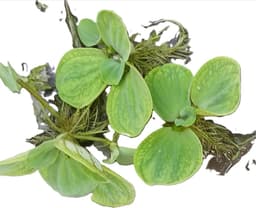
The RHS rate is about four to five oxygenator bunches, each of three to four stems, per square metre. That is a spacing guide, not a promise that algae will stay away. A pond of about two square metres wants roughly eight to ten bunches, not a second box the same afternoon. Too many oxygenators can strip oxygen at night in summer, because the plants respire after dark. Allow about one floating plant per square metre, and keep about half the surface clear. Water lettuce sits on the water, rather than in a basket. A full carpet shades the oxygenators. The pre-weighted live bunches in this set are indoor, zone 10 stock, not the oxygenator rate for a British liner.

Waste and a dead delivery

Leave freshly removed plants on the edge for a short while so snails, newts and other animals can crawl back, then bin or compost them away from wild ponds, streams and ditches. Put rinse water on garden soil away from any watercourse. Drains can reach a river. A dead or brown arrival is a description problem before it is a planting problem. Photograph the inner wrap, the plant and the label before you rinse. Section 11 of the Consumer Rights Act 2015 says goods must match their description, so a live plant that arrives rotten may fail that test. Tired leaf tips on a firm crown are a different case from a collapsing crown.

Common questions

How deep do marginals go?
There is no single depth for every marginal. The RHS growing guide points you to the depth and the eventual size for that plant, and a bog plant is not a standing-water plant. Measure the shelf and set the basket where the crown matches the label. A marsh plant sunk beside a deep marginal often loses its crown in the first fortnight.
Do I sink the 9 cm pot as it arrives?
The 9 cm pot is the nursery pot that survived the post. RHS guidance is to replant into an aquatic basket rather than sink that pot as the permanent home. Buyers often see better growth only after a larger basket, because the retail pot leaves the crown cramped. Tip the 9 cm pot out over a bucket. It is a sound travelling container and a poor long-term basket.
How many oxygenator bunches per square metre?
About four to five bunches, of three to four stems each, per square metre is the RHS planting rate. It is a starting density, not a promise of clear water, and a heavier planting can use oxygen at night in warm summer weather. On a pond of about two square metres that is roughly eight to ten bunches.
Should I quarantine new pond plants?
Hold new plants apart from the main pond until you have rinsed the compost and checked the foliage. The RHS points to quarantine because Crassula helmsii can travel as a fragment in nursery compost. A separate trug is enough for a household pond. Quarantine does not make an aquarium bunch safe to release outdoors if it was never a pond species.
What if the plants are dead on arrival?
Photograph them before you rinse or bin them, including the label and the inner packaging. Section 11 of the Consumer Rights Act 2015 requires goods to match their description, so a live plant that arrives dead is a complaint to the seller with those photos. Brown tips on a firm crown are a different case from a rotten, smell-heavy plant. Contact the seller while you still have the parcel.

Related pages

Sources

Public UK sources from the research digest, used for this page in October 2026. Prices, stars and review counts are from the eleven amazon.co.uk listings. A nitrate, oxygen or algae line on a listing is the seller's claim, not a laboratory result.

  1. RHS, choosing pond plants (retrieved 19 October 2026)
  2. RHS, planting aquatic and bog plants (retrieved 19 October 2026)
  3. GOV.UK, invasive non-native plant rules in England and Wales (retrieved 19 October 2026)
  4. The Wildlife and Countryside Act 1981 (Prohibition on Sale etc.) (England) Order 2014 (retrieved 19 October 2026)
  5. GB Non-native Species Secretariat, Be Plant Wise (retrieved 19 October 2026)
  6. Natural History Museum, garden pond FAQ (retrieved 19 October 2026)
  7. Consumer Rights Act 2015, section 11 (retrieved 19 October 2026)
  8. OATA, do not sell aquarium plants for ponds (retrieved 19 October 2026)