Wood Brightener vs Wood Bleach
You have searched both names because amazon.co.uk prints wood bleach on a 9.9% oxalic bottle and on a two-part kit. If the garden set should look like its own wood again, choose a stated oxalic solution or a teak cleaner-brightener. If stripped timber should be paler than it grew, choose the two-part set and accept a lighter surface. That is the wood brightener vs wood bleach fork. The Products Compared editorial team compared the five amazon.co.uk listings from 15 October 2026 with the Rustins 2024 label. There was no assay. Shelf prices move, and a qualifying purchase can earn us a commission at no extra cost to you. The five sit on our [wood brightener comparison](/hub/garden-furniture/wood-brightener).
You have searched both names because amazon.co.uk prints wood bleach on a 9.9% oxalic bottle and on a two-part kit.
You have searched both names because amazon.co.uk prints wood bleach on a 9.9% oxalic bottle and on a two-part kit. If the garden set should look like its own wood again, choose a stated oxalic solution or a teak cleaner-brightener. If stripped timber should be paler than it grew, choose the two-part set and accept a lighter surface. That is the wood brightener vs wood bleach fork. The Products Compared editorial team compared the five amazon.co.uk listings from 15 October 2026 with the Rustins 2024 label. There was no assay. Shelf prices move, and a qualifying purchase can earn us a commission at no extra cost to you. The five sit on our wood brightener comparison.
Our top picks
| Badge | Product | Type | Active claim | Weathered timber | Note | Price | Offer |
|---|---|---|---|---|---|---|---|
| Best overall |  Star brite Star brite one-step teak brightener | One-step cleaner and brightener | No dangerous acids; acid-free field | Weathered grey and blackened teak | 7.4 | £56.18 | View offer |
| Best value |  Rustins Rustins two-part wood bleach | Two-part wood bleach | Two-part lightening system | Removes weather stains | 7.0 | £22.86 | View offer |
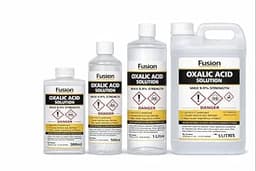
 Generic Oxalic solution 9.9%, 300 ml | Oxalic wood bleach | Oxalic acid 9.9% | Decking cleaner; bleaches wood | 6.8 | £7.97 | View offer |


On this page
Two jobs under one search
Oxalic acid and teak brighteners when you want the original colour
Two-part bleach when paler than nature is the point
Where the labels overlap
Common questions
What is the difference between a wood brightener and a wood bleach?
Will oxalic acid make teak paler than it grew?
Will a two-part bleach also remove grey weathering?
Why do the 9.9% bottles call themselves wood bleach?
What if the wood was dyed or stained on purpose?
Can I use household chlorine bleach instead?
Do both types need the same vinegar wash?
Related pages
Sources
Public UK, manufacturer and amazon.co.uk sources used for this comparison; last accessed 15 October 2026.
- amazon.co.uk listings for the five wood-brightener ASINs (retrieved 15 October 2026)
- HSE EH40/2005 Fourth Edition 2020, Table 1 (retrieved 15 October 2026)
- HSE COSHH assessment guidance (retrieved 15 October 2026)
- HSE GB CLP and cleaning-product H318 note (retrieved 15 October 2026)
- Rustins Wood Bleach label PDF, 2024 (retrieved 15 October 2026)
- Furniture Clinic teak brightener (retrieved 15 October 2026)
- VMD Product Information Database (retrieved 15 October 2026)
- Practical Boat Owner, 14 March 2016, teak cleaners (retrieved 15 October 2026)