Independent comparisons. We may earn from shop links. More info

How to use a felling wedge in the back cut

Updated: 22 October 2026

You are about to drive a wedge into an unfinished back cut, and the mistakes that hurt people are usually about sequence, not about which orange pack you bought. The wedge holds the kerf open and adds lift toward a notch you have already planned. It does not replace the hinge, an escape route, or the moment you walk away because the lean, the crown, or the target underneath is wrong. Kit choices are on the [felling wedge comparison](/hub/forestry-tools/felling-wedge). This page is the method. Peter F. followed published UK felling guidance for the sequence and did not lab-test these packs. A qualifying purchase can earn a commission at no extra cost to you.

You are about to drive a wedge into an unfinished back cut, and the mistakes that hurt people are usually about sequence, not about which orange pack you bought.

Our top picks

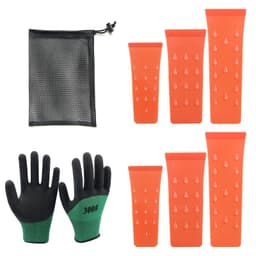
LDXDRU LDXDRU 6, 8 and 10 inch

Best overall

LDXDRU LDXDRU 6, 8 and 10 inch
10.0/10about £17.99
kuzuryu kuzuryu 5.5 inch 6-pack

Best value

kuzuryu kuzuryu 5.5 inch 6-pack
9.0/10about £10.37
On this page

Where the wedge sits in the cut

Husqvarna's UK felling guidance assumes a directional notch first. The back cut meets that notch from the opposite side and leaves a hinge of uncut wood. The wedge enters the back cut before it is finished, while there is still kerf to open, not after the tree is sitting on the stump with the saw pinched. On the bumper-spike method, insert the wedge once you have sawn about half the diameter from the back. On a safe-corner cut, you may drive the wedge and then remove the corner, without cutting into the wedge. Small stems may need only a hand or a pole. Wedges earn their place when the tree may sit back on the bar. Husqvarna's felling-tools page quotes about 50 to 60 mm of lift. That is manufacturer guidance, not a measurement of these ABS packs. Length choice is on felling wedge size.

What you hit it with

Strike with an axe butt or an impact breaking bar. Square blows send the wedge along the kerf. Keep your free hand off the wedge head, so a miss does not land on the hand that was steadying it. Do not use the saw as a hammer. Plastic in these listings is meant to survive a touch from the bar better than a steel splitter. That is not permission to hit until something moves. Before the first strike, clear the escape route. PPE for chainsaw work in HSE INDG317 is a helmet, hearing and eye protection, leg protection, and boots with the chainsaw mark where required. At work, PUWER expects training and a certificate for work on or in a tree unless you are under supervision. A garden exemption from a felling licence does not cancel a tree preservation order. Against the lean, Husqvarna's UK pages describe a second wedge beside the first and, in some situations, a third on top. Some US courses cap stacking at two. Stay inside your training, and stop when lift stops.
LDXDRU LDXDRU 6, 8 and 10 inch

Testsieger

LDXDRU LDXDRU 6, 8 and 10 inch
10.0/10about £17.99

If the saw is already stuck

When the bar is pinched, the engine should be off and the chain brake on before you lever or wedge. NPTC cross-cutting notes describe freeing a trapped saw by wedging the cut, levering, or using another saw at least 300 mm from the trapped bar. Reassess lean and hinge before you carry on. Driving a second wedge is the same tool as a planned lift, but the stress on the kerf is higher when the bar is bound. If two wedges and careful levering do not release the bar, the problem is no longer more hammer. It is geometry, a hang-up, or a stem that needs a competent feller.

When you stop

Stop when the hinge is about to fail on your terms, when the crown moves unexpectedly, when a building sits in the fall line, or when the tree is hung up. On dead ash, minimise hammering. A Forestry Commission eAlert of 28 June 2018, quoting FISA, says shock from wedge blows drops deadwood. Call a competent feller when the lean is beyond your training, a winch is part of the plan, or the notch and hinge are uncertain. England's felling licence rules on GOV.UK still apply outside garden exemptions. If the only job is splitting rounds on the ground, see felling wedge vs splitting wedge.

Common questions

Do I put the wedge in before or after the back cut is finished?
Before it is finished, while the kerf still accepts the wedge and the hinge is intact. Husqvarna's UK order is notch first, then the back cut, with the wedge going in once there is room, including about half the diameter on the bumper-spike method. After the tree is sitting on a pinched bar, you are in a rescue, not in the planned sequence.
Axe, hammer, or the back of the saw?
Use an axe butt or a breaking bar, with square blows along the kerf. Do not use the saw as a hammer. Keep your free hand off the wedge head so a miss does not land on your fingers. Plastic is there to be kinder to the chain than steel if you touch the bar. It is not a reason to strike harder.
What if the bar is already pinched?
Switch the engine off and set the chain brake before you lever or wedge. NPTC notes allow wedging the cut, levering, or another saw at least 300 mm from the trapped bar, not yanking a running chain. If two wedges do not free the bar, stop and reassess. More hammer will not fix a hang-up.
Can I stack wedges?
Sometimes. On fells against the lean, Husqvarna describes a second wedge beside the first and, in some situations, a third on top. Some US courses cap stacking at two. Stay inside the method you were trained on, and stop when extra wedges no longer add lift.
When do I walk away instead of hitting harder?
Walk away when the lean fights your training, the stem is hung up, people or buildings sit in the fall line, or the notch and hinge are wrong. At work, chainsaw use on or in a tree expects training under HSE's PUWER guidance. A garden felling-licence exemption does not cancel a tree preservation order.

Related pages

Sources

Public UK sources from the research digest, retrieved on 22 October 2026. amazon.co.uk listing fields are cited on the product cards.

  1. Husqvarna UK, Felling wedges (retrieved 22 October 2026)
  2. HSE, Working with chainsaws (retrieved 22 October 2026)
  3. GOV.UK, When a felling licence is needed (retrieved 22 October 2026)
  4. Forestry Act 1967, section 9 (retrieved 22 October 2026)
  5. GOV.UK, Tree felling: getting permission (retrieved 22 October 2026)
  6. HSE INDG317 (retrieved 22 October 2026)
  7. STIHL UK plastic wedges (retrieved 22 October 2026)
  8. Forestry Commission eAlert, 28 June 2018 (retrieved 22 October 2026)