Independent comparisons. We may earn from shop links. More info

Vapour barrier vs damp proof membrane

Updated: 21 October 2026

Vapour barrier vs damp proof membrane is the split between water vapour from a warm room and liquid moisture from the ground. Use about 125 micrometres on the warm side of a timber frame, and polyethylene of at least 300 micrometres under a slab, linked to the wall damp-proof course. Use both when the membrane sits on the cold side of insulation. The [vapour barrier comparison](/hub/flooring-tools-and-accessories/vapour-barrier) shows the five listings. Warm-side thickness is on the [vapour barrier buying guide](/hub/flooring-tools-and-accessories/vapour-barrier/sub/vapour-barrier-buying-guide). Peter F. compared the listings with public UK guidance. No slab was tested. A qualifying purchase can earn a commission at no extra cost to you.

Vapour barrier vs damp proof membrane is the split between water vapour from a warm room and liquid moisture from the ground.

Our top picks

On this page

Two moistures

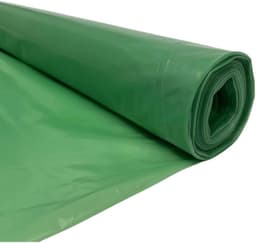
Ground moisture is water in the soil and in a new slab. A damp-proof membrane stops that water reaching the floor finish and the bottom of the walls. Approved Document C describes polyethylene below a ground-supported slab, continuous with the damp-proof course. Room vapour is moisture in warm indoor air. A vapour control layer on the warm side of the insulation slows that movement. LABC Warranty treats 125 micron polythene as one accepted form in a frame. Both sheets can be green. The water they deal with is not the same water.

300 micrometres and 125 micrometres

Below a ground-supported slab, Approved Document C paragraph 4.8 asks for polyethylene of at least 300 micrometres, 1200 gauge, with joints sealed. Site Right lists 1200, 1000 and 2000 gauge as damp-proof membrane, and 500 gauge separately as a slip membrane. On a timber-framed wall, the NHBC 2025 extract sets a minimum of 500 gauge, about 125 micrometres, on the warm side. Thicker is not automatically better there. Northwest Floor Screeders describe one sequence: at least 300 micron up to the wall damp-proof course, then at least 125 micron over the insulation. That is one firm’s build-up, not the only legal floor.
B2C B2C yellow 0.2 mm, 20 m²

Testsieger

B2C B2C yellow 0.2 mm, 20 m²
5.2/10about £19.79

When the floor needs both

A government research summary quotes BS 5250:2011 on this point. A damp-proof membrane on the warm side of the insulation may be assumed to form the air and vapour control layer. A damp-proof membrane on the cold side needs a separate air and vapour control layer. Under a typical ground-bearing slab the membrane is on the cold side of any insulation laid above it, so you still need a control layer on the warm side. A 125 micron layer under a slab is below the 300 micrometre line in paragraph 4.8. The warm-side sequence is on how to fit a vapour control layer. None of the five amazon.co.uk listings is the slab membrane.

Which sheet in this comparison is which

ndcpolipak B084FM2VF2, at £63.69, states 500 gauge and EN 13984. NDC marks the vapour barrier to EN 13984 and the damp-proof membrane to EN 13967, so this roll does not meet paragraph 4.8. GVC2 at £12.60 and GVC4 at £15.69 state 125 micron and do not name EN 13984. The yellow sheet at £19.79 states 0.2 mm, about 200 micrometres, still short of 300. The foil at £42.25 is a sauna facing. None of the five is a stated 1200 gauge damp-proof membrane. A floating floor uses another film, on the vapour barrier under laminate page.

Common questions

Can a vapour barrier be used as a damp-proof membrane?
Not the 125 micron sheets in this set. Approved Document C asks for polyethylene of at least 300 micrometres below a ground-supported slab, with sealed joints. A 500 gauge vapour control layer is about 125 micrometres. Using it under a slab misses paragraph 4.8. None of the five listings is a stated 1200 gauge damp-proof membrane.
Can a 1200 gauge membrane be the warm-side sheet?
Only if the wall or roof specification says so. The NHBC extract for external timber-framed walls names a minimum of 500 gauge on the warm side. Thicker is not automatically better there. A damp-proof membrane can form the control layer when it sits on the warm side of insulation. On the cold side, you still need a separate layer.
Why do I sometimes need both?
The two sheets sit on different sides of the insulation. Under a ground-bearing slab the damp-proof membrane is on the cold side of insulation laid above it, so you still need a control layer on the warm side. Northwest Floor Screeders describe one version: 1200 gauge below, then at least 125 micron over the insulation. That is one firm’s sequence, not the only lawful floor.
Is 500 gauge a damp-proof membrane if the label says so?
Read the declaration. Site Right stocks 500 gauge as a slip membrane, and stocks 1200, 1000 and 2000 gauge as the damp-proof membranes. NDC marks vapour barrier to EN 13984 and damp-proof membrane to EN 13967. A 500 gauge label can be a warm-side layer or a slip sheet over insulation. Paragraph 4.8 still wants at least 300 micrometres below a ground-supported slab.
Where does the sheet go if insulation is above the slab?
The damp-proof membrane goes where the floor design puts the ground-moisture break, commonly below the slab, continuous with the wall damp-proof course. The vapour control layer goes on the warm side of the insulation. If the membrane is already on the cold side, you still need a separate control layer on the warm side. A 125 micron roll does not stand in for the 300 micrometre sheet.
What about radon?
This page does not specify a radon barrier. Radon protection is a separate design, with its own membrane, and it is not one of the five listings compared here. A 125 micron vapour control layer is not that barrier. If the site needs radon measures, take the floor build-up to someone who designs to that guidance before you buy a green roll for the studs.

Related pages

Sources

Public UK sources used for this comparison. Listing prices, stars and review counts are the amazon.co.uk lines kept with these five products. Shelf date 19 October 2026.

  1. Approved Document C, 2013 (retrieved October 2026)
  2. Approved Document L Volume 1 (retrieved October 2026)
  3. LABC Warranty vapour control layers (retrieved October 2026)
  4. NHBC 7.2.15 pitched roofs (retrieved October 2026)
  5. BS EN 13984:2013 (retrieved October 2026)
  6. NDC Polipak damp proofing (retrieved October 2026)
  7. Wickes Damplas VCL sheet (retrieved October 2026)
  8. Wickes laminate flooring guide (retrieved October 2026)