Independent comparisons. We may earn from shop links. More info

How to use a hand tamper

Updated: 21 October 2026

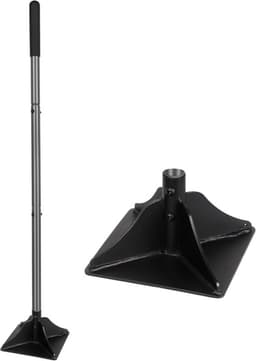
You already have a manual rammer, and the loose material in front of you is a thin layer of sand, soil or Type 1. Check the shaft, spread a thin lift, drop the face flat, overlap, and stop when the surface stops moving underfoot. The models in the [Tamping rammer](/hub/flooring-tools-and-accessories/tamping-rammer) comparison are hand heads from 2.1 kg to 5.4 kg. They are not petrol rammers, and this page does not set a price. Peter F. used public UK guides and amazon.co.uk review themes on 20 October 2026. No lab density test was run. A purchase through our links can earn a commission at no extra cost to you.

You already have a manual rammer, and the loose material in front of you is a thin layer of sand, soil or Type 1.

Our top picks

On this page

Before the first drop

Wear boots with a protected toe. Coppard recommends gloves and steel-toe boots for hired impact rammers, and the same foot protection is the sensible minimum when a metal face is falling beside your boots. Stand so both feet are outside the spot you are about to strike. Harbour Housewares, DFENG, OENBATOM, Gekufa, Walensee and BlumeTrec are sectional. Tighten every joint, lift the head a few centimetres, and listen. A click means the bolts are already moving. Reviews include loose joints, disputed bolts, and in one Walensee report a missing Allen key. Roughneck ROU64379 is one fibreglass handle, and Amtech A1870 is not sold as a tube kit, so those two do not start with a bolt check. Scrape dried soil off the plate. Damp soil sticks to the Roughneck face in reviews. If the excavation has unsupported sides, stop.

How to strike

Lift the head and let the mass fall. You are using the weight of the tool, from 2.1 kg to 5.4 kg on these listings, not a shove along the ground. Pushing moves material sideways. The face should meet the ground flat. The Department for Transport's practical guide to street works says a vibrotamper shoe should hit flat, not on the toe or heel. That sentence is about a powered shoe. An edge strike on a hand plate still digs a groove and leaves the rest of the lift loose. It does not turn your hand tamper into a street-works machine. On a fibreglass shaft, let the head fall. Roughneck reviews link slamming with cracking worries. Overlap each drop. Work from the far edge back toward your feet. Beside an existing slab, keep the metal face on the fill. A corner blow on a concrete edge chips the arris.

How thick a layer

Pavingexpert says sub-base layers no thicker than 150 mm, with a plate as the normal tool and a hand method as the lighter-duty alternative. Treat 150 mm as an upper guide, not a laboratory density. A hand head will not knit a 150 mm loose layer from the top. If the material is still soft halfway down, scrape it back and do a thinner lift. Sand bedding is thinner than Type 1. The Gekufa at 2.43 kg shows up in reviews of short slab runs. A 5 kg-class head is what the shed-base comments use, and a 1.5 × 3 m pad is tiring in one go. Several sessions match the Roughneck reviews better than an afternoon of slamming. Walk the patch. A compacted sub-base should not move underfoot. A new heel dent means the lift is still loose. That is a garden check, not a street-works sign-off.

When to put it down

Put the tamper down when the surface no longer moves underfoot, the joints are still tight, and the area is still the small patch you started with. Retighten sectional bolts when they click, and stop before your aim goes. An open drive or a deep loose sub-base needs a vibrating plate. Clay that stays loose underneath after a plate has passed is the case hire firms point at a petrol trench rammer of about 68 kg, which none of these listings is. The tamper versus wacker plate page is that choice. Patio thicknesses are on the hand tamper for a patio page. Call a professional when the ground is a street covered by reinstatement rules, when the trench may hide services, or when someone has asked for a density sign-off.

Common questions

Do I lift and drop, or push?
Lift the head and let it fall flat so the mass of the tool does the compacting. Pushing or scrubbing moves the layer sideways and leaves it loose underneath. On a fibreglass handle, guide the drop and avoid driving the shaft like a sledge. Reviews on the Roughneck link slamming with cracking worries. Overlap the prints so you do not leave a soft ridge between them.
How thick should each layer be?
Use 150 mm as the upper guide from Pavingexpert for a granular sub-base layer, and spread sand bedding thinner than that. A hand head will not compact a thick loose layer from the top. If your heel still sinks, scrape material off and compact a shallower lift. The 150 mm figure is a paving guide. It is not a laboratory density and it is not a pass count.
How do I know it is compacted?
Walk it. Pavingexpert says a compacted sub-base surface should not move underfoot. A new heel dent means the lift is still loose. That is a garden check for a small pad. It does not certify street works, and these amazon listings publish no kilonewton rating you could quote as a result.
What if the bolts click?
Stop and retighten them. Sectional tampers in this set load their joints on every drop, and Walensee and Harbour reviews describe bolts that loosen. One Walensee buyer reported a missing Allen key, so check the fixings are in the box before you leave the house. Roughneck does not arrive as tubes. A click on that model is a reason to inspect the head, not to hunt for a joint that is not there.
When is a hand tamper the wrong tool?
It is the wrong tool when the area is an open vehicle sub-base, when the layer stays soft after thin lifts, or when the excavation is unsupported. It is also the wrong tool when you needed a petrol trench rammer. Hire or buy the machine that matches the soil and the space, and stop if services or a density sign-off are in play.

Related pages

Sources

Sources taken from the research digest. Listings were checked in October 2026.

  1. DfT Practical Guide to Street Works (retrieved 20.10.2026)
  2. GOV.UK: how to reinstate a road after street works (retrieved 20.10.2026)
  3. HAUC NG10.3 compaction requirements (retrieved 20.10.2026)
  4. HSE hand-arm vibration regulations (retrieved 20.10.2026)
  5. HSE PUWER overview (retrieved 20.10.2026)
  6. Pavingexpert: sub-bases (retrieved 20.10.2026)
  7. Coppard rammer hire (retrieved 20.10.2026)
  8. Toolstation Roughneck tamper ROU64379 (retrieved 20.10.2026)