Independent comparisons. We may earn from shop links. More info

How to light an outdoor gas fireplace

Updated: 22 October 2026

You have a propane pan, bowl or fire pit table on the patio, the cylinder is full, and the listing promised a push-button flame. This page on how to light an outdoor gas fireplace is the connect, leak-test, light and shut-down sequence, not a product ranking. Model choice and prices stay on the [outdoor gas fireplace comparison](/hub/fireplaces-and-stoves/outdoor-gas-fireplace). The Products Compared editorial team used the saved amazon.co.uk listings and public UK sources, not a timed lab burn. A qualifying purchase can earn us a commission at no extra cost to you.

You have a propane pan, bowl or fire pit table on the patio, the cylinder is full, and the listing promised a push-button flame.

Our top picks

On this page

Before you open the valve

Light outdoors in free air only. NHS guidance on carbon monoxide is clear about barbecues and camping stoves indoors or in a tent; treat a propane fireplace the same way. Liquid Gas UK’s patio-heater sheet says not in an enclosed space, tent or marquee, and not close to umbrellas unless the manual allows. Scottish Fire and Rescue advice asks for a stable, non-combustible surface clear of awnings and gazebos. Keep the cylinder upright, the hose unkinked, and children and pets back. Glass and lava rock get hot. If the hose still reads like a US 20 lb tank while you hold a green patio-gas bottle, settle the fitting first. Form and heat belong on the outdoor gas fireplace buying guide.

Connect and leak-test

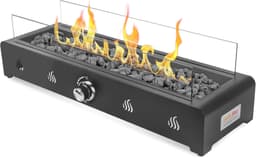
Start with the appliance control OFF. Attach the regulator the way the manual and the bottle collar describe. For many UK patio cylinders that is a 27 mm clip-on; for other propane bottles it may be a screw-in POL. Never force a mismatch. GOV.UK says change cylinders outdoors, with the tap off before a change, and use soapy water for leaks. Liquid Gas UK prefers a proper leak-detection fluid on brass when you have it. Brush the joints, open the cylinder slowly, and watch for bubbles. No flame nearby. If bubbles appear, shut the cylinder and do not light. An intermittent feed, as one UK review described on a side-mounted Onlyfire pan, is a stop. Do not tuck a bottle under a cloth skirt beside the flame.

Lighting and first-use purge

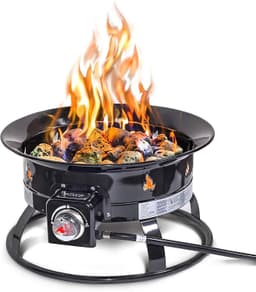
Light exactly as the product manual says. Pulse or piezo tables may need a cell in the igniter. One Outsunny UK review found no AAA despite a batteries bullet. Match-light bowls in the Outland style need a long lighter and a careful face. Reviews warn that a flash can catch hair. First light after a hose change often takes longer because air is still in the line. If the flame will not stay, shut down, wait the time the manual names, often around five minutes, and retry once. Do not flood the patio with unburned gas. Wind can kill a weak spark when glass sits only on the long sides. Set the height on the knob, not by opening the cylinder further.

Shut down and stop conditions

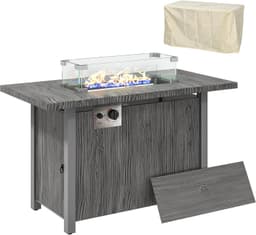
Turn the cylinder off first, then the appliance controls, matching GOV.UK’s outdoor sequence. Let glass and lava cool before you lift a wind guard or fit a cover. One Outsunny UK review says the glass came apart when lifted warm. Store the cylinder outdoors, upright, never indoors as spare heating. Stop if you smell gas after shut-down, if bubbles return, if the connector will not seat, or if the flame keeps cutting out. A Gas Safe engineer is the call for a leak the cylinder tap does not stop, a damaged connector, or any pipe onto the house gas meter. If you are still choosing furniture, that contrast is tabletop gas fire pit or fire pit table.

Common questions

In what order do I open the cylinder and the control?
Appliance OFF, connect and leak-test, then open the cylinder slowly, then light per the manual. Do not open the bottle with the burner control already demanding gas. Change cylinders outdoors, with the tap off before a change, as GOV.UK’s outdoor fire-safety note describes. If you smell gas or see bubbles, shut the cylinder and do not keep sparking.
How do I check for leaks without a flame?
Brush the joints with leak-detection fluid or soapy water, open the cylinder, and look for bubbles. Keep lighters and cigarettes away during the check. Liquid Gas UK prefers a proper leak-detection fluid on brass fittings when you have the choice. If foam appears, shut the bottle, remake the joint or replace the part, and do not light.
Why does the first light take longer?
Air in a new or recently connected hose has to purge before propane reaches the burner. Follow the manual’s first-light steps rather than flooding the patio with gas. A short purge, then push-and-turn, is the pattern several UK patio-pit manuals describe. If nothing holds, shut down and wait rather than leaving the valve open.
What if the flame will not stay on?
Shut down, wait the cool-off time in the manual, often around five minutes, and retry once. A persistent cut-out points to wind, a weak igniter, a bad connector or a thermocouple, not endless sparking. Glass on the long sides only can let a cross-wind drop the flame. An intermittent connector is a stop condition.
Can I light it under a gazebo?
Not in an enclosed gazebo, tent or marquee. NHS guidance treats barbecues and camping stoves indoors or in a tent as a carbon monoxide risk; treat this flame the same way. Liquid Gas UK’s patio-heater sheet says not in an enclosed space, and not close to umbrellas unless the manual allows a clearance. Keep free air around the flame.
When do I call a Gas Safe engineer?
When a leak continues after the cylinder is shut, when a connector or hose is damaged, or when you want pipework to the house gas meter. Portable cylinder lighting is owner work only when the parts match and the leak test is clean. It does not cover meter work or a natural-gas conversion.

Related pages

Sources

Public UK sources used for this comparison. amazon.co.uk prices, stars and review counts were taken from the listings on 21 October 2026.

  1. GOV.UK, Fire safety outdoors (retrieved 21 October 2026)
  2. GOV.UK, LPG general information (retrieved 21 October 2026)
  3. Gas Safety (Installation and Use) Regulations 1998 (retrieved 21 October 2026)
  4. HSE L56 (retrieved 21 October 2026)
  5. Liquid Gas UK, regulator sheet 39 (retrieved 21 October 2026)
  6. Liquid Gas UK, patio heater sheet (retrieved 21 October 2026)
  7. NHS, Carbon monoxide poisoning (retrieved 21 October 2026)
  8. GOV.UK, Smoke control areas (retrieved 21 October 2026)
  9. amazon.co.uk, Onlyfire 28-inch tabletop pan (retrieved 21 October 2026)
  10. amazon.co.uk, Outland Living Firebowl 893 (retrieved 21 October 2026)