Independent comparisons. We may earn from shop links. More info

Wi-Fi smoke alarm vs radio interlink

Updated: 21 October 2026

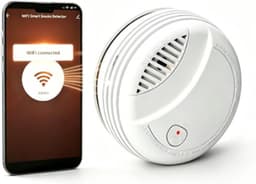
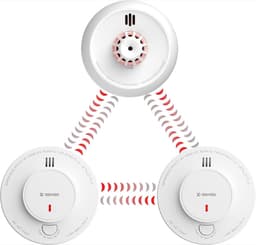
A Tuya or Smart Life alarm does not replace the alarms that all sound together. A Wi-Fi smoke alarm messages your phone. A radio-interlinked alarm is the siren network: one head triggers, the others in the group sound, and the router can be off. This wifi vs interlinked smoke alarm page keeps those jobs apart, using the packs in the [wireless smoke alarm comparison](/hub/fire-protection/wireless-smoke-alarm). The legal differences between nations are on the [Scotland, England, Wales and Northern Ireland page](/hub/fire-protection/wireless-smoke-alarm/sub/wireless-smoke-alarm-scotland-england). Interlinked alarms use radio frequency and do not need Wi-Fi. A qualifying purchase can earn a commission at no extra cost to you.

A Tuya or Smart Life alarm does not replace the alarms that all sound together. A Wi-Fi smoke alarm messages your phone.

Our top picks

LINKD LINKD smoke, heat and CO

Best overall

LINKD LINKD smoke, heat and CO
9.2/10about £99.99
XUK XUK PA-437EN

Alternative

XUK XUK PA-437EN
9.2/10about £21.99
X-Sense X-Sense HS21

Best value

X-Sense X-Sense HS21
8.4/10about £47.99
On this page

Three different wireless jobs

The first job is the sounder in the alarm itself. That local beep does not depend on your broadband. The FireAngel FA6620, the TEFLERON pair and the WISUALARM standalones are this job only. The second job is radio interlink. LINKD, XINDUM, the CPVAN kits, the X-Sense HS21 and the WISUALARM S05 are sold so that a trigger sounds the grouped heads. The third job is the app. The XUK PA-437EN at about £21.99 joins 2.4 GHz Tuya or Smart Life. A UK review describes a 9 V battery and no link to other alarms.

What the law is asking for

Scotland's buyer page is explicit that interlink is radio, not Wi-Fi. A phone in your pocket while you are at work is not that test. A sealed radio kit can be the self-fitted option. A mains cable is the other. An app account is neither. England's landlord booklet does not require interlink, so a Wi-Fi alarm is not illegal in England in some general sense. It still does not warn a bedroom that never received a radio signal. Wales wants rented homes on the electrical supply. Wi-Fi does not satisfy that. Northern Ireland's 2024 guidance is an interlink duty. A notification badge is not the link.
LINKD LINKD smoke, heat and CO

Testsieger

LINKD LINKD smoke, heat and CO
9.2/10about £99.99

When a Wi-Fi head is still useful

Buy the app as a second layer when the sirens already exist. Pairing has to be on 2.4 GHz. A sensible pair is a radio kit for the house and one Wi-Fi head as the messenger. The best-of page assigns those radio packs to the house types.

What not to mix

Do not mix brands and call it one system. CPVAN's second generation will not talk to SM11R. The XUK does not claim a bridge to any radio group. Do not treat wireless in a filter as proof of interlink. The buying guide order is link type first, then the sealed cell, then heat and CO. Wi-Fi fails the first step whenever every head must sound. The XUK card is a smoke alarm. It is not a heat alarm and it is not a CO alarm.

Common questions

Do wireless smoke alarms need Wi-Fi?
Radio-interlinked alarms do not. Scottish guidance says they use radio frequency and do not need Wi-Fi. The LINKD, CPVAN, XINDUM, HS21 and WISUALARM S05 packs are in that camp: no router in the setup. A Wi-Fi alarm such as the XUK needs 2.4 GHz Wi-Fi for the phone alert. The word wireless on its own does not tell you which of the two you have bought. Read the line that says RF, Link+, or Smart Life.
If the router dies, will the alarm still sound?
The alarm on the ceiling can still sound. The phone notification cannot. That is the split X-Sense states for its Wi-Fi model: local siren yes, app no, once Wi-Fi is down. A radio group does not use the router for the siren network, so a dead broadband line is irrelevant to whether the landing sounds. Test the button anyway. A dead sealed cell is a different failure, and no network choice fixes a chirp at four years.
Can a Smart Life head make the landing alarm sound?
Only if that landing alarm is in the same app group and the product actually interconnects, which the XUK review says it does not. A Smart Life smoke alarm notifies the phone. It does not, on this listing, radio a separate RF head on the landing. X-Sense's FAQ says its Wi-Fi XS01-WX will not interconnect with its RF XS01-WR. Assume they stay separate until the maker's instructions say that exact pair joins, and then still run the all-sound test.
Why does Scotland say you do not need Wi-Fi?
Because the interlink has to work without an internet service. The tolerable standard wants the smoke and heat alarms to sound together in the home. Radio or a cable does that. Wi-Fi adds a dependency on a router, a 2.4 GHz band and an account. Those fail when you are not maintaining them. The government page is telling you not to buy an app in the belief that it is the required link. You may still add an app later, after the radio or mains system is in.
Is Nest Protect enough for a Scottish kitchen?
No. Nest Protect units can interconnect with each other, including without Wi-Fi for that link, and they still do not provide the BS 5446-2 heat alarm Scottish homes are told to fit in the kitchen. Interconnect is not the missing piece. The heat sensor is. A Nest in the hall does not complete the kitchen. This comparison's radio kits that include a heat head are the ones that even contain the right sensor, and they still have to be sited and tested.
Can I add Wi-Fi on top of a radio kit?
Yes, as an extra head that messages your phone, not as a member of the radio group. Fit and test the RF kit so one button sounds every linked alarm. Then, if you want the away-from-home ping, add the about £21.99 XUK on 2.4 GHz and test its own button. Do not remove a heat alarm to make room for it. Do not expect the XUK test to set off the HS21 or the LINKD.

Related pages

Sources

Public UK sources listed below, plus amazon.co.uk shelf prices and ratings for these ASINs, last checked on 19 October 2026.

  1. Scottish Government: fire and smoke alarms in Scottish homes (retrieved 19 October 2026)
  2. Scottish Government: where and what to buy (retrieved 19 October 2026)
  3. Scottish Government: Tolerable Standard guidance on fire and carbon monoxide detection (retrieved 19 October 2026)
  4. Scottish Government: changes to fire safety laws (retrieved 19 October 2026)
  5. GOV.UK: smoke and carbon monoxide alarms, England regulations Q&A for landlords (retrieved 19 October 2026)
  6. legislation.gov.uk: Wales regulation 5, smoke alarms (retrieved 19 October 2026)
  7. GOV.WALES: fitness for human habitation guidance (retrieved 19 October 2026)
  8. EDA summary of BS 5839-6:2019 changes (retrieved 19 October 2026)