Independent comparisons. We may earn from shop links. More info

Combined vs separate smoke and CO alarm

Updated: 21 October 2026

You can put one disc on the landing or buy a smoke alarm and a carbon monoxide alarm as two objects. Combined vs separate smoke and CO alarm comes down to the room. A combination alarm is enough when that room suits both sensors. It is the wrong single purchase when the boiler is in the kitchen, because one housing cannot sit on the landing ceiling and 1–3 m from the boiler at the same time. Model scores stay on the [smoke and CO detector comparison](/hub/fire-protection/smoke-and-co-detector). A qualifying purchase can earn a commission at no extra cost to you.

You can put one disc on the landing or buy a smoke alarm and a carbon monoxide alarm as two objects. Combined vs separate smoke and CO alarm comes down to the room.

Our top picks

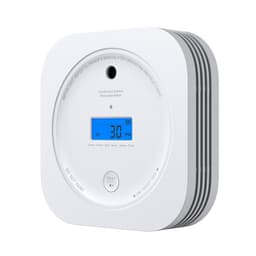
AEGISLINK AEGISLINK SC200

Best overall

AEGISLINK AEGISLINK SC200
7.7/10about £23.19
X-Sense X-Sense SC07

Alternative

X-Sense X-Sense SC07
8.6/10about £27.71
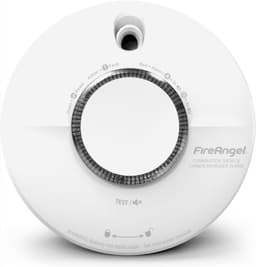
FireAngel FireAngel SCB10-R

Rank 3

FireAngel FireAngel SCB10-R
9.0/10about £29.99
On this page

Two hazards, two sensors

A smoke alarm does not detect carbon monoxide, and a carbon monoxide alarm does not detect smoke. Age UK allows either both types or a combined unit. The combination is both sensors in one piece of plastic, so it has one place on the wall or ceiling. You do not gain a kitchen heat detector by printing both words on the carton. Devon and Somerset Fire and Rescue Service still wants a heat alarm in the kitchen. The FireAngel SCB10-R prints both EN numbers and is listed by Safelincs as unsuitable for a kitchen or a garage. Standards and batteries are in the buying guide.

When one housing is enough

Use one combination alarm when one spot is fair for both sensors. A living room with a wood stove is the usual case, if the maker allows the room and you can keep 1–3 m from the appliance. A hall that really is the appliance room can be the same case. The FireAngel SCB10-R illustrates that choice: sealed cell, Kitemark, both EN numbers, at about £29.99 in the 19 October 2026 capture. The green flash every 40 seconds makes it a poor bedroom. One combo does not delete a smoke alarm on every other floor.
AEGISLINK AEGISLINK SC200

Testsieger

AEGISLINK AEGISLINK SC200
7.7/10about £23.19

The kitchen boiler

A kitchen boiler splits the two jobs. The smoke position for the stairs stays on the landing. The carbon monoxide position stays in the kitchen, 1–3 m from the appliance. An optical combo is the wrong object there, and Safelincs bars the FireAngel from kitchens and garages. What goes in the kitchen is a heat detector, plus a separate carbon monoxide alarm if fuel burns there. A landing combo can still be the smoke point for that floor. It does not replace the heat alarm or the carbon monoxide alarm. Wales wants mains interlinked smoke in a rented home. Scotland wants interlinked smoke alarms and a kitchen heat alarm as well.

A recommendation with a condition

Buy one combination alarm when the room passes both tests, and buy separate alarms when it fails either. For a kitchen boiler, use a smoke or combination alarm on the landing, a heat alarm in the kitchen, and a carbon monoxide alarm within 1–3 m of the boiler. For a stove only in the living room, one allowed combo can cover that room, and you still add smoke cover on other storeys. Two uncertified discs can win on placement and lose on standards. The X-Sense XP0A-MR’s app does not fix a kitchen ban. The measurements are on where to fit a combined alarm.

Common questions

Does a smoke alarm detect carbon monoxide?
No. A standard smoke alarm reacts to smoke particles. It does not measure carbon monoxide, which has no smell. A carbon monoxide alarm does not stand in for a smoke alarm on the landing. You need both sensing methods, either as two products or as one combination unit that is allowed to sit where you put it. Age UK’s guide uses that same split.
When is one combination alarm enough?
When one room is a proper smoke location and a proper carbon monoxide location. A living room with a stove, or a hall that is genuinely the appliance room, can be that case if the manual allows the room and you can keep 1–3 m from the appliance. You still cover other storeys for smoke. One disc is not enough for a whole house, and it is not enough when the boiler is behind another door.
When should I buy two separate alarms?
When the best smoke position and the best carbon monoxide position are different rooms. The usual British layout is a landing smoke alarm and a carbon monoxide alarm in the kitchen or utility room with the boiler. Add a heat alarm in the kitchen rather than moving an optical combo over the hob. Separate units also let you choose a sealed carbon monoxide alarm where the nation requires a life battery, without forcing the smoke alarm to be the same object.
What should go in the kitchen?
A heat alarm, not an optical smoke alarm and not the FireAngel SCB10-R. If a gas, oil or solid-fuel appliance is in that room, add a carbon monoxide alarm 1–3 m from it. A gas hob is outside England’s landlord carbon monoxide duty and inside the Welsh reading of a gas appliance. Cooking fumes are why the smoke sensor stays out, even if a combo elsewhere in the flat is a good buy.
Does a combination alarm replace a heat alarm?
No. A combination of smoke and carbon monoxide still uses a smoke sensor that nuisance-alarms in a kitchen. Fire services ask for a heat alarm in that room. Scotland asks for one as part of the interlinked fire alarms, and a combo that meets BS EN 14604 and BS EN 50291 does not delete that heat alarm. The combo can sit in another allowed room. The hob still needs heat detection.

Related pages

Sources

Public UK sources from the research digest, last checked on 19 October 2026. Prices, stars, and review counts are the amazon.co.uk lines captured that day.

  1. GOV.UK — Smoke and Carbon Monoxide Alarm (England) Regulations, landlord booklet (retrieved 19 October 2026)
  2. Approved Document B, volume 1, dwellings (retrieved 19 October 2026)
  3. Approved Document J circular, 2022 (retrieved 19 October 2026)
  4. Scottish Government — fire and smoke alarms in Scottish homes (retrieved 19 October 2026)
  5. Department for Communities — Northern Ireland private-tenancy alarms, 2024 (retrieved 19 October 2026)
  6. NHS — carbon monoxide poisoning (retrieved 19 October 2026)
  7. FireAngel SCB10 datasheet (retrieved 19 October 2026)