Independent comparisons. We may earn from shop links. More info

Where to fit a combined smoke and CO alarm

Updated: 21 October 2026

You already have a combination alarm in the box, and the landing ceiling and the boiler cupboard are arguing over the same disc. Where to fit a combined smoke and CO alarm is a placement problem before it is a drill problem. Smoke wants the ceiling on the circulation route. Carbon monoxide wants the room with the fuel-burning appliance, 1–3 m from it. One housing can take only one of those positions. This page is the fitting and testing sequence for an alarm you have bought. Which model to buy is the [smoke and CO detector comparison](/hub/fire-protection/smoke-and-co-detector). A qualifying purchase can earn a commission at no extra cost to you.

You already have a combination alarm in the box, and the landing ceiling and the boiler cupboard are arguing over the same disc.

Our top picks

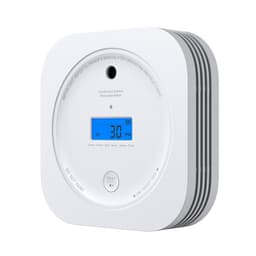
AEGISLINK AEGISLINK SC200

Best overall

AEGISLINK AEGISLINK SC200
7.7/10about £23.19
X-Sense X-Sense SC07

Alternative

X-Sense X-Sense SC07
8.6/10about £27.71
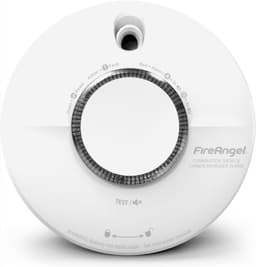
FireAngel FireAngel SCB10-R

Rank 3

FireAngel FireAngel SCB10-R
9.0/10about £29.99
On this page

One housing, two siting rules

A combination alarm has one position. The spots coincide when the appliance is in a room the maker allows. They do not coincide when the boiler is in a kitchen. On a typical English terrace the disc belongs on the landing ceiling, and it does not cover the kitchen. Safelincs lists the FireAngel SCB10-R as unsuitable for a kitchen or a garage. If you are still choosing, use the buying guide.

Ceiling, 300 mm, and not the kitchen

Put a smoke alarm on the ceiling in the hall or landing, at least 300 mm from a wall or a light. A bedroom is a poor place for the SCB10-R if the green flash faces the pillow. Kitchens and bathrooms are out, because steam sets a smoke sensor off. A garage title on a Kitire listing is not permission: one reviewer found a do-not-install line in the manual. The X-Sense SC07’s holes sit the body about 15 degrees off level.
AEGISLINK AEGISLINK SC200

Testsieger

AEGISLINK AEGISLINK SC200
7.7/10about £23.19

One to three metres from the appliance

Approved Document J wants the carbon monoxide alarm in the same room as the appliance: at least 300 mm from a wall on the ceiling, or high on the wall but not within 150 mm of the ceiling, and 1–3 m from the appliance. If it is in a cupboard, site the alarm just outside, still in the room. The SCB10-R manual prints no alarm before 120 minutes at 30 ppm, and an alarm between 60 and 90 minutes at 50 ppm. That window is part of BS EN 50291-1, not a reason to fit the disc in a banned kitchen.

Twist on, test, and read the chirps

On the FireAngel SCB10-R, twist the alarm onto the baseplate. A green LED about every 40 seconds is standby. End of life is two chirps and an amber LED twice every 40 seconds. The test pattern is three long sounds, then four short sounds. Press test after fitting, then monthly.

When to stop and call someone

If the carbon monoxide pattern sounds and you did not press test, get everyone into fresh air and stay out. Call NHS 111 for suspected exposure, and 999 if breathing is difficult or someone is confused, unconscious, weak, or has chest pain. The gas emergency number is 0800 111 999. Call an electrician for mains interlink. None of these amazon discs is that system. In a rented home, report a failed alarm to the landlord. If the landing disc was the wrong buy, read combined versus separate alarms.

Common questions

Can one combination alarm on the landing cover the boiler?
No, if the boiler is in another room. The landing position is the smoke position for the stairs. Carbon monoxide placement for a fixed appliance is in the appliance room, 1–3 m from it. A FireAngel SCB10-R is also barred from kitchens and garages on the Safelincs listing, so it cannot be the kitchen carbon monoxide alarm even if you wanted one disc to do both. Add a separate carbon monoxide alarm where the fuel burns.
Should a combination alarm go on the ceiling or the wall?
Use the ceiling for the smoke role: centre of the hall or landing, at least 300 mm from walls and lights. In the appliance room, Approved Document J allows the ceiling, at least 300 mm from a wall, or high on the wall but not within 150 mm of the ceiling, and 1–3 m from the appliance. Follow the manual if it is stricter. A bedroom ceiling is still a bad night’s sleep if the green flash faces the bed.
How far from the boiler, fire or stove?
Between 1 m and 3 m horizontally, in the same room, for the carbon monoxide position in the Approved Document J note. Closer than 1 m can sit in a plume the standard is not aiming at. Further than 3 m, or through a closed door, is no longer that position. If the appliance is inside a cupboard, site the alarm just outside it, still in the room, where you will hear it.
Why keep it out of the kitchen and the garage?
Cooking steam and smoke set off an optical or photoelectric sensor, which is why fire services specify a heat alarm in the kitchen. Garages bring exhaust and dust, and maker instructions often ban them. The FireAngel is listed as unsuitable for both rooms. A Kitire title that says garage still produced a review quoting a manual line not to install it there. Put this combo in a listed room, and cover the kitchen with a heat alarm plus a carbon monoxide alarm if fuel burns there.
How do I tell a test from an alarm from end of life?
A test is the pattern you start with the button. On the SCB10-R manual that is three long sounds, then four short sounds. An unwanted carbon monoxide alarm is that hazard’s sound when nobody pressed test, and you leave the building. End of life on this listing is two chirps and amber twice every 40 seconds, after which you replace the sealed unit. Do not use a chirp code from a different FireAngel model.

Related pages

Sources

Public UK sources from the research digest, last checked on 19 October 2026. Prices, stars, and review counts are the amazon.co.uk lines captured that day.

  1. GOV.UK — Smoke and Carbon Monoxide Alarm (England) Regulations, landlord booklet (retrieved 19 October 2026)
  2. Approved Document B, volume 1, dwellings (retrieved 19 October 2026)
  3. Approved Document J circular, 2022 (retrieved 19 October 2026)
  4. Scottish Government — fire and smoke alarms in Scottish homes (retrieved 19 October 2026)
  5. Department for Communities — Northern Ireland private-tenancy alarms, 2024 (retrieved 19 October 2026)
  6. NHS — carbon monoxide poisoning (retrieved 19 October 2026)
  7. FireAngel SCB10 datasheet (retrieved 19 October 2026)