Independent comparisons. We may earn from shop links. More info

How to fit a mini smoke alarm

Updated: 20 October 2026

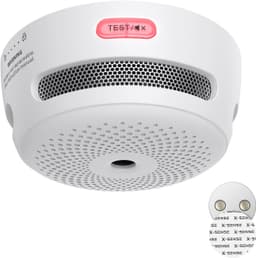
You can reach the ceiling, the alarm in your hand is a battery mini, and the pad in the box looks quicker than a drill. How to fit a mini smoke alarm is mostly about keeping that disc on the ceiling in the hall, where it can still be heard with the doors shut. A pad that lets go is an alarm that is not there. Screw it up, at least 30 cm from walls and lights, press the test button until it sounds, and replace the sealed unit when it chirps or by 10 years. Which model to buy is on the [Mini smoke alarm](/hub/fire-protection/mini-smoke-alarm) comparison. Products Compared used London Fire Brigade, Fire Kills, the Scottish Fire and Rescue Service, and the NFCC, plus the amazon.co.uk listings in this set, on 20 October 2026. This is not a lab test. A qualifying Amazon purchase can earn a commission at no extra cost to you.

You can reach the ceiling, the alarm in your hand is a battery mini, and the pad in the box looks quicker than a drill.

Our top picks

Heiman Heiman HS1SA 1-pack

Best overall

Heiman Heiman HS1SA 1-pack
8.8/10about £19.99
X-Sense X-Sense XS01 magnetic

Alternative

X-Sense X-Sense XS01 magnetic
8.2/10about £16.99
Wisualarm Wisualarm S05-A

Best value

Wisualarm Wisualarm S05-A
8.4/10about £11.99
On this page

Where to put a mini smoke alarm

Put it on the ceiling in the hall or on the landing, as near the centre of that escape route as you can. Fire Kills asks for at least one alarm on every level of the home, in the middle of the hall or landing, and not in or near a kitchen or a bathroom. The Scottish Fire and Rescue Service and B&Q's generic battery-alarm guide both use the same clearance: about 30 cm from walls, lights, doors, and vents. That gap matters on a mini as much as on a full-size disc, because a sensor tucked against a cornice or a warm lamp is sampling the wrong air. Bedrooms can take an extra alarm. Fire Kills treats that as an addition, not as a substitute for the hall. London Fire Brigade is blunt that one alarm in the hall is not enough if other rooms can start a fire. You should still hear the hall alarm with the bedroom door closed. If the leaflet in your box allows a wall, follow that leaflet. Do not invent a wall position the manufacturer did not allow. A kitchen still needs a heat alarm, to BS 5446-2, which this category does not sell. Cooking fumes and bathroom steam are why smoke alarms are kept out of those rooms. If you hush a mini every time the kettle boils, it is in the wrong place.

Screws, pads, and glue

London Fire Brigade's line is "screw, don't glue". Glue can seep into the alarm and stop it working. That rules out a blob of adhesive you happened to have in a drawer, even on a rental ceiling you would rather not mark. A magnetic pad or a 3M sticker is not the same as glue, and several titles in this set lead with a no-drill fit. It is still the spare method. Pads in this comparison let go on some ceilings. The X-Sense magnetic listing, ASIN B0DCP18HBH, says the pad works best above 15 °C. You warm the surface for one to three minutes, then press for 30 seconds. A cold landing in January is a poor bet for that pad. At least one UK review says the adhesive was not sticky enough. Use the screws and plugs where the box includes them. The X-Sense screw-mount listing, ASIN B0FS655X7L, is a bracket, screws, and plugs, with no pad on that page. The Heiman HS1SA one-pack includes a bracket, screws, and dowels. The Wisualarm S05-A offers a 3M sticker or screws. The Daytech two-pack offers a magnetic pad or a screw kit. If both are in the box, screw it. A pad is reasonable only on a clean, dry, warm ceiling, and you should still know that it can fail. Which of those boxes you ordered is on the best mini smoke alarm page. Do not glue. If the only fixing you were offered is a sticker, and the ceiling is painted, cold, or textured, buy a listing that includes screws or stop.
Heiman Heiman HS1SA 1-pack

Testsieger

Heiman Heiman HS1SA 1-pack
8.8/10about £19.99

Fit the base and test it

Read the leaflet before you drill. The sequence below is the generic one B&Q describes for a battery alarm, not a promise about the twist direction on your model. Choose the spot. Check for cables and pipes before you make a hole. A mini still needs plugs in a plasterboard ceiling, and a cable you nick is a worse afternoon than a pad. Mark through the base, fit the plugs, and screw the base so it sits flat. Seat the alarm until it locks the way the leaflet shows. If the head will not lock, as one UK review of the newer Heiman listing described, do not leave it balanced on the disc. Press the test button and hold it until the alarm sounds. Do that on the day you fit it, and at least monthly after that. Fire Kills is the source for the monthly test. In a rented home in England, the NFCC says the tenant does that test during the tenancy. The landlord's repair duty, after a report, runs from 1 October 2022. A hush press must silence a nuisance alarm and then return the unit to watching. It must not leave the alarm off. A regular chirp on a sealed unit means replace the alarm, not the cell. You cannot slide in a fresh AAA pack the way you can on the Yezala, which UK reviews say takes three AAA cells. On a Heiman, an X-Sense, a Wisualarm, or a Secair, the 10-year cell is sealed. A chirp at five months, which one UK review reported on a Secair bought in May 2026, is the end of that unit.

When to replace it, and when to get help

Replace the whole alarm at 10 years, or by the date printed on the base, even if the button still beeps. The National Fire Chiefs Council says the sensor ages. A test-button beep at year ten proves the sounder, not that the sensor can still see smoke. Some X-Sense reviews praise a date on the unit so you can read the replacement year without guessing. If your alarm has no date, write the fitting month on the base with a marker you can still read from the landing. Do this yourself only if you can reach the ceiling safely and the alarm is battery-powered. If you need a ladder you do not trust, stop. Ask the local fire and rescue service about a home safety visit, where one is offered. Call an electrician for mains alarms, for a panel, and for an HMO. This page does not describe wiring. A Grade D2 system in a new house, or an interlinked set in Scotland, is not a mini you twist onto a sticky pad. If the alarm chirps inside the 10-year claim, replace it rather than waiting for the printed date. Early chirps are common in the UK reviews for this set. A caravan ceiling, damp storage, and carbon monoxide are on mini smoke alarm for caravans.

Common questions

Where on the ceiling should a mini smoke alarm go?
In the hall or on the landing, as close to the centre as you can, at least 30 cm from walls, lights, doors, and vents. That spacing is the Scottish Fire and Rescue Service figure, and B&Q uses the same 30 cm from a wall or a light. Follow the leaflet if it allows a wall. Keep it out of the kitchen and the bathroom.
Can you fit a mini smoke alarm in a bedroom?
Yes, as an extra. Fire Kills treats a bedroom alarm as an addition to the alarm on every level, not as a replacement for the hall or landing. You should still hear the escape-route alarm with the doors closed. London Fire Brigade says one hall alarm is not enough on its own if other rooms can start a fire.
Should you use the magnetic pad or the screws?
Use the screws. Pads in this set let go on some ceilings, and the X-Sense magnetic listing wants the surface above 15 °C. Screw listings and screw packs are in the same comparison, including the Heiman one-pack and the X-Sense screw-mount XS01. A pad is a spare method on a clean, dry, warm ceiling, not the fixing this page recommends first.
Why does London Fire Brigade say not to glue an alarm?
Because glue can seep into the alarm and stop it working. Screw it to the ceiling instead. A factory 3M sticker is not an excuse to add your own adhesive. If the sticker is all the box offers and you do not trust it, choose a model that includes screws.
How do you test a sealed mini, and how often?
Press and hold the test button until the alarm sounds, on the day you fit it and at least once a month. Fire Kills sets that interval. In an English rental the tenant does the monthly test, and the landlord repairs after a report. A hush button should not leave the alarm switched off. The beep shows the sounder works. It does not prove the sensor will still see smoke in ten years.
What does a chirp mean on a 10-year sealed alarm?
It means replace the whole alarm. The cell is not a shop battery you can change. UK reviews in this set include chirps at a few months and at one to three years, inside the 10-year claim. A regular chirp is a fault, not a reminder you can ignore until the printed date.
When do you replace the whole unit even if the button still works?
At 10 years, or by the date on the base, whichever the leaflet and the NFCC point you to. The sensor ages even when the test button still beeps. Replace it sooner if it chirps, if it will not lock onto the base, or if it fails to sound when you test it. If you cannot reach the ceiling, ask the local fire and rescue service about a home safety visit rather than balancing on a chair.

Related pages

Sources

Public UK sources used for the rules and fitting advice on this page, last checked on 20 October 2026.

  1. Smoke and Carbon Monoxide Alarm (England) Regulations 2015, regulation 4 (retrieved 20 October 2026)
  2. GOV.UK: The Smoke and Carbon Monoxide Alarm (England) Regulations 2015, Q&A for landlords (retrieved 20 October 2026)
  3. GOV.UK: Fire safety, Approved Document B (retrieved 20 October 2026)
  4. Scottish Government: Fire and smoke alarms in Scottish homes (retrieved 20 October 2026)
  5. The Renting Homes (Fitness for Human Habitation) (Wales) Regulations 2022, regulation 5 (retrieved 20 October 2026)
  6. Northern Ireland: smoke, heat and carbon monoxide alarms in private tenancies (retrieved 20 October 2026)
  7. London Fire Brigade: smoke alarms and heat alarms (retrieved 20 October 2026)
  8. Fire Kills: detecting a fire (retrieved 20 October 2026)