How to fill holes in a wall
A picture has come down and you want the hole flat before the next coat of emulsion. This is how to fill holes in a wall when the damage is a shallow interior nick or a short crack, not a void and not a crack a surveyor should see. Clean the edges, press ready-mixed paste in layers, wait until it is dry through, then sand and paint. The pastes are on the [surface filler comparison](/hub/fillers-adhesives-and-sprays/surface-filler). A plasterboard hole with nothing behind it belongs on [filler for plasterboard joints](/hub/fillers-adhesives-and-sprays/surface-filler/sub/surface-filler-plasterboard). Shelf prices on the comparison are from 15 October 2026. The Products Compared editorial team did not run a lab test.
A picture has come down and you want the hole flat before the next coat of emulsion.
A picture has come down and you want the hole flat before the next coat of emulsion. This is how to fill holes in a wall when the damage is a shallow interior nick or a short crack, not a void and not a crack a surveyor should see. Clean the edges, press ready-mixed paste in layers, wait until it is dry through, then sand and paint. The pastes are on the surface filler comparison. A plasterboard hole with nothing behind it belongs on filler for plasterboard joints. Shelf prices on the comparison are from 15 October 2026. The Products Compared editorial team did not run a lab test.
Our top picks
| Badge | Product | Stated fill depth | Stated dry time | Interior or exterior | Note | Price | Offer |
|---|---|---|---|---|---|---|---|
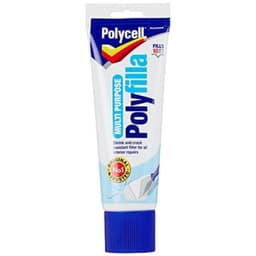
| Best overall |  Polycell Polycell Multi-Purpose Polyfilla 330 g | Not stated | Full cure 2 hours | Not stated | 8.9 | about £3.49 | View offer |
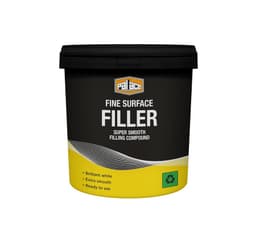
| Best value |  Palace Palace Fine Surface Filler 600 g | Layers of no more than 3 mm | Not stated | Interior | 8.1 | about £1.25 | View offer |
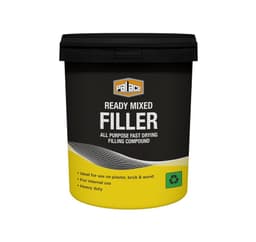
| Alternative |  Palace Palace Langlow Ready Mixed Filler 1 kg | Layers no thicker than 10 mm | Surface-dry 1–2 hours; up to 24 hours at 20°C | Interior; not exposed exterior | 8.7 | about £6.99 | View offer |
On this page
Which holes this method is for
Clean the hole and the surface
Fill in layers and let each one dry
Sand, then paint
When to patch or call someone
Common questions
Should I clean the hole before I fill it?
Can I fill a deep hole in one go?
How long do I wait before I sand?
Can I paint the filler the same day?
When should I stop and call someone?
Related pages
Sources
Public UK sources used for this comparison. Listing prices are from amazon.co.uk on 15 October 2026.
- Polycell — Multi Purpose Polyfilla Ready Mixed (retrieved 15 October 2026)
- Palace Chemicals — Ready Mixed Filler TDS (28 October 2024) (retrieved 15 October 2026)
- Toupret UK — powder versus ready-to-use (retrieved 15 October 2026)
- HSE — sanding taped plasterboard joints (retrieved 15 October 2026)
- NHBC — Cracking in your home (retrieved 15 October 2026)
- BBC — cracks in walls (retrieved 15 October 2026)
- Consumer Rights Act 2015, section 9 (retrieved 15 October 2026)
- Checkatrade — how to fill holes in a wall (retrieved 15 October 2026)