Wall filler buying guide: depth first
You have a picture hook to fill before the room is painted, or a hairline beside a door, and the tubs on amazon.co.uk all look like the same white paste. This wall filler buying guide starts from that hole. Depth comes first, then indoors or outside, then the surface, then the pack. The eight ready-mixed listings on the [surface filler comparison](/hub/fillers-adhesives-and-sprays/surface-filler) are the set, with shelf prices from 15 October 2026, not a live re-check. Named buy-this-if lines are on [best fine surface filler](/hub/fillers-adhesives-and-sprays/surface-filler/sub/surface-filler-best). Listed prices there run from about £1.25 to about £21.00. The Products Compared editorial team did not run a lab test.
You have a picture hook to fill before the room is painted, or a hairline beside a door, and the tubs on amazon.co.uk all look like the same white paste. This wall filler buying guide starts from that hole.
You have a picture hook to fill before the room is painted, or a hairline beside a door, and the tubs on amazon.co.uk all look like the same white paste. This wall filler buying guide starts from that hole. Depth comes first, then indoors or outside, then the surface, then the pack. The eight ready-mixed listings on the surface filler comparison are the set, with shelf prices from 15 October 2026, not a live re-check. Named buy-this-if lines are on best fine surface filler. Listed prices there run from about £1.25 to about £21.00. The Products Compared editorial team did not run a lab test.
Our top picks
| Badge | Product | Stated fill depth | Interior or exterior | Pack size | Note | Price | Offer |
|---|---|---|---|---|---|---|---|
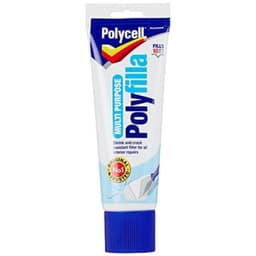
| Best overall |  Polycell Polycell Multi-Purpose Polyfilla 330 g | Not stated | Not stated | 330 g | 8.9 | about £3.49 | View offer |
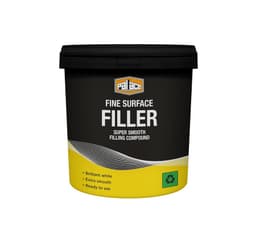
| Best value |  Palace Palace Fine Surface Filler 600 g | Layers of no more than 3 mm | Interior | 600 g | 8.1 | about £1.25 | View offer |
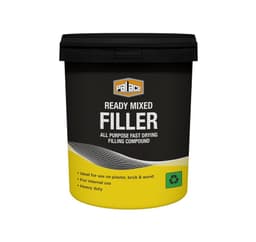
| Alternative |  Palace Palace Langlow Ready Mixed Filler 1 kg | Layers no thicker than 10 mm | Interior; not exposed exterior | 1 kg | 8.7 | about £6.99 | View offer |
On this page
Start with the depth of the hole
Interior, exterior, and gaps that move
Match the paste to the surface
Pack size and what the reviews actually show
When not to buy filler
Common questions
How do I choose wall filler if I only know the hole?
Can I use the same tub indoors and outdoors?
Is a 330 g tube enough for a room of cracks?
When is a moving skirting gap a sealant, not filler?
Does a high star rating on six reviews mean it is the better tub?
Related pages
Sources
Public UK sources used for this comparison. Listing prices are from amazon.co.uk on 15 October 2026.
- Polycell — Multi Purpose Polyfilla Ready Mixed (retrieved 15 October 2026)
- Palace Chemicals — Ready Mixed Filler TDS (28 October 2024) (retrieved 15 October 2026)
- Toupret UK — powder versus ready-to-use (retrieved 15 October 2026)
- HSE — sanding taped plasterboard joints (retrieved 15 October 2026)
- NHBC — Cracking in your home (retrieved 15 October 2026)
- BBC — cracks in walls (retrieved 15 October 2026)
- Consumer Rights Act 2015, section 9 (retrieved 15 October 2026)
- Checkatrade — how to fill holes in a wall (retrieved 15 October 2026)