Independent comparisons. We may earn from shop links. More info

How to use a caulking gun so the bead stops

Updated: 2026-10-23

You have a gun and a cartridge, and the last bead trailed silicone past the joint because the piston stayed under pressure. How to use a caulking gun is a sequence: cut a small hole, pierce the inner seal, load, prime on scrap, lay the bead, and hit the release the moment you stop, unless a drip-stop unloads the piston for you. Frames and prices are on the [caulking gun comparison](/hub/fillers-adhesives-and-sprays/caulking-gun). Updated 21 October 2026 from amazon.co.uk listings and public UK sources. No lab test. A qualifying purchase can earn a commission at no extra cost to you.

You have a gun and a cartridge, and the last bead trailed silicone past the joint because the piston stayed under pressure.

Our top picks

On this page

Before the gun is loaded

The joint decides the bead more than the trigger does. Cut out the failed sealant so the new cartridge meets a clean edge, then dry the gap. Mask both sides when the edge is acrylic or a visible tile line, and pull the tape after you have tooled, while the surface is still workable. Read the safety data sheet on the cartridge. HSE guidance on isocyanates is about the product, not the frame: ventilate, wear the gloves the sheet names, and treat sprayed polyurethane as a different exposure from a bathroom bead. Below about 10°C sealant stiffens, so a cartridge from a shed wants time indoors. If the steel twisted on the first squeeze, the Consumer Rights Act 2015 gives you 30 days to reject goods that are not of satisfactory quality.

Cut, pierce and load

Cut less than you think. Coral's bullets describe an angle of about 45 degrees. Start with a small opening, because you can trim again and you cannot put plastic back. UK trade pages load a 310 ml cartridge nozzle-first: press the release, draw the rod back, seat the nozzle end, and stop at the first resistance. Some American brand pages teach a heel-first load. Use nozzle-first on a UK ratchet gun of the Coral type. Pierce the inner foil before you expect sealant. Pressurising an unpierced foil dumps a burst once the foil gives. Then bring the rod up until the piston meets the cartridge, and prime with two or three short pulls onto scrap cardboard. Loading is finished when sealant appears as a steady thread. If nothing appears, the nozzle is still closed, the foil is still intact, or the piston is not seated.

The bead and the stop

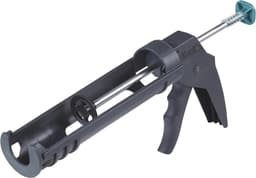
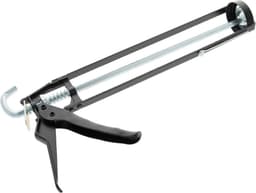
Move the gun as you squeeze, with the nozzle leading and the handle lifted slightly so the cut face beds into the joint. The hole size and your speed set the bead. On a basic skeleton the stop is your thumb: keep it on the release tab, let go of the trigger, and leave it there so the rod can spring back. Coral describes a release arm. If you only let go of the trigger, the piston stays loaded and the cartridge keeps extruding. A drip-stop on the MG 100 or MG 200 unloads the piston when you release the trigger. Everbuild's bullets call the Power Pro dripless. The WORKPRO uses a red button on a smooth rod. One MG 200 reviewer reported a stop that worked at first and later did not. If yours has gone quiet, use the manual release.

Tool the joint, then know when to stop

The gun does not finish the bead. A profile tool or a wetted finger pulls the sealant into the joint and strikes the surplus off. Do it before a skin forms. Pull the masking tape once the edge is struck. Cure time belongs on the cartridge sheet. This page will not promise a shower-safe hour. Stop treating it as a gun problem when water is already coming through a shower, a ceiling or the floor below. Stop when the joint is specified for fire, glazing or structural movement, or when the safety data sheet asks for respiratory protection. If the tube will not enter the cradle, the sequence never starts. A frame that bends on first use goes back under the 30-day right to reject.

Common questions

Do you pierce before or after the rod is hard against the piston?
Pierce the foil before you put full pressure on the cartridge. On a UK ratchet gun the order is release, rod back, nozzle seated, foil pierced, then the piston brought up to the plunger. Pressurising an unpierced foil is how a burst covers the worktop. If the rod is already hard home and nothing is coming, release the pressure before you hunt for the foil.
Should you load nozzle-first or heel-first?
Nozzle-first is the UK load for a 310 ml cartridge: nozzle into the frame, stop at first resistance, then prime. Heel-first appears on some American brand pages. Use nozzle-first on a standard UK skeleton unless your gun is built around a different seat. The test is scrap card. Sealant should appear as a thread, not as a pop.
How do you stop the ooze on a basic skeleton gun?
Put your thumb on the release tab, let go of the trigger, and keep the thumb there so the rod springs back. That is the stop on a Coral release arm, a G4GADGET or ProDec Advance clip, and a Roughneck quick release. If you only let go of the trigger, the ratchet holds the piston and the cartridge keeps moving. Wipe after the pressure is off, then tool the bead.
What changes if the gun has a drip-stop?
Wolfcraft's drip-stop, and Everbuild's dripless wording, are meant to unload the piston when you release the trigger. The WORKPRO's red button is the control on that smooth-rod gun. You still cut, pierce, prime and tool. A worn stop can still leave a tail, which is why some MG owners pull the rod back. The feature releases pressure. It does not guarantee a clean line on acrylic.
When is the job no longer a gun problem?
When water is already through the floor or across a ceiling, when the joint is a specified fire, glazing or movement joint, or when the safety data sheet needs more ventilation than the room allows. A bent frame on first use is a Consumer Rights Act rejection. An empty bead from an uncut nozzle or an unpierced foil is still a sequence problem, and a new frame will not open that foil.

Related pages

Sources

Public UK sources used for this comparison. amazon.co.uk prices, stars and review counts were taken from the listings on 21 October 2026.

  1. BuildWiz UK, sealant gun types (retrieved 21 October 2026)
  2. Wolfcraft MG 100 (retrieved 21 October 2026)
  3. Wolfcraft MG 200 (retrieved 21 October 2026)
  4. Sika UK, Power Pro (retrieved 21 October 2026)
  5. BS EN ISO 11600 via BSI (retrieved 21 October 2026)
  6. General Product Safety Regulations 2005 (retrieved 21 October 2026)
  7. Consumer Rights Act 2015, section 22 (retrieved 21 October 2026)
  8. HSE, isocyanates (retrieved 21 October 2026)