Independent comparisons. We may earn from shop links. More info

Pneumatic vs manual caulking gun

Updated: 23 October 2026

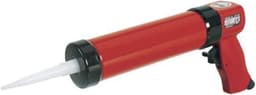
Your wrist is the complaint, usually halfway through a thick grab adhesive. A pneumatic vs manual caulking gun decision is about whether air will actually remove that squeeze. It will, if a compressor, a hose, and a regulator are already part of the work. It will not, if you still have to buy the air supply for a single bathroom bead. We compared the two drives using UK prices for high-ratio manual guns and UK review themes on the Clarke in our [air caulking gun comparison](/hub/fillers-adhesives-and-sprays/air-caulking-gun). If you buy through our links, we may earn a commission at no extra cost to you.

Your wrist is the complaint, usually halfway through a thick grab adhesive. A pneumatic vs manual caulking gun decision is about whether air will actually remove that squeeze.

Our top picks

On this page

What your hand is being asked to do

A manual gun multiplies your grip through a thrust ratio. A cheap skeleton gun is often a low ratio. A 12:1 or 25:1 gun is a different lever. Newborn, a US maker, points higher ratios at thick polyurethane. That is a rule of thumb, not a British Standard. UK shops list Concept 25:1 guns in the low £20s to about £30 including VAT. They need no compressor, and a decent model still stops the plunger with a thumb release. One cartridge of sanitary silicone is a few minutes. A day of window frames or van seals is when people look at air. Clarke reviewers wanted the air gun because thick adhesive and long beads were hard on the hands. That case still assumes the compressor is there.

What an air gun changes

An air gun moves the force off your hand and onto the compressor. You still steer the nozzle and tool the joint. You add a hose, a regulator, and the limit in that gun’s manual. Evercoat’s technical note says some products are specified for a rod-driven gun only. If the adhesive sheet says manual or rod drive, follow the sheet. Clarke reviewers praise the lower effort, then describe full-flow triggers, end caps that lose their thread, and cartridges that will not seal if they are dented. How to set the regulator and load the tube is on how to use an air caulking gun. If you have no compressor, buy the 25:1 manual gun.

Drips are a release problem on both

Air does not mean a dripless gun. Drip is leftover pressure behind the plunger after you have stopped asking for sealant. A manual gun dumps that pressure with a thumb lever or a rod release. An air gun dumps it if the design exhausts when you release the trigger. Graco describes an instant exhaust on its Power Caulk. COX fits a thumb release on manual high-ratio guns. A basic direct-air gun may do neither until you close a regulator and bleed the line. On a manual gun the release is the thumb. On an air gun it is the trigger plus a regulator set low enough that the bead was controllable on scrap. The pneumatic caulking gun buying guide is where you check that the air gun states a pressure.

When to pick which

Stay with a manual gun, preferably a real 12:1 or 25:1 with a pressure release, when the job is one bathroom or a few cartridges a year, when you have no compressor, or when the adhesive sheet asks for rod drive. Pick air when the compressor is already part of the day and the hand is the limit: many cartridges, thick polyurethane or grab adhesive, or long silicone runs. Among the air listings we kept, the Clarke is the one with UK review text about that effort saving, at £26.99.

Common questions

Is a 25:1 gun enough for grab adhesive?
Often, yes, for occasional cartridges, which is why UK shops sell 25:1 guns in the low £20s to about £30. Newborn’s ratio chart is a rule of thumb from a US maker, not a UK requirement, and it does point high ratios at thick material. If a 25:1 still stalls on the adhesive you use every day, and a compressor is already in the workshop, that is the moment air earns its hose. If the product sheet says rod-driven only, stay with the manual gun the sheet names.
When does air actually save my wrist?
When you are repeating a stiff cartridge and the compressor is already connected. Clarke reviewers describe less effort on thick adhesive, van seals, resin, and long silicone beads, including where arthritis or one-arm use made a manual gun miserable. Air does not help a single easy silicone bead if you spent the morning setting up a compressor you do not otherwise use. The regulator is part of the saving. Full trigger pressure just moves the strain into a mess you then have to tool off.
Do I still get drips with air?
You can. Drips follow trapped pressure. Some air guns exhaust when the trigger is released, and some Clarke users report little ooze. Others hiss, spit, or empty the tube because the regulator is too high or the cartridge is not sealed. A manual thumb release prevents drips only if you use it. Neither drive is dripless by definition.
What if I do one bathroom a year?
Use a manual gun. The setup of hose, regulator, and compressor dominates a short job, and a 25:1 gun is enough for a basin and a bath if the sealant is ordinary sanitary silicone. Air pays back when the cartridge count climbs or the material is too stiff for your hand. One bead is a poor reason to buy either the Clarke or a thirstier trade gun.
What if the adhesive maker says rod-driven only?
Follow the sheet. Evercoat’s note on manual versus pneumatic guns says some products need a rod-driven dispenser, because air pressure is a different way of applying force. Using an air gun against that instruction can wreck the mix or the cure, and it is not a shortcut the thrust ratio will fix. If you are unsure, the technical data sheet beats a forum tip.

Related pages

Sources

Public UK sources used for this comparison. amazon.co.uk prices, stars and review counts were taken from the listings on 19 October 2026.

  1. HSE HSG39, compressed air safety (retrieved 19 October 2026)
  2. Pressure Systems Safety Regulations 2000 (retrieved 19 October 2026)
  3. Control of Noise at Work Regulations 2005, regulation 4 (retrieved 19 October 2026)
  4. HSE, isocyanates in construction (retrieved 19 October 2026)
  5. Clarke CAT82B product page (retrieved 19 October 2026)
  6. Clarke CAT82B manual (retrieved 19 October 2026)
  7. Chicago Pneumatic CP9885 (retrieved 19 October 2026)
  8. COX AirFlow 3 310 ml (retrieved 19 October 2026)