Independent comparisons. We may earn from shop links. More info

Lawn weed and feed vs feed only

Updated: October 2026

Clover in the grass, moss under the hedge and thin worn patches can look like one problem. A weedkiller, an iron moss treatment and a feed-only fertiliser do different jobs. This lawn weed and feed vs feed only page is the narrowest treatment that fits. The wider range, including the top pick and the best value, is in our [Wolf Garden lawn fertiliser comparison](/hub/fertiliser-soil-and-bark-mulch/wolf-garden-lawn-fertiliser). Use a killer only for a problem named on its authorised label. If the lawn is only pale or sparse, feed alone may be enough. A qualifying purchase can earn us a commission at no extra cost to you.

Clover in the grass, moss under the hedge and thin worn patches can look like one problem. A weedkiller, an iron moss treatment and a feed-only fertiliser do different jobs.

Our top picks

On this page

What each type of lawn treatment does

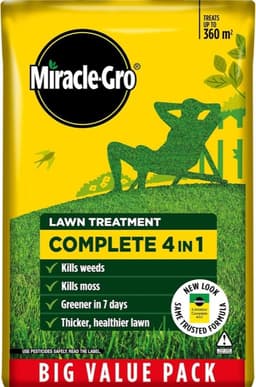
Weed-and-feed supplies nutrients and a selective herbicide for named broad-leaved weeds. WOLF-Garten SQ 120 is described as 0.8% 2,4-D and 0.12% dicamba. Miracle-Gro Complete 4 in 1 is a weed-and-moss treatment for April to September. Coverage and conditions come from the current UK box. Iron is a different job. WOLF-Garten SW 100 lists 14% nitrogen, 5% potassium oxide and 6% iron. It feeds and acts on moss. It is not a broad-leaved weedkiller. Iron sulphate blackens moss. That is the treatment, not burnt grass, and the dead moss still has to be raked out. Feed-only products do not promise to kill weeds or moss. Westland SafeLawn adds grass seed, and its fact sheet says it does not kill either. The type choice is on the buying guide.

The UK label and authorisation rule

In Great Britain or Northern Ireland, a pesticide must be authorised for the place and the purpose, including a product brought in from elsewhere. The label should show the authorisation, such as a MAPP number, with actives, precautions, dose and conditions. The listings used here do not establish a UK MAPP number for either WOLF-Garten box. Some 2,4-D and dicamba products are for professional amenity turf only. If a stored weedkiller is no longer in the HSE garden products database, HSE says it is probably no longer authorised and illegal to use. Do not raise the dose or mix products. German-market reviews do not settle the UK label. If authorisation is unclear, use a clearly labelled UK product or feed only.

Moss needs removal and a change in conditions

An approved mosskiller treats what you can see. Iron sulphate turns moss black. Rake it out afterwards so grass has light and air. Some Miracle-Gro listings say about two weeks. Your label takes priority. The RHS says moss control is temporary if the conditions stay the same. Compaction, poor drainage, shade and close mowing favour its return. Aeration, a higher cut or a shade-tolerant mix can matter more than another iron dose. Plain feed does not kill moss. It can help grass thicken after you have removed the moss and improved the site. Seasonal feed is on the autumn lawn feed guide. Spreading faults are on the application guide.

Children, dogs and the narrower treatment

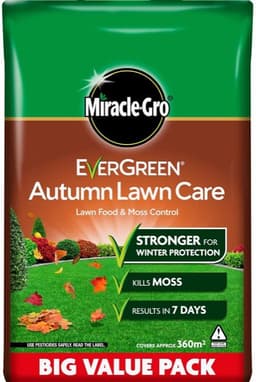
Many weed-and-feed and iron listings say to keep children and pets off until the granules are watered in and the surface is dry. Westland says the lawn may be used after application. Follow the pack. The best-value autumn listing uses the water-in and dry rule. The top pick's listing does not answer the pet question. An authorised domestic weedkiller is for broad-leaved weeds on its current UK label. Substantial moss needs an authorised moss treatment, then removal, then a change to moisture, shade or compaction. If an animal swallows granules, keep the packaging and call your vet. Animal PoisonLine is 01202 509000. Do not induce vomiting unless a vet tells you to.

Common questions

Do I need a weedkiller or only a feed?
Use feed only when the main issue is pale, slow-growing or sparse grass and you do not need to control a named weed. Consider a weedkiller when established broad-leaved weeds are the actual problem and the current UK label covers them. Feeding can strengthen turf, but it is not a direct substitute for herbicide.
Does lawn feed alone get rid of moss?
No. Feed may help grass recover and compete after moss has been removed, but it does not directly kill the moss. An approved iron-based product can blacken it for removal. Drainage, shade, compaction and mowing also need attention, or the moss is likely to return.
What is in WOLF-Garten SQ 120 and SW 100?
Available data describes SQ 120 as containing 0.8% 2,4-D and 0.12% dicamba. SW 100 is listed with 14% nitrogen, 5% potassium oxide and 6% iron. Check the UK pack, because online data may refer to another market.
Is there an authorisation number for the WOLF-Garten boxes?
The listing data used here does not establish a UK MAPP number for either WOLF-Garten box. That proves neither authorisation nor the lack of it. Check the label and the HSE database. Do not use either box as a domestic pesticide unless its UK authorisation and permitted use are clear.
How long after weed and feed can children and dogs use the lawn?
There is no universal interval. Many listings say to keep people and pets away until the treatment has been watered in and the lawn is dry, but the exact product label controls. Keep the pack available, apply only the stated dose, and prevent access for longer if visible granules remain.
Does Westland SafeLawn kill weeds?
No. Westland's fact sheet says SafeLawn does not kill weeds or moss. It combines lawn feed with grass seed, so its role is to encourage denser turf. Choose it for feeding and patch improvement, not when you need direct control of established weeds.
Why does moss turn black, and what should I do next?
Iron sulphate causes moss to blacken as it dies. Follow the pack timing, then rake out the dead material and help the grass recover. Treatment alone is temporary if shade, poor drainage, compaction or excessively close mowing continues to favour moss.

Related pages

Sources

Public UK and manufacturer sources used for this comparison; last accessed 15 October 2026.

  1. HSE: Pesticides in gardens and homes (retrieved 15 October 2026)
  2. GOV.UK: Pesticide approval (retrieved 15 October 2026)
  3. GOV.UK: Manufacturing and marketing fertilisers (retrieved 15 October 2026)
  4. RHS: Moss on lawns (retrieved 15 October 2026)
  5. RHS: Autumn lawn care (retrieved 15 October 2026)
  6. Animal PoisonLine: Fertilisers and pets (retrieved 15 October 2026)
  7. Westland SafeLawn fact sheet (retrieved 15 October 2026)
  8. WOLF-Garten: SQ 120 product page (retrieved 15 October 2026)