Independent comparisons. We may earn from shop links. More info

How to use organic liquid fertiliser on this bottle

Updated: October 2026

You already have a brown bottle in the shed and a 9 L can by the tap. How to use organic liquid fertiliser is the method on that pack: shake, measure the printed ratio, water moist compost, and stay inside the UK season on the label. It is not a ranking, and it is not a universal capful. The [organic liquid fertiliser comparison](/hub/fertiliser-soil-and-bark-mulch/organic-liquid-fertiliser) holds the nine listings. This page tells you how to apply the bottle you hold without copying 1:10 onto 1:500. We compared amazon.co.uk listings and public UK sources, and we did not run a laboratory test. A qualifying purchase can earn a commission at no extra cost to you.

You already have a brown bottle in the shed and a 9 L can by the tap.

Our top picks

On this page

Read this bottle's ratio before you fill the can

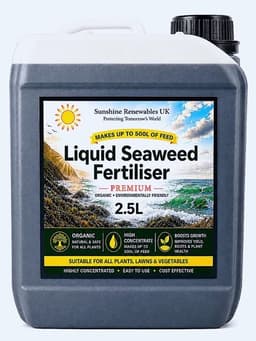
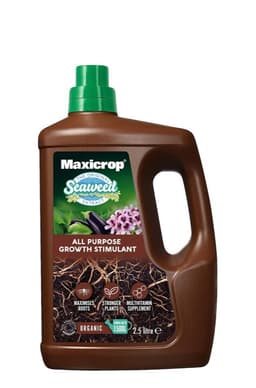
These nine listings are not one concentrate. Topline prints 1:10. Maxicrop 2.5 L prints 1:100 on Amazon. Sunshine 5 L and 2.5 L print 1:200. Sunshine iron prints 1:400. Shropshire prints 1:500. The lawn litre prints 1:10 or 1:20. The tomato litre prints 4:2:6 in the mixing-ratio field, which is not a water recipe. Vitax prints no mixing ratio in the attributes. One United Kingdom review says the rates are on the bottle and are not obvious. Maxicrop's two figures stay side by side. The amazon.co.uk field is 1:100. A maker Original label says 45 ml in 9 L, which is 1:200. This site does not pick a winner. Use the label on the bottle in your hand, not a screenshot from a sibling listing. Shropshire's 10 ml in 5 L belongs to Shropshire. Copying that onto Topline's 1:10 pack is how you burn foliage.

Measure into moist compost

If the compost is dry, water first and wait until it is moist. The Royal Horticultural Society says not to feed dry soil. Shake the bottle. Measure the printed dose into the can. Fill with water. Apply to the root zone, or spray the leaves only if that label allows foliar use. Rinse the can so the next crop does not inherit last week's mix. Choosing which bottle to buy sits on the organic liquid fertiliser buying guide. Which listing fits which job sits on best organic liquid fertiliser.

Drench, foliar spray, and a different lawn habit

Most of these bottles are a watering-can drench. Vitax names a root drench or a foliar spray. Sunshine iron names a watering can or a sprayer. Maxicrop 2.5 L says soil or plants. If the label allows a foliar spray, use cool hours, morning or evening, not midday sun on a July patio. Fine sprayers clog on some seaweed mixes. A watering can is the safer default when the listing does not force a spray. The lawn litre is every 4-6 weeks, not Topline's 7-14 day pot interval. Pet-friendly wording means as directed. Store the bottle closed, away from frost and children. The Maxicrop Original label range in the file is 0-30°C. If you are treating the Soil Association 2.5 L as a tomato feed, open seaweed fertiliser or liquid feed.

How often, how to store, when to stop

Topline prints every 7-14 days from March to August. The lawn litre prints every 4-6 weeks. There is no universal organic-liquid calendar. A heated room in January is not a July tomato. If the winter label is silent, do not invent a weekly dose. Stop when the plant is not growing, when the compost is dry, or when you have already used the printed interval. A worked mistake: you used Shropshire at 1:500, then poured that cap into Topline, whose field is 1:10. That can is far too strong. Read this bottle before the tap runs.

Common questions

How do I dilute organic liquid fertiliser?
Use the ratio on the bottle in your hand. In this set that runs from 1:10 to 1:500, plus a tomato field that is not a water ratio, plus a Vitax listing with no attribute ratio. Shake, measure, mix, apply to moist compost, and rinse the can. Do not copy a neighbour's cap across brands.
Foliar spray or watering can?
A watering-can drench is the default. Use a foliar spray only when that label allows it, and only in cool hours. Vitax and Sunshine iron name spray use. Fine nozzles clog on some seaweed mixes. If the listing is silent, stay with the can.
How often in a UK summer?
Follow the interval on that pack. Topline says every 7-14 days from March to August. The lawn litre says every 4-6 weeks. Other rows leave frequency to the bottle. Do not put a pot habit onto turf, or a lawn interval onto a weekly tomato can.
Can I use it in winter on houseplants?
Only if the label allows indoor use and a winter rate. Maxicrop 2.5 L asks about indoor use and does not answer in the capture. A heated room in January is not a July border. If the label is silent, do not invent a weekly winter dose.
Why does Maxicrop say 1:100 and 1:200?
The amazon.co.uk mixing field on the 2.5 L listing is 1:100. A maker Original label says 45 ml in 9 L, which is 1:200. This site copies both and does not reconcile them. Use the label on the bottle you hold.
Is it safe around pets once it is dry?
Pet-friendly wording means as directed, not that a pet may drink the concentrate. Store closed and away from children and pets. Do not walk on wet lawn feed because a bullet mentioned homes with children. If irritation continues after washing, get advice.
What if the bottle leaks?
Wipe the path, keep the bottle off pale stone, and contact the seller. The tomato litre has repeated spout-leak complaints. Sunshine iron has a spill report. The Consumer Rights Act 2015 covers a leaker or a mis-described pack.

Related pages

Sources

Public UK and maker sources from the research digest, used for this page in October 2026. Prices, stars and review counts are from the nine stored amazon.co.uk listings. A title that says organic is not a control-body certificate. The 4:2:6 tomato field is not an analysis from this site. Shropshire's 2,500 litre line and Sunshine's 500 litre line are listing arithmetic. A 5.0 from five reviews is not a crop trial.

  1. RHS, Seaweed products (retrieved October 2026)
  2. RHS, Biostimulants (retrieved October 2026)
  3. RHS, How to feed plants (retrieved October 2026)
  4. GOV.UK, Manufacturing and marketing fertilisers (retrieved October 2026)
  5. GOV.UK, Organic farming certification (retrieved October 2026)
  6. OF&G, Approved inputs (retrieved October 2026)
  7. SBM, Maxicrop NPK query (retrieved October 2026)
  8. Maxicrop Original label (retrieved October 2026)