Natural fertiliser buying guide: what to check first
A UK allotment in April can need a soil meal, a tomato pot a potash liquid, and a tired lawn a bottle that says grass, yet the listings still lead with natural. A natural fertiliser buying guide starts with that mismatch. This page is from Peter F., the DIY and tools editor, on 21 October 2026. The nine amazon.co.uk listings are on the [natural fertiliser comparison](/hub/fertiliser-soil-and-bark-mulch/natural-fertiliser), read with Royal Horticultural Society, Soil Association and GOV.UK pages. Nobody here ran a plot trial. A qualifying Amazon purchase can earn a commission at no extra cost to you. Check job, analysis or dilution, origin, and a named control body only if you need one.
A UK allotment in April can need a soil meal, a tomato pot a potash liquid, and a tired lawn a bottle that says grass, yet the listings still lead with natural.
A UK allotment in April can need a soil meal, a tomato pot a potash liquid, and a tired lawn a bottle that says grass, yet the listings still lead with natural. A natural fertiliser buying guide starts with that mismatch. This page is from Peter F., the DIY and tools editor, on 21 October 2026. The nine amazon.co.uk listings are on the natural fertiliser comparison, read with Royal Horticultural Society, Soil Association and GOV.UK pages. Nobody here ran a plot trial. A qualifying Amazon purchase can earn a commission at no extra cost to you. Check job, analysis or dilution, origin, and a named control body only if you need one.
Our top picks
| Badge | Product | Form | Dilution or ratio | Organic claim | Note | Price | Offer |
|---|---|---|---|---|---|---|---|
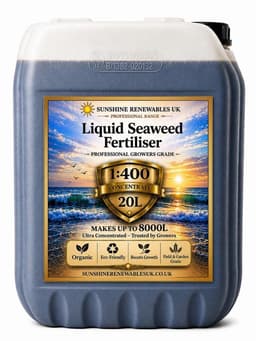
| Best overall |  Sunshine Renewables UK Sunshine Renewables seaweed 20 L | Liquid | 1:400 | No Soil Association or OF&G | 9.4 | about £59.99 | View offer |
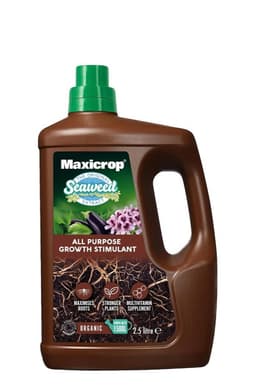
| Alternative |  Maxicrop Maxicrop seaweed 2.5 L | Liquid | 1:100 | Soil Association claimed | 9.2 | about £18.99 | View offer |
| Best value |  Topline Topline fish, blood and bone 8 kg | Granules | 1:0:0 | No Soil Association or OF&G | 9.2 | about £18.98 | View offer |
On this page
Start with the job, not the word natural
Read the analysis or dilution on that pack
Origin, diet, and a named mark
Form, pack, and the failure the reviews name
Common questions
Do I need a soil meal, a seaweed tonic, a tomato liquid, a lawn liquid, or an acer food?
What must the pack print besides the word natural?
Is organic in the title the same as Soil Association or OF&G?
Does a Soil Association Approved Input mean my crop is certified organic?
How do I compare a 1:100 bottle with a 1:400 bottle?
Are animal meals vegan, and do I have to read the ingredients on a seaweed blend?
Why is a cheap litre not always the cheaper feed?
Related pages
Sources
Public UK sources from the research digest, used for this page in October 2026. Prices, stars and review counts are from the nine amazon.co.uk listings captured on 19 October 2026. The card score is the star rating multiplied by 20, not a laboratory test. Westland's published fish, blood and bone analysis is an example on the maker's page, not the analysis of every sack here. A dog that eats bone meal needs a vet. This page does not state a poison dose.
- RHS, fertilisers (retrieved 19 October 2026)
- RHS, seaweed products (retrieved 19 October 2026)
- RHS, biostimulants (retrieved 19 October 2026)
- RHS, fertiliser labels explained (retrieved 19 October 2026)
- RHS, how to feed plants (retrieved 19 October 2026)
- GOV.UK, fertiliser from animal by-products (retrieved 19 October 2026)
- GOV.UK, organic food approved control bodies (retrieved 19 October 2026)
- Soil Association, approved and verified inputs (retrieved 19 October 2026)
- Westland, fish, blood and bone (retrieved 19 October 2026)