Independent comparisons. We may earn from shop links. More info

How to use mycorrhiza: root contact, then close the bag

Updated: October 2026

You are about to plant a bare-root rose, a pot-grown shrub, or a tray of tomatoes, and the pouch of fungi is already on the potting bench. How to use mycorrhiza in a UK garden is one contact application on living roots, no phosphate in the same hole, then a closed bag. This page is the procedure only. Which pouch to buy stays on the [mycorrhiza comparison](/hub/fertiliser-soil-and-bark-mulch/mycorrhiza). An old rose bed still needs a soil swap before you sprinkle.

You are about to plant a bare-root rose, a pot-grown shrub, or a tray of tomatoes, and the pouch of fungi is already on the potting bench.

Our top picks

On this page

Put it on the roots, not the soil surface

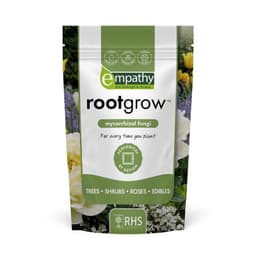
Open the hole no deeper than the roots and about three times as wide, the Royal Horticultural Society tree-and-shrub rule, then sprinkle granules or grains so they sit against the roots. Backfill with the soil you took out and water the plant. Do not water the pouch in from above. UK reviews on the Empathy 360 g listing call that surface spread a waste. The 360 g listing is granules. The Plantworks 150 g listing says powder, while reviews describe large grains. Treat both as a dry sprinkle. The RHS 150 g pouch says sprinkle at the bottom of the planting hole. Amazon copy on the 360 g page also mentions mixing into potting mix. Prefer contact, not a compost blend you hope will migrate. Empathy’s gel dip is a different pack, not one of the eight kept ASINs. With a dry pouch, sit the roots on the grains. Form choice is on mycorrhiza powder vs granules.

Skip phosphate in the same hole

Do not add Growmore, bone meal or another phosphate-rich fertiliser to the same hole. The RHS says phosphorus in general fertilisers and superphosphate can suppress the fungus. Rose-grower pages sometimes still tell you to put feed in the hole. Refuse that on planting day. Hungry crops in peat-free compost still need feeding later. If the soil is very poor, the RHS line is a season later, not in the same handful as the fungi. You will not see a result in a week. Brassicas, blueberries and rhododendrons are not rescued by a careful sprinkle. If roses already grew in that ground, swap the soil first. The dimensions sit on mycorrhiza for roses.

Bare roots, rootballs and pots

Bare roots: dampen them if they are dry, sit grains on the feeder roots, set the plant at the depth it grew, and backfill. For roses, keep the union at soil level, which is the RHS advice. On a pot-grown ball, tease the outer roots and sprinkle against that face, not only under a solid pot shape. In a container, use the same contact. Do not mix the whole compost bag and hope. TNC MycorrHydro is for named hydro systems. This page is not that how-to. Reviewers say it does not dissolve easily and can block a watering-can rose or a narrow line. Do not pour garden granules into a reservoir, and do not treat a rooting-powder title as cutting hormone. Call a professional for a compacted urban tree pit or for suspected honey fungus.

Close the pouch

Close the bag against humidity, keep it cool and dry, and keep it out of full sun. Reviews on the 360 g pouch say heat can damage the fungi. Reaching into an opened 150 g packet with soil on your fingers shortens what you can use later. A burst seam that spills pellets is a goods-not-as-described problem, not a reason to store granules in an open tray. The 360 g listing says use within 12 months of opening and, in another bullet, that there is no expiry date. Treat both as listing sentences. Wet leftovers are not worth sprinkling over the bed. Do not add a second handful next week.

Common questions

Do I sprinkle it in the hole or water it over the surface?
Sprinkle it so the product touches living roots, then water the plant. UK reviews say watering the granules in like liquid feed is waste. Surface spreading on the soil does not replace root contact.
Can I add Growmore or bone meal in the same hole?
No. The RHS says phosphorus in general fertilisers and superphosphate can suppress the fungus. Feed later if the soil is poor, especially on hungry crops in peat-free compost. The pouch is not a substitute fertiliser.
How do I treat a pot-grown rootball versus bare roots?
On bare roots, get grains onto the feeder roots before backfill. On a pot-grown ball, expose some outer roots and sprinkle against that face rather than only under a closed pot shape. Both need contact, not a ring of product in empty soil.
Is the gel dip the same as the dry pouch in this comparison?
No. Empathy’s gel-and-granule dip is a separate SKU and is not among the eight kept ASINs. With a dry pouch, sit or coat the roots on the grains. Do not invent a slurry from a 150 g garden pack.
When can I feed the plant later?
If the soil is very poor, the RHS line is a season later, not on planting day. Peat-free containers and hungry vegetables still need a normal feed programme after establishment. The inoculant does not replace that.
How should I store an opened pouch?
Seal it, keep it cool and dry, and keep it out of full sun. Reviews link humidity, heat and soil on your fingers to a shorter usable life. Do not store spilled pellets in an open tray.
Will I see a result in a week?
Do not plan on it. Some reviewers say it is too soon to judge, and this page did not run a trial. The job is contact at planting, not a visible flush in seven days.

Related pages

Sources

Public UK and maker sources from the research digest, used for this page in October 2026. Prices, stars and review counts are from the eight amazon.co.uk listings in that digest. An organic bullet is not a licence number. A root-volume line and a spore count were not measured here. No pouch is treated as a cure for rose sickness or as a UKCA-approved biostimulant.

  1. RHS, Mycorrhizal fungi (retrieved 20 October 2026)
  2. RHS, Trees and shrubs planting (retrieved 20 October 2026)
  3. RHS, Biostimulants (retrieved 20 October 2026)
  4. RHS, Replant disease (retrieved 20 October 2026)
  5. HSE, Biostimulants and plant protection (retrieved 20 October 2026)
  6. GOV.UK, Manufacturing and marketing fertilisers (retrieved 20 October 2026)
  7. AHDB, How should biostimulants be used? (retrieved 20 October 2026)
  8. Empathy, rootgrow 360 g (retrieved 20 October 2026)