Independent comparisons. We may earn from shop links. More info

Mycorrhiza for roses when the bed already grew roses

Updated: October 2026

You are planting a bare-root rose into a new bed, or into the hole where last year’s bush failed. Mycorrhiza for roses in the United Kingdom is a standard garden inoculant on the roots at planting, plus a soil swap if roses already grew there. The sachet is not a cure for rose sickness. The [mycorrhiza comparison](/hub/fertiliser-soil-and-bark-mulch/mycorrhiza) holds the price grid. Figures below are the listing prices and star lines, not a colonisation trial. A qualifying purchase can earn a commission at no extra cost to you.

You are planting a bare-root rose into a new bed, or into the hole where last year’s bush failed.

Our top picks

On this page

Bare-root roses and a standard pouch

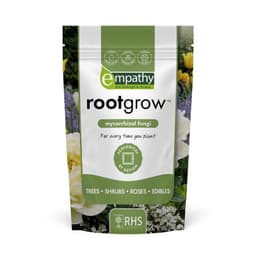
Roses take a standard arbuscular inoculant. Empathy includes them and excludes brassicas and ericaceous plants, so a rose is in scope and a blueberry in the same order is not. Named garden pouches here are Rootgrow 360 g at £10.34 (4.6 from 2,864 reviews) and the 150 g pouches at £6.79 and £7.59. Saved reviews mention bare-root roses on the 360 g and RHS 150 g listings. That is usage evidence, not a colonisation trial. Dampen dry roots, sprinkle so the grains touch them, set the union at soil level as the RHS advises, and backfill. Nursery figures such as 25 g per plant, 60 g for one or two bushes, or a 150 g pouch for about twelve bushes are not measurements on this page. The bulb-starter bundle is stated for 50 bulbs. You do not need it for roses. RootMax’s title also says rooting powder. Do not treat it as cutting hormone. The shortlist is on best mycorrhiza.

Rose sickness is a soil problem first

Rose sickness is why a new bush sulks in ground that already grew roses. The RHS replant page asks you to replace the soil in a hole about 60 cm wide and at least 30 cm deep. The rose planting page also cites 45 cm deep and wide. Both figures are larger than a sprinkle. Manufacturer sachets are described as claimed to be effective, and still under experimental evaluation. Grower pages sometimes say Rootgrow eliminates replant sickness. Do not repeat that as fact. The soil swap comes first. The sachet is an add-on, not a cure for rose sickness or honey fungus. A trowel scrape is not that hole. Take the old soil off the plot and bring in soil that has not grown roses, then put the inoculant on the new roots. A 150 g pouch in the old hole, with the same backfill, is the shortcut this page refuses.

Fertiliser versus fungus in the hole

Several rose nurseries still tell you to put rose fertiliser or bone meal in the planting hole. The RHS says not to add fertiliser at planting, because phosphorus can suppress the fungus. Follow that if you are using an inoculant, and feed later on poor or peat-free soil. The sprinkle itself is on how to use mycorrhiza. Phosphate in the same scrape works against the pouch. If you only swap soil, you have still done the job the RHS puts first. Use 360 g for a row, or 150 g for one or two bushes. Ghjkldha is not Empathy Rootgrow. BioTabs at £28.98 with three reviews is not a rose upgrade.

When to call a professional

Honey fungus is not rose sickness. White mycelium under bark, bootlaces in the soil, or a sudden dieback that matches that disease means you stop planting and get advice. A sachet does not treat it, and the same applies to other named root diseases. Compacted urban pits are the other point where someone who knows trees should take over. Do not keep planting into failed unions because the pouch mentions replant problems. Swap the soil, or move the rose. This comparison used amazon.co.uk listings and public RHS and HSE pages. Nobody here inspected your soil.

Common questions

Should I use mycorrhiza when planting a bare-root rose?
Yes, if you have a standard garden pouch and the roots will touch it. Roses are in scope for Empathy Rootgrow. It is an add-on at planting, not a replacement for watering-in or for a soil swap on an old rose bed.
Will Rootgrow cure rose sickness in an old bed?
No. The RHS still asks for a soil swap and treats manufacturer sachets as claims under evaluation. Grower lines that say it eliminates replant sickness are not used as fact here. Swap about 60 cm by 30 cm, or 45 cm deep and wide on the rose planting page, then add the pouch.
How much soil do I swap, and how deep?
The general replant page cites about 60 cm wide and at least 30 cm deep. The rose planting page also cites 45 cm deep and wide. Both are RHS figures. A trowel scrape is not that hole.
Can I add rose fertiliser in the same hole?
Not if you are using the inoculant. The RHS says phosphorus can suppress the fungus. Some rose growers still recommend bone meal or feed in the hole. That is the conflict. Feed later if the soil is poor.
How much pouch for one bush versus a row?
Nursery sheets quote figures such as 25 g, 60 g, or a 150 g pouch for about twelve bushes. Those are not measurements on this page. For one or two bushes the 150 g pouches at £6.79 or £7.59 are the small-session buy. A row points at 360 g.
Is honey fungus the same as rose sickness?
No. Rose sickness is a replant problem in old rose soil. Honey fungus is a named disease with its own signs. Call a professional if you suspect honey fungus. Do not treat either with a sachet as a cure.
Which pouch from this set suits roses?
Named Empathy or Plantworks Rootgrow: 360 g as the default row pouch, 150 g for a small session. The RHS 150 g pouch is the same job with fewer reviews. The bulb bundle is unnecessary unless you also have about 50 bulbs.

Related pages

Sources

Public UK and maker sources from the research digest, used for this page in October 2026. Prices, stars and review counts are from the eight amazon.co.uk listings in that digest. An organic bullet is not a licence number. A root-volume line and a spore count were not measured here. No pouch is treated as a cure for rose sickness or as a UKCA-approved biostimulant.

  1. RHS, Mycorrhizal fungi (retrieved 20 October 2026)
  2. RHS, Trees and shrubs planting (retrieved 20 October 2026)
  3. RHS, Biostimulants (retrieved 20 October 2026)
  4. RHS, Replant disease (retrieved 20 October 2026)
  5. HSE, Biostimulants and plant protection (retrieved 20 October 2026)
  6. GOV.UK, Manufacturing and marketing fertilisers (retrieved 20 October 2026)
  7. AHDB, How should biostimulants be used? (retrieved 20 October 2026)
  8. Empathy, rootgrow 360 g (retrieved 20 October 2026)