Lawn lime for moss
The neighbour said the moss means the soil is sour, and a bag of limestone is the cure. Lawn lime for moss has to take that story apart. Lime does not kill moss. It is only worth discussing after a fair pH test shows the soil is too acid for the grass you want. This page is from Peter F., the DIY & tools editor, on 21 October 2026. He used the Royal Horticultural Society moss and lime pages, plus the seven amazon.co.uk listings on the [lawn lime comparison](/hub/fertiliser-soil-and-bark-mulch/lawn-lime). A qualifying Amazon purchase can earn us a commission at no extra cost to you. None of those seven listings is a mosskiller.
The neighbour said the moss means the soil is sour, and a bag of limestone is the cure. Lawn lime for moss has to take that story apart. Lime does not kill moss.
The neighbour said the moss means the soil is sour, and a bag of limestone is the cure. Lawn lime for moss has to take that story apart. Lime does not kill moss. It is only worth discussing after a fair pH test shows the soil is too acid for the grass you want. This page is from Peter F., the DIY & tools editor, on 21 October 2026. He used the Royal Horticultural Society moss and lime pages, plus the seven amazon.co.uk listings on the lawn lime comparison. A qualifying Amazon purchase can earn us a commission at no extra cost to you. None of those seven listings is a mosskiller.
Our top picks
| Badge | Product | Form | Lawn named | Moss line on the listing | Note | Price | Offer |
|---|---|---|---|---|---|---|---|
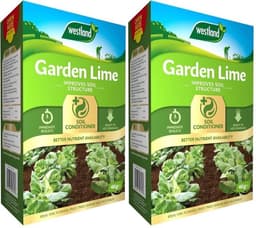
| Best overall |  Westland Westland Lime Soil Conditioner (pack of 2) | Granules | No | Not stated | 8.2 | about £19.98 | View offer |
| Alternative |  OLDCASTLE LAWN & GARDEN Jolly Gardner Fast Acting Lime | Pellets | Yes | Listing claim only | 4.6 | about £123.16 | View offer |
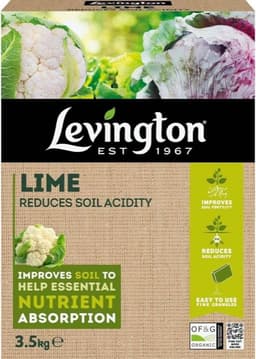
| Best value |  MURIEL BARGAINS Levington Garden Lime 3.5 kg | Granules | Yes | Listing claim only | 4.0 | about £11.49 | View offer |

On this page
Moss in a lawn is not a lime deficiency
Remove the moss before you talk about lime
Lime only if the pH test says the soil is acid
When to leave the moss
Common questions
Does garden lime kill moss?
Why is there moss if I already limed?
Should I scarify before I lime?
What if the lawn is shady or squelchy and the pH is fine?
Will lime turn the lawn green this week?
Is iron sulphate the same as lime?
Do fine grasses want a lower pH than a family ryegrass lawn?
Related pages
Sources
Public UK and maker sources from the research digest, used for this page in October 2026. Prices, stars and review counts are from the seven amazon.co.uk listings captured on 19 October 2026. A moss line is a listing claim. A maker's pet line applies to that garden lime, not to hydrated lime or to every bag. This is not a laboratory test.
- RHS, lime and liming (retrieved 19 October 2026)
- RHS, soil pH and testing (retrieved 19 October 2026)
- RHS, moss on lawns (retrieved 19 October 2026)
- RHS, acidifying soil (retrieved 19 October 2026)
- Westland Garden Lime (retrieved 19 October 2026)
- Levington Lime (retrieved 19 October 2026)
- Fertilisers Regulations 1991 (retrieved 19 October 2026)
- CAFRE, the value of lime (retrieved 19 October 2026)