Lawn lime buying guide
A mossy patch or a yellow stripe after last summer's drought is not, on its own, a reason to order a bag. A lawn lime buying guide starts with the soil, not the product photo. This page is from Peter F., the DIY & tools editor, on 21 October 2026. He read the seven amazon.co.uk listings on the [lawn lime comparison](/hub/fertiliser-soil-and-bark-mulch/lawn-lime), plus Royal Horticultural Society pages and the Fertilisers Regulations 1991. Nobody here ran a pH trial. A qualifying Amazon purchase can earn us a commission at no extra cost to you. By the end you should know whether to buy calcium carbonate garden lime at all, and which chemical words to refuse.
A mossy patch or a yellow stripe after last summer's drought is not, on its own, a reason to order a bag. A lawn lime buying guide starts with the soil, not the product photo.
A mossy patch or a yellow stripe after last summer's drought is not, on its own, a reason to order a bag. A lawn lime buying guide starts with the soil, not the product photo. This page is from Peter F., the DIY & tools editor, on 21 October 2026. He read the seven amazon.co.uk listings on the lawn lime comparison, plus Royal Horticultural Society pages and the Fertilisers Regulations 1991. Nobody here ran a pH trial. A qualifying Amazon purchase can earn us a commission at no extra cost to you. By the end you should know whether to buy calcium carbonate garden lime at all, and which chemical words to refuse.
Our top picks
| Badge | Product | Form | Lime alone | Pack | Note | Price | Offer |
|---|---|---|---|---|---|---|---|
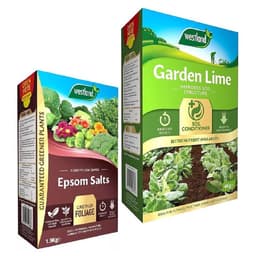
| Best overall |  Topline Topline garden lime and Epsom salt | Granules and powder | No | 4 kg lime plus 1.5 kg Epsom salt | 3.5 | about £18.95 | View offer |
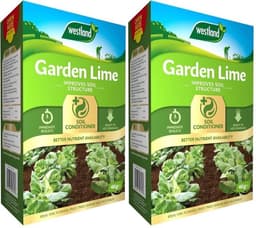
 Westland Westland Lime Soil Conditioner (pack of 2) | Granules | Yes | 2 × 4 kg (item weight 8 kg) | 8.2 | about £19.98 | View offer | |
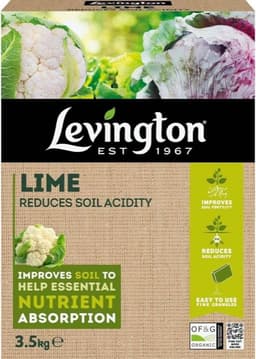
| Best value |  MURIEL BARGAINS Levington Garden Lime 3.5 kg | Granules | Yes | 3.5 kg (unit count 3,600 g) | 4.0 | about £11.49 | View offer |
On this page
Test the soil before you buy lawn lime
Garden lime, hydrated lime, gypsum, and dolomitic lime
Why the grams on the bag do not match the next brand
What to check on the listing
Common questions
Do I need lawn lime if I have not tested the soil?
Is garden lime the same as hydrated lime or builders' lime?
Will gypsum raise the pH?
When is dolomitic lime the right buy?
Can I lime ericaceous plants or a bed I want for blueberries?
Related pages
Sources
Public UK and maker sources from the research digest, used for this page in October 2026. Prices, stars and review counts are from the seven amazon.co.uk listings captured on 19 October 2026. A moss line is a listing claim. A maker's pet line applies to that garden lime, not to hydrated lime or to every bag. This is not a laboratory test.
- RHS, lime and liming (retrieved 19 October 2026)
- RHS, soil pH and testing (retrieved 19 October 2026)
- RHS, moss on lawns (retrieved 19 October 2026)
- RHS, acidifying soil (retrieved 19 October 2026)
- Westland Garden Lime (retrieved 19 October 2026)
- Levington Lime (retrieved 19 October 2026)
- Fertilisers Regulations 1991 (retrieved 19 October 2026)
- CAFRE, the value of lime (retrieved 19 October 2026)