Independent comparisons. We may earn from shop links. More info

How to repot houseplants when the new compost arrives

Updated: October 2026

You have a pot-bound plant on the windowsill and a new bag of houseplant compost or mineral substrate waiting by the door. How to repot houseplants well is less about brand loyalty and more about pot size, drainage, and when the starter feed in that bag actually ends. The [houseplants compost comparison](/hub/fertiliser-soil-and-bark-mulch/houseplants-compost) shows which listings print two-month, three-month, or fertiliser-free claims. This guide walks the method. It is not a ranking. Prices are in pounds. A qualifying purchase can earn a commission at no extra cost to you.

You have a pot-bound plant on the windowsill and a new bag of houseplant compost or mineral substrate waiting by the door.

Our top picks

On this page

When to repot

Look for roots at the drainage hole, compost that dries in hours or stays sour, and a plant that tips. RHS houseplant guidance suggests potting on about every two to three years, preferably in spring. Houseplant Focus bullets say repot every eighteen to twenty-four months; that is a manufacturer line on that pack, not a rule that overrides the RHS range. Prefer spring over mid-winter in a cold UK flat. Move a rotting plant or one climbing out of a cracked pot at any time, but keep the step-up modest. If the plant is happy and the hole is clear, wait.

Pot size and drainage

Overpotting keeps the new mix wet while the old root ball sits in the middle. RHS material gives more than one useful width: the houseplant growing guide often points to a pot about five to ten centimetres wider; overpotting advice also discusses roughly 2.5 to 5 cm for many pots and warns against a container that is far too large. Treat those as a band, not as one invented correct centimetre. A decorative outer pot without a hole is not a planting pot; keep the plant in a liner with drainage and empty the saucer. Westland's eight-litre bullet claims the bag fills a twenty-eight-centimetre pot. That is how far one bag may go, not a reason to jump every plant into that size. If the pot is already far too big, water sparingly or move the plant into a closer fit. Choose compost versus pon before you start if you are changing system entirely. Feed and weight are on houseplant compost or pon.
Lechuza Lechuza Basicpon 12 L

Testsieger

Lechuza Lechuza Basicpon 12 L
7.9/10about £18.98

The repot, including dust and smell

Water the plant lightly the day before if the root ball is bone dry, so it slides out without tearing. Tip the pot, support the stem, and ease the root ball free. Tease circling roots gently, trim only soft rotten sections with clean tools, and discard the worst of the old compost without stripping every root bare unless disease forces it. Add a little fresh mix to the new pot, set the plant at the same depth, fill around the sides, and firm lightly so there are no large air pockets. Water through until drainage runs clear, then empty the saucer. Open fibre bags away from your face, dampen dusty media if needed, and wash your hands afterwards. RHS garden-health advice treats compost dust as something to minimise. Do not bake compost in an oven. If a sack smells strongly of manure, do not use it as bedroom potting mix. Basicpon twelve litres is about ten kilograms and Lechuza-PON eighteen litres about 14.9 kg, so plan the lift. Reviewers often rinse pon, and Lechuza's declaration flags dust and gloves.

When the feed in the bag runs out

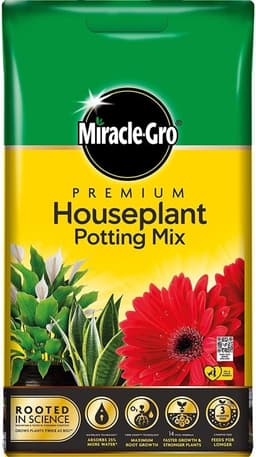
Fresh mix is not a licence to fertilise on day one on top of a charged bag. Houseplant Focus bullets claim nutrients for up to two months. Miracle-Gro houseplant bullets claim up to three months. Basicpon is fertiliser-free, so once the plant is settled you follow a normal liquid or other feed routine rather than waiting for a phantom starter window. Lechuza's own PON pages claim about six to eight months for LECHUZA-PON; that window is for PON, not for Basicpon. When the stated period ends, start feeding at the label rate for your product and season. Water when the surface is dry rather than on a fixed calendar that ignores light and pot size. If you have not yet chosen a bag, the houseplant compost buying guide separates indoor bags, sacks, blocks, and pon.

Common questions

How do I know it needs repotting?
Roots at the hole, a dense circling ball, sour or exhausted compost, and stalled growth despite reasonable light are the usual signs. Happy plants can wait. Roughly every two to three years is an RHS planning guide, not a deadline for every species.
How much bigger should the pot be?
Stay close to the current pot. RHS pages discuss about five to ten centimetres wider for many houseplants and tighter step-ups elsewhere to avoid overpotting. Do not jump to a pot that leaves a wide collar of wet empty mix.
Should I repot in winter?
Spring is preferred. Winter moves are possible for emergencies but recovery is slower in short UK daylight. Keep the size increase modest and watch watering.
Do I water straight away?
Yes, water through after potting so the new mix settles around the roots, then empty standing water. Afterwards, water when the surface is dry rather than daily.
When do I start feeding?
After the bag's stated starter window. Two months on Focus bullets, three months on Miracle-Gro houseplant bullets, a planned routine for Basicpon once the plant is settled, and the manufacturer's longer window for Lechuza-PON if that is what you bought.
What if the new bag smells of manure?
Do not use a strong manure smell as bedroom potting mix. Prefer an indoor houseplant bag for living spaces, or use the sack outdoors. A smell that makes the goods unfit for the stated indoor use is a seller issue.
Do I rinse pon?
Many users rinse mineral substrate to reduce dust before planting. Follow the manufacturer's handling notes, use gloves if the pack advises it, and expect heavier bags than a ten-litre compost sack.

Related pages

Sources

Public UK sources from the research digest, used for this page on 23 October 2026. Prices, stars and review counts are from the stored amazon.co.uk listings. A peat-free line is only what that listing prints. This is not a laboratory test.

  1. RHS, peat-free compost (retrieved 23 October 2026)
  2. RHS, peat-free retail from 2026 (retrieved 23 October 2026)
  3. Defra, horticultural peat announcement, 27 August 2022 (retrieved 23 October 2026)
  4. Hansard written answer, 19 March 2026 (retrieved 23 October 2026)
  5. Consumer Rights Act 2015, section 11 (retrieved 23 October 2026)
  6. RHS, fungus gnats (retrieved 23 October 2026)
  7. RHS, growing houseplants (retrieved 23 October 2026)
  8. RHS, health risks in the garden (retrieved 23 October 2026)