Independent comparisons. We may earn from shop links. More info

Houseplant compost buying guide before you order one

Updated: October 2026

You are standing in a flat with a pot-bound monstera and an amazon.co.uk search that mixes eight-litre indoor bags, sixty-litre sacks, compressed blocks, and bags of stone. A houseplant compost buying guide starts by matching the format to that job, then checking peat wording and litres on the listing you are about to order. The [houseplants compost comparison](/hub/fertiliser-soil-and-bark-mulch/houseplants-compost) shows the twelve products side by side. This page does not pick a winner. It stops you buying the wrong kind of bag before you compare brands. Prices are in pounds. A qualifying purchase can earn a commission at no extra cost to you.

You are standing in a flat with a pot-bound monstera and an amazon.co.uk search that mixes eight-litre indoor bags, sixty-litre sacks, compressed blocks, and bags of stone.

Our top picks

On this page

Four things sold as houseplant compost

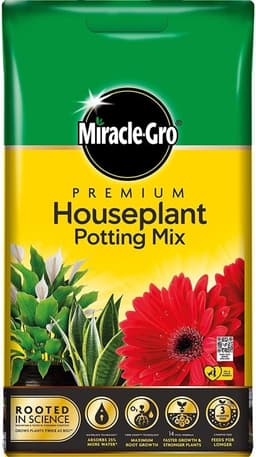
The shelf uses compost, potting soil, and potting mix for objects that behave differently in a UK living room. An indoor bag of about five to ten litres suits a few houseplants. Westland's eight-litre mix with Seramis and perlite, and Miracle-Gro's ten-litre houseplant mix, are lighter upstairs than a patio sack and name indoor plants rather than borders. A sixty-litre title that also names vegetables and herbs may suit a mixed garden. It is a poor default for one bedroom philodendron because of storage, damp weight, and smell. A compressed block arrives as a dry brick you soak; the litres are a reconstituted volume. Lechuza Basicpon and Lechuza-PON are pumice, lava, and zeolite, not fibre compost, and the catalogue type Planter is a mis-tag. Feed and weight are on houseplant compost or pon.

Peat words, organic, and feed

England's announced 2024 amateur peat ban was not enacted, so peat compost can still be sold. If the bag does not say peat-free, the RHS says it most likely is not. Organic, eco, and premium do not replace those words. Peat-free is printed on Houseplant Focus, both Basicpon sizes, Lechuza-PON, and one bullet on a Laeto forty-litre houseplant mix. Miracle-Gro's ten-litre listing, model 119769, does not print it. Do not copy a B&Q peat-free code onto that product. The wording page is peat-free houseplant compost. Focus claims nutrients for up to two months, Miracle-Gro up to three months, and Basicpon is fertiliser-free. Lechuza's own PON pages claim about six to eight months; that window belongs to PON, not Basicpon.
Lechuza Lechuza-PON 18 L

Testsieger

Lechuza Lechuza-PON 18 L
8.3/10about £23.99

Litres you can trust

Price per litre only helps when the litre figure is the one you will receive. One Miracle-Gro twin is titled two by ten litres while the volume field records ten litres. A Laeto multi-purpose title says sixty litres while reviews describe forty-litre bags. A Laeto houseplant mix is titled forty litres with a bullet that says sixty. Houseplant Focus lists two by eight litres and a sixteen-litre volume field, yet the weight is 1.2 kg. A DIVCHI block claims ten litres at 680 g and is soaked to expand. Under the Consumer Rights Act 2015, goods must match their description. For a few pots, an eight- or ten-litre indoor bag with agreeing fields is usually enough.

What to buy for a flat

For a few foliage plants in a UK flat, an eight- to ten-litre indoor mix is the usual buy if you can store one bag. On these listings that band is roughly seven to ten pounds, around ninety pence to just over a pound a litre when the litres agree. Choose the printed peat-free twin if that wording is non-negotiable. Skip a sixty-litre sack unless you also have outdoor jobs. Choose pon only if you can lift five to fifteen kilograms. Miracle-Gro ten litres is about 3.34 kg, Basicpon twelve litres about ten kilograms, and Lechuza-PON eighteen litres about 14.9 kg. Pot size and the end of the starter feed are on how to repot houseplants.

Common questions

Can I use multi-purpose compost for a houseplant?
You can for many ordinary foliage plants if the mix drains and the pot has a hole, and RHS material treats peat-free multipurpose as suitable for many containers. It is still a heavier, outdoor-oriented purchase for one indoor plant. Prefer a smaller indoor bag when storage, smell, and weight matter more than cheap litres.
How many litres do I need for a few pots?
An eight- to ten-litre indoor bag covers several small to medium pot-ons if you step up only slightly. One plant in a large decorative cachepot does not need a sixty-litre sack. Buy the next bag when you actually repot again rather than storing damp open compost for months.
Does organic mean peat-free?
No. Organic describes feedstock or marketing language unless a clear peat-free line is printed. The RHS states that unmarked bags are most likely not peat-free. Check this listing only; do not infer from another brand's shop page.
What is the difference between an 8 litre indoor bag and a 40 litre sack?
The indoor bag is sized for houseplants and flats. The large sack is volume for mixed outdoor and indoor claims, with more weight and storage. Litres on the title can still conflict with other fields, so read the whole listing before ordering the large sack.
Why is a 10 litre order only 680 g?
That pattern matches a compressed block sold as a reconstituted volume. You add water and expand it. It is not the same as receiving ten litres of loose mix. Follow the pack; do not expect a full sack in the box.
Do I need feed in the bag?
Starter feed is convenient but time-limited. Two-month and three-month claims are common on indoor bags; Basicpon has none. After the stated window you feed anyway. Choose fertiliser-free only if you will dose yourself.
When is pon the better fork?
When you want a mineral substrate, clearer long-term structure, or are leaving organic mix for other reasons. It costs more per litre and weighs more. Stay with compost if you want a light bag for a few ordinary pots and a familiar watering routine.

Related pages

Sources

Public UK sources from the research digest, used for this page on 23 October 2026. Prices, stars and review counts are from the stored amazon.co.uk listings. A peat-free line is only what that listing prints. This is not a laboratory test.

  1. RHS, peat-free compost (retrieved 23 October 2026)
  2. RHS, peat-free retail from 2026 (retrieved 23 October 2026)
  3. Defra, horticultural peat announcement, 27 August 2022 (retrieved 23 October 2026)
  4. Hansard written answer, 19 March 2026 (retrieved 23 October 2026)
  5. Consumer Rights Act 2015, section 11 (retrieved 23 October 2026)
  6. RHS, fungus gnats (retrieved 23 October 2026)
  7. RHS, growing houseplants (retrieved 23 October 2026)
  8. RHS, health risks in the garden (retrieved 23 October 2026)