Feed houseplants in winter
It is a dark afternoon in December, the heating is on, and the bottle you used in July is still next to the watering can. Feeding houseplants in winter is the decision this page is for: whether that bottle stays shut from October to February. Mixing steps for the growing season stay on [how to feed houseplants](/hub/fertiliser-soil-and-bark-mulch/fertiliser-for-houseplants/sub/fertiliser-for-houseplants-how-to-use). This is the season decision, not a product ranking. It is not a trial of the nine bottles on the [houseplant fertiliser comparison](/hub/fertiliser-soil-and-bark-mulch/fertiliser-for-houseplants). The Products Compared editorial team wrote it on 21 October 2026 from those public pages. A qualifying purchase can earn a commission at no extra cost to you.
It is a dark afternoon in December, the heating is on, and the bottle you used in July is still next to the watering can.
It is a dark afternoon in December, the heating is on, and the bottle you used in July is still next to the watering can. Feeding houseplants in winter is the decision this page is for: whether that bottle stays shut from October to February. Mixing steps for the growing season stay on how to feed houseplants. This is the season decision, not a product ranking. It is not a trial of the nine bottles on the houseplant fertiliser comparison. The Products Compared editorial team wrote it on 21 October 2026 from those public pages. A qualifying purchase can earn a commission at no extra cost to you.
Our top picks
| Badge | Product | Feed style | Dose | Stated use | Note | Price | Offer |
|---|---|---|---|---|---|---|---|
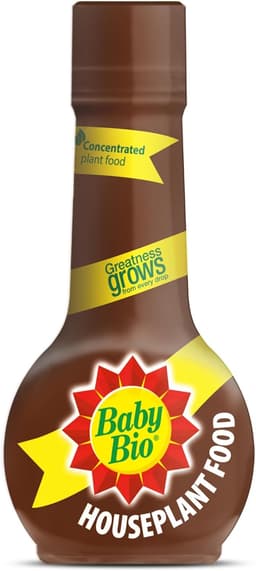
| Best overall |  Baby Bio Baby Bio Houseplant Food 175 ml | Concentrate | 5-10 drops in 1/2 litre of water, poured onto the soil | Indoor houseplants | 9.4 | about £3.99 | View offer |
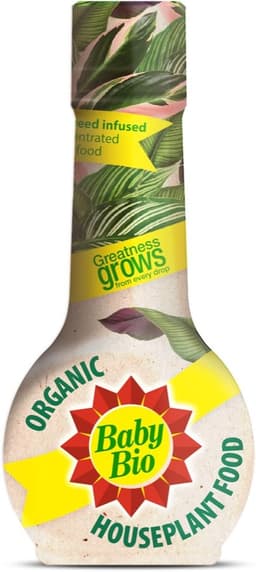
| Preis-Tipp |  Baby Bio Baby Bio organic 175 ml | Concentrate | 5-10 drops in 1/2 litre of water, poured onto the soil | Houseplants | 9.2 | about £3.99 | View offer |
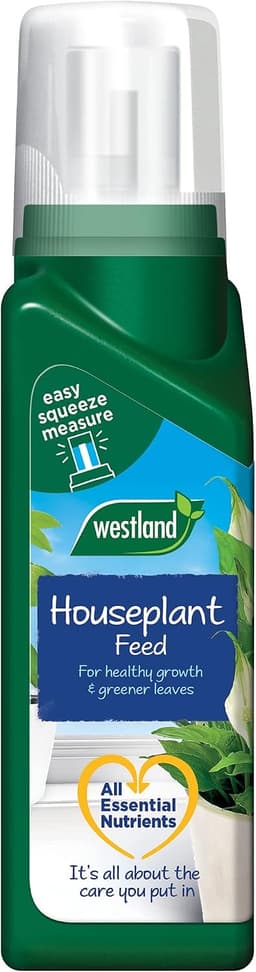
| Alternative |  Westland Westland Houseplant Feed 200 ml | Concentrate | Easy measuring doser. Bullets do not state millilitres per litre. | Houseplants | 9.2 | about £6.98 | View offer |
On this page
Why winter is different in a UK room
Where the advice splits
Plants that are still growing
If you have already fed too often
Common questions
Do I stop completely in December?
My plant is still making leaves under a bright window. Then what?
What does Westland say about winter?
Why do leaf tips go brown in winter after feeding?
What is the white crust?
Related pages
Sources
Public UK and maker sources from the research digest, used for this page in October 2026. Prices, stars and review counts are from the nine amazon.co.uk listings captured on 21 October 2026. Listing ratio fields are not treated as NPK. The organic word on one Baby Bio title is not a certifier. A maker analysis is the maker's statement, not an independent UK lab test.
- RHS, houseplants growing guide (retrieved 21 October 2026)
- RHS, feeding plants (retrieved 21 October 2026)
- Gardeners' World, how to feed house plants (retrieved 21 October 2026)
- GOV.UK, manufacturing and marketing fertilisers (retrieved 21 October 2026)
- Fertilisers Regulations 1991 (retrieved 21 October 2026)
- HSE, about pesticides (retrieved 21 October 2026)
- Westland Houseplant Feed (retrieved 21 October 2026)
- Morrisons, Baby Bio house plant food 175 ml (retrieved 21 October 2026)