Houseplant fertiliser buying guide
You have a pothos, a peace lily and a monstera on a UK windowsill, and the amazon.co.uk results are a row of green bottles that all say houseplant food. This houseplant fertiliser buying guide sorts that shelf into concentrate, ready-to-use liquid, all-purpose mix, and the specialist bottles this set does not cover. Prices and review counts for the nine listings live on the [houseplant fertiliser comparison](/hub/fertiliser-soil-and-bark-mulch/fertiliser-for-houseplants). The Products Compared editorial team prepared this on 21 October 2026 from those listings. It is not a laboratory trial. A qualifying purchase can earn a commission at no extra cost to you.
You have a pothos, a peace lily and a monstera on a UK windowsill, and the amazon.co.uk results are a row of green bottles that all say houseplant food.
You have a pothos, a peace lily and a monstera on a UK windowsill, and the amazon.co.uk results are a row of green bottles that all say houseplant food. This houseplant fertiliser buying guide sorts that shelf into concentrate, ready-to-use liquid, all-purpose mix, and the specialist bottles this set does not cover. Prices and review counts for the nine listings live on the houseplant fertiliser comparison. The Products Compared editorial team prepared this on 21 October 2026 from those listings. It is not a laboratory trial. A qualifying purchase can earn a commission at no extra cost to you.
Our top picks
| Badge | Product | Feed style | Dose | Stated use | Note | Price | Offer |
|---|---|---|---|---|---|---|---|
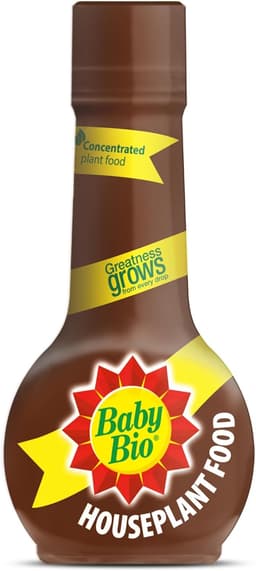
| Best overall |  Baby Bio Baby Bio Houseplant Food 175 ml | Concentrate | 5-10 drops in 1/2 litre of water, poured onto the soil | Indoor houseplants | 9.4 | about £3.99 | View offer |
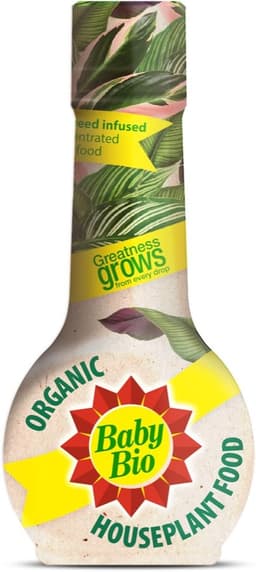
| Preis-Tipp |  Baby Bio Baby Bio organic 175 ml | Concentrate | 5-10 drops in 1/2 litre of water, poured onto the soil | Houseplants | 9.2 | about £3.99 | View offer |
| Alternative |  Miracle-Gro Miracle-Gro Pour and Feed 1 L | Ready to use | Pour. Bullets give no dilution. Reviews treat it as ready mixed. | Ornamental plants, fruits and vegetables. Indoor use is a listing question. | 9.0 | about £5.00 | View offer |
On this page
What you are actually buying
Match the bottle to the plant
Read the label, not the scraped ratio
What this shelf cannot decide
Common questions
Is houseplant food different from all-purpose liquid?
Should I buy the small concentrate or the litre pour-on?
What does a high nitrogen number mean for leaves?
Do orchids use the same bottle?
Does organic on the title mean a named certifier?
Related pages
Sources
Public UK and maker sources from the research digest, used for this page in October 2026. Prices, stars and review counts are from the nine amazon.co.uk listings captured on 21 October 2026. Listing ratio fields are not treated as NPK. The organic word on one Baby Bio title is not a certifier. A maker analysis is the maker's statement, not an independent UK lab test.
- RHS, houseplants growing guide (retrieved 21 October 2026)
- RHS, feeding plants (retrieved 21 October 2026)
- Gardeners' World, how to feed house plants (retrieved 21 October 2026)
- GOV.UK, manufacturing and marketing fertilisers (retrieved 21 October 2026)
- Fertilisers Regulations 1991 (retrieved 21 October 2026)
- HSE, about pesticides (retrieved 21 October 2026)
- Westland Houseplant Feed (retrieved 21 October 2026)
- Morrisons, Baby Bio house plant food 175 ml (retrieved 21 October 2026)