Independent comparisons. We may earn from shop links. More info

How to repot a cactus safely and successfully

Updated: October 2026

Your cactus is leaning, its roots fill the nursery pot or water runs straight past a compacted root ball. Knowing how to repot a cactus helps you correct the pot and compost without leaving damaged roots sitting wet. In the UK, spring is usually the most forgiving time because active growth is beginning and brighter conditions help the medium dry. Choose a suitable mix from our [cactus soil comparison](/hub/fertiliser-soil-and-bark-mulch/cactus-soil), then prepare the new pot before handling the plant. The core method is simple: move up only slightly, use a dry free-draining medium, protect yourself from spines and delay watering while injuries settle.

Your cactus is leaning, its roots fill the nursery pot or water runs straight past a compacted root ball. Knowing how to repot a cactus helps you correct the pot and compost without leaving damaged roots sitting wet.

Our top picks

On this page

Wait for spring and a genuinely full pot

Repot when the roots have filled the container, growth has stalled despite sensible care, or the compost has broken down and no longer wets or drains evenly. The RHS recommends spring for routine cactus and succulent repotting. Do not repot merely because the decorative outer pot looks small if the root system still has room. A cold, dim winter windowsill leaves damp compost around inactive roots. If a plant is rotting or sitting in waterlogged medium, act on the problem rather than waiting for the calendar. Watering immediately before the job is usually unhelpful, because drier compost falls away more cleanly. If you still need to choose the mix, use the cactus soil buying guide to check plant group, named minerals and pack volume.

Choose holes, a modest size increase and suitable grit

The new container must have drainage holes. A pot with no exit for excess water turns even a free-draining mix into a reservoir, while a saucer left full has much the same effect. Choose a pot only one size larger; RHS guidance on overpotting gives roughly 2.5–5 cm wider as a useful general range. Excess compost around a small root ball stays wet for longer. Neither terracotta nor plastic compensates for missing drainage holes. A grit top dressing can support the plant and keep wet organic particles away from the stem. The British Cactus and Succulent Society distinguishes smaller grit mixed through the compost, around 3–4 mm, from larger particles used on top. Gardeners' World suggests about a 1 cm surface layer when managing houseplant flies. This is a management aid, not a guaranteed cure.

Follow a spine-safe repotting sequence

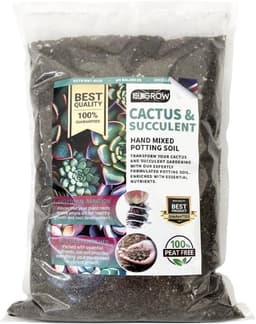
Prepare the new pot with enough dry mix to hold the root ball at its previous depth. Do not bury the stem to make the plant look steadier, as tissue that was previously above the compost can rot when held damp. Put on sturdy gloves and wrap a folded strip of newspaper around the cactus to form a loose collar. Do not squeeze the stem or crush spines. Tip the old pot on its side and ease the root ball out. Support the plant rather than pulling it by the crown. Tease away loose, exhausted compost and inspect the roots under good light. Remove dead, hollow or rotten material with a clean blade, and allow substantial cuts to callus before potting. Set the cactus centrally and add compost around the sides in stages. Do not compress it into a solid plug. According to the seller, 4 litres fills a 14 cm pot, but the root ball and pot shape change the volume you will actually use. Use washed horticultural grit, not builders' sand. Our cactus soil versus multi-purpose compost guide explains why an ordinary wet mix is risky.

Give dry aftercare and recognise exceptions

Do not water straight after routine repotting. The BCSS advises waiting at least one to two weeks, giving any damaged roots time to heal before moisture reaches them; wait longer if you cut significant roots. Resume watering gradually, then let the compost dry rather than offering frequent sips. A soft base, an unpleasant smell or a pot that stays heavy and damp calls for investigation, not another drink. Christmas cactus is the exception: it prefers a more moisture-retentive mix and is often repotted around the end of March.

Common questions

When should I repot a cactus in the UK?
Spring is the usual time, as growth is restarting and brighter conditions help the compost dry. Repot when roots fill the pot or the medium has broken down, not simply every year. Deal with active rot or severe waterlogging promptly rather than waiting for spring, because leaving damaged roots wet can worsen the problem.
How much larger should the new pot be?
Move up only one pot size. A general RHS range is about 2.5–5 cm wider, with a modest increase usually better for a small cactus. A much larger pot surrounds the root ball with unused compost that dries slowly. Stability should come from a suitable pot shape and mineral top dressing, not unnecessary volume.
Do cactus pots need drainage holes?
Yes. Drainage holes provide an escape route for surplus water; without them, even a gritty mix can remain saturated at the base. Empty the saucer or outer cachepot after watering. If a decorative container has no hole, keep the cactus in a draining inner pot and remove it for watering.
Should I water immediately after repotting?
No. The BCSS advises keeping newly repotted cacti dry for at least one to two weeks so small root injuries can heal. Wait longer when roots were cut. After that, water according to the plant and season, then let the medium dry rather than maintaining constant dampness.
How can I handle cactus spines?
Wear sturdy gloves and use a folded newspaper strip as a loose collar around the plant. Padded tongs can help with a small cactus, provided you do not squeeze the stem. Support the root ball as the pot comes away. For a very large, valuable or awkward specimen, ask another person or a specialist for help.
Can I repot a Christmas cactus the same way?
The handling and drainage principles are similar, but the medium and aftercare differ. Christmas cactus is a rainforest plant and usually wants more organic matter and steadier moisture than a desert cactus. Repot it in spring into a slightly larger draining pot, using a mix suited to epiphytic cacti rather than an extremely dry desert blend.

Related pages

Sources

Public UK sources from the research digest, used for this page in October 2026. Prices, stars and review counts are the figures stored from the eleven amazon.co.uk listings on 19 October 2026. A drainage line and a peat-free line are listing claims. This is not a laboratory test. Selling peat compost was not shown as an offence in force in January 2026.

  1. RHS, cacti and succulents growing guide (retrieved October 2026)
  2. RHS, peat-free composts and mulches (retrieved October 2026)
  3. RHS, John Innes compost (retrieved October 2026)
  4. British Cactus and Succulent Society, containers, composts and repotting (retrieved October 2026)
  5. BBC Gardeners’ World, cactus soil (retrieved October 2026)
  6. Peat Free Partnership, legislation timeline (retrieved October 2026)
  7. UK Parliament deposited paper DEP2026-0072, 29 January 2026 (retrieved October 2026)
  8. Consumer Rights Act 2015, section 9 (retrieved October 2026)