Lawn fertiliser price per square metre: compare costs

Calculate lawn feed cost per square metre using stated coverage, with four UK price examples and the listing gaps that make comparisons unreliable.
On this page
A £15 bottle can look cheaper than a £110 bag until you ask how much lawn each one actually treats. Lawn fertiliser price per square metre turns unlike pack sizes into a useful comparison, but only when the seller or label states a credible coverage area. The calculation is simple; deciding when the available figures are good enough is the important part.
In short
Divide the current pack price by its stated coverage in square metres to estimate the cost of one application at the label rate. On prices captured on 15 October 2026, four Substral examples worked out at roughly £0.18 to £0.41 per stated square metre, but these are product snapshots rather than a UK market average. If a listing gives no area, or contradicts itself, keep the figure as a shelf price instead of inventing a unit cost.
Calculate lawn fertiliser price per square metre
Use one consistent equation: pack price divided by the number of square metres the pack is stated to cover. For example, a £30 pack with coverage of 150 m² costs £0.20 per stated square metre for one application. Work from the full price you would pay for the pack, not the price per kilogram, because kilograms alone do not reveal how heavily the product must be applied. Keep delivery charges separate unless every option uses the same delivered price.
The words stated square metre matter. Coverage is linked to the product's application rate, so two 10 kg bags may treat very different areas. Compare products at their own label rates rather than assuming equal weights do equal work.
Four Substral price examples
The following arithmetic uses amazon.co.uk shelf prices captured on 15 October 2026 and the coverage stated with each product. Check the live price and label before ordering.
Substral Moos
£49.25 divided by about 140 m² is approximately £0.35 per stated square metre. Because the coverage itself is approximate, the result should also be presented as an estimate rather than a precise rate.
Substral EasyFix
£61.64 divided by 150 m² is approximately £0.41 per stated square metre. This was the highest unit figure among these four examples, although price alone does not describe the product's purpose, formulation or suitability.
Substral Premium
£91.10 divided by 400 m² is approximately £0.23 per stated square metre. Its higher shelf price is therefore lower per covered square metre than the Moos and EasyFix examples in this snapshot.
Substral Express
£109.69 divided by 600 m² is approximately £0.18 per stated square metre. It had both the highest shelf price and the lowest calculated unit cost in this four-product set. That is why choosing the smallest checkout total can be a false economy for a large lawn.
You can review the underlying range on our Substral lawn fertiliser comparison. Treat the £0.18 to £0.41 spread as four dated examples, not a price band for every lawn feed in the UK.
Measure your lawn before comparing
A low unit price saves nothing if the pack size leaves an expensive shortfall or far more unused product than you can sensibly store. Measure the actual grassed area first. For a rectangular lawn, multiply length by width in metres; a 12 m by 8 m lawn is 96 m². Split an L-shaped lawn into rectangles, calculate each one and add the results. For a triangular section, multiply base by perpendicular height and divide by two.
Subtract large patios, beds and sheds. For curved edges, divide the lawn into simple shapes and use a sensible estimate.
Now compare pack coverage with your measured area. A 150 m² pack is enough for one label-rate application over a 120 m² lawn, assuming the coverage claim applies to the product as supplied. A 100 m² pack is not enough, even if its shelf price is attractive; you would need two packs, and the checkout cost is twice the displayed pack price. If your lawn is small and you will not use the remainder as directed, a slightly higher price per square metre can still produce the lower sensible spend.
Repeat applications change the cost
The basic calculation covers one application. If the label permits and recommends another application, multiply both the product needed and the cost by the number of treatments. A £0.23-per-m² feed costs about £0.46 per m² across two identical applications; a £0.41 example becomes about £0.82 per m². Three applications would triple the one-treatment figure.
Do not plan repeated feeding merely because the multiplication works. The RHS advises feeding when you want a denser, all-grass lawn, and the product label determines the rate and usable timing. Lawn condition, season and the specific formulation all matter.
The stated doses reinforce why bag weight cannot stand in for coverage. In the available product data, Premium has a dose of 25 g/m², while EasyFix has 50 g/m². At those rates, the same weight would not treat the same area. Our Wolf-Garten lawn fertiliser comparison provides another range to inspect, but only where coverage and purpose are stated on the same basis.
When not to calculate a unit price
Some listings do not provide enough compatible information for an honest price-per-m² figure. An organic product in the available display data gives its coverage only as "Low". That is not an area and cannot be converted into square metres. Report its pack price and explain the missing information instead.
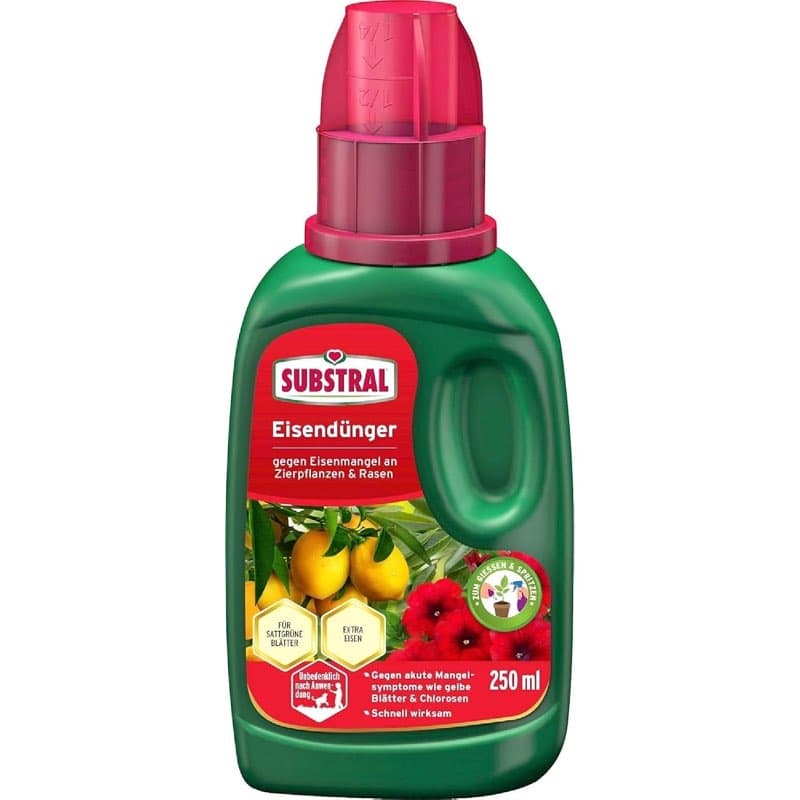
The iron bottle presents a similar problem. Substral 7391 Iron Fertiliser Green has a shelf price of about £15.35 and 4.6 from 848 ratings, but no square-metre coverage in the available data. Calling it the cheapest way to feed a lawn because the bottle costs about £15.35 would confuse the smallest transaction with the lowest treatment cost. The bottle might prove economical or expensive after applying its instructions; without the necessary figures, neither conclusion is supported.
Contradictory data is also a stop sign. The Rasen-Vital product has a bullet point and a coverage field that disagree. Do not pick whichever number creates the more appealing result, and do not average them. Check the physical label or seek clarification from the manufacturer or seller before calculating.
You may sometimes derive coverage when the pack clearly states both usable quantity and an application rate. A 10 kg bag applied at 25 g/m² mathematically covers 400 m². Only do this when both figures unquestionably refer to the exact product and application; otherwise, leave the unit price uncalculated.
Choosing value, not just the lowest number
Price per square metre is a filter, not a complete recommendation. First match the product to the task described on its label: routine feeding, a seasonal treatment and a moss-related treatment are not interchangeable merely because all are sold for lawns. Compare unit costs only among products that genuinely meet the same need.
Then consider pack fit. For a 90 m² lawn, a product covering 100 m² may involve less cash and less leftover material than a 600 m² pack, even when the larger pack wins on unit price. For a 500 m² lawn, the reverse can be true because several small packs increase the checkout total. Calculate the number of whole packs you must buy, not a fractional cost that no retailer offers.
Application equipment can alter the real budget too. Granules may need a suitable spreader, while liquids may require a watering can, hose attachment or sprayer as specified. Include that cost separately if you do not already own what is required. A result is only as reliable as the price, coverage and application rate behind it.
How we prepared these figures
The Products Compared editorial team used four amazon.co.uk shelf prices captured on 15 October 2026 and divided each by the coverage stated in the available product information. We compared the arithmetic with public RHS guidance on lawn feeding and fertiliser labels. We did not conduct a laboratory or garden performance test, and this small selection is not a survey of the UK market.
Amazon prices, promotions and availability can change at any time. Check the live listing, then verify the rate and warnings on the pack before use. If the listing differs from the physical label, follow the current instructions. If you buy through a qualifying affiliate link, Products Compared may earn a commission at no extra cost to you. That does not change the calculation or justify filling gaps in a listing.
Common questions
How do I calculate lawn fertiliser price per square metre?
Why can a bigger lawn fertiliser bag be cheaper per square metre?
Does a second lawn feed double the cost?
What if a lawn feed listing gives no coverage?
Is liquid lawn feed always cheaper than granules?
Are these figures the UK average price for lawn fertiliser?
How much lawn fertiliser do I need?

Products Compared publishes British-English buying guides based on amazon.co.uk listings and public UK sources. We do not run a lab and we do not invent test scores.
Related articles
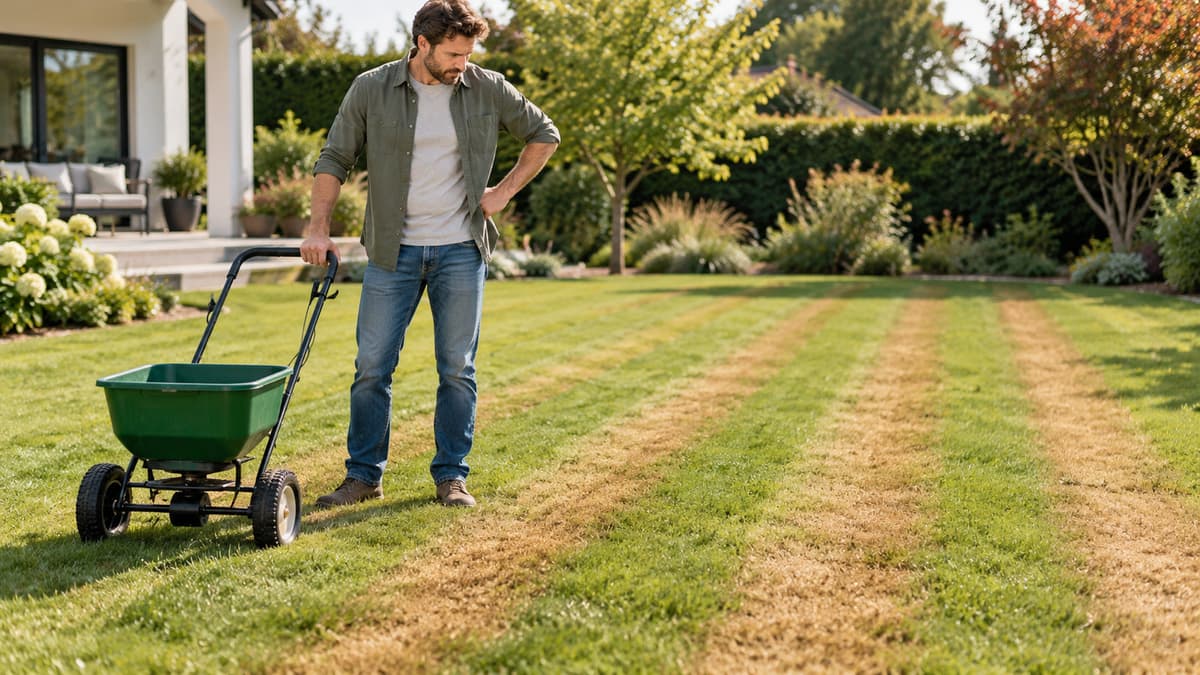
Brown stripes after feeding a lawn
Why uneven or excessive lawn feed can leave stripes, and what to do next.
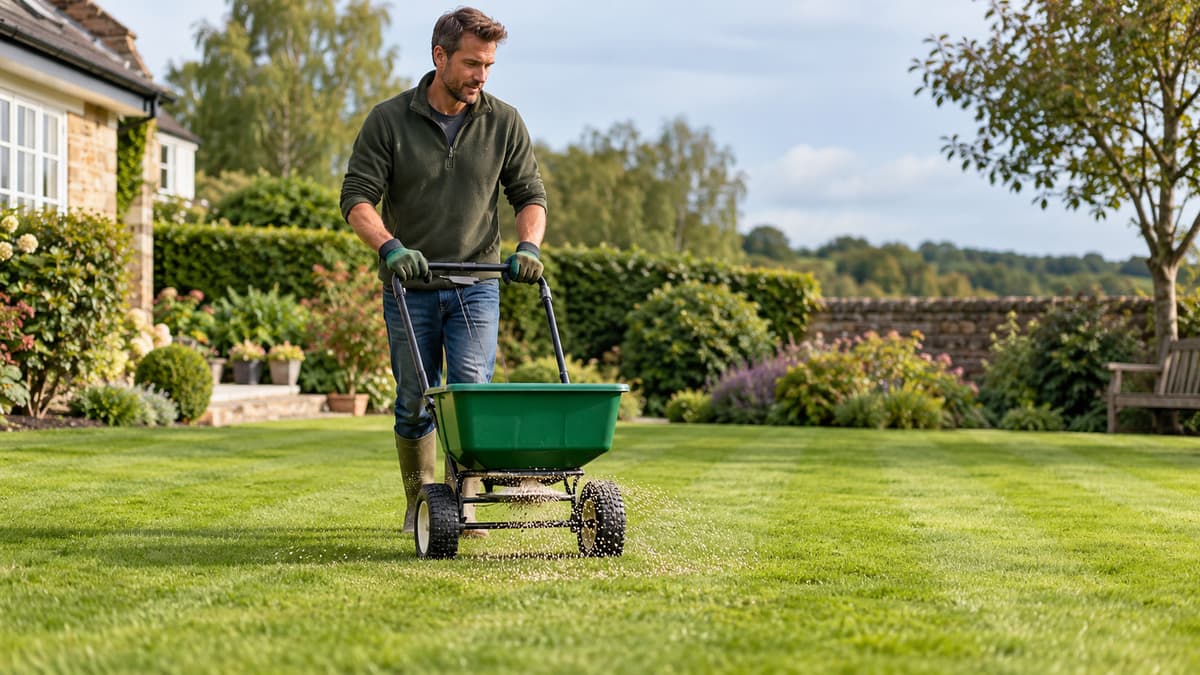
How to feed a UK lawn
Use the label rate, prepare the lawn and spread feed more evenly.

What a UK fertiliser label must show
Understand application rates, coverage claims and the instructions that matter.