How to feed a lawn in the UK without scorching it
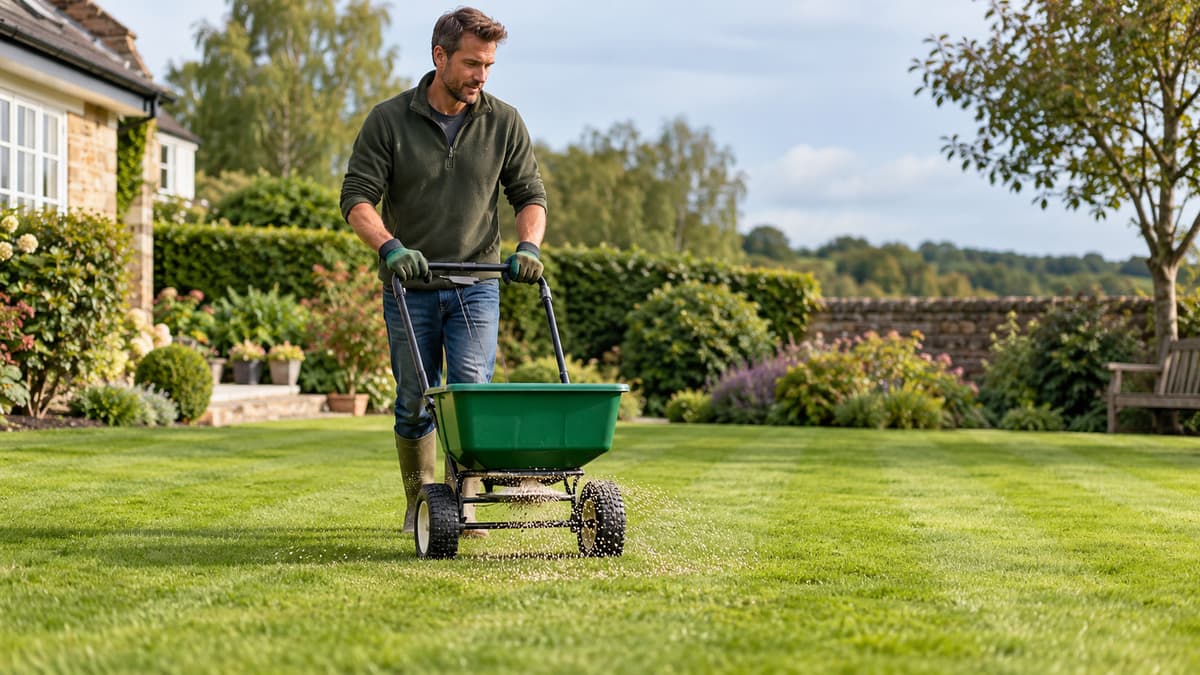
Learn when and how to feed a UK lawn: measure the grassed area, use the labelled rate, spread granules evenly and water them in without scorching the grass.
On this page
The safest way to feed a lawn in the UK is to measure the grassed area, use the rate printed on your product and spread the calculated amount evenly. Apply only while the grass is actively growing, then follow the label on watering, mowing and keeping people or pets off the treated area.
Guessing the dose, or filling a spreader while it sits on the lawn, can leave pale gaps, dark stripes or scorched patches.
In short
For most established UK lawns, spring feeding begins only after growth has restarted, often in late March or April; feeding is optional if the grass is already healthy. Measure in square metres, calculate the exact quantity from the pack rate, apply half in each of two directions where the instructions permit, and water granular feed in as directed.
Decide whether your lawn needs feed
Lawn feed is useful when you want denser growth, better colour or recovery after wear, but it is not a compulsory monthly treatment. The Royal Horticultural Society's spring and summer lawn guidance describes feeding as optional and recommends matching care to the lawn's condition.
Fertiliser will not fix compacted soil, persistent shade, drought, waterlogging, a blunt mower or cutting too short. If the lawn is dry enough to crack or wet enough to squash underfoot, improve the conditions and wait for active growth before you feed.
Set a modest objective: encourage recovery, improve density or support growth after scarifying. Compare the formulations in our Substral lawn fertiliser guide and WOLF-Garten lawn fertiliser comparison, but let the label on the product you actually buy control the application.
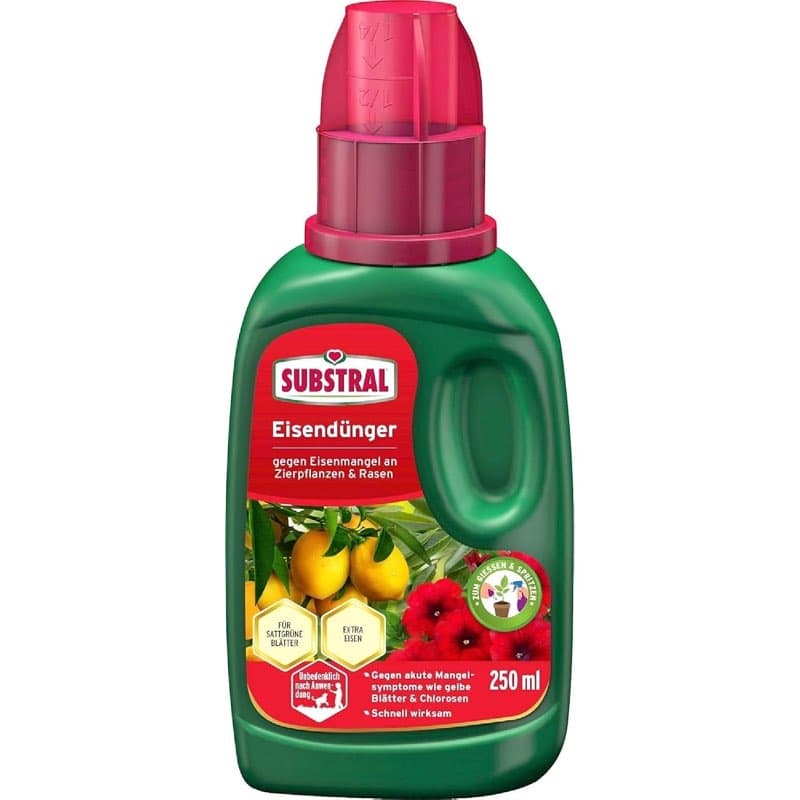
The top pick on the Substral page is the Substral 7391 Iron Fertiliser Green, about £15.35, at 4.6 from 848 amazon.co.uk ratings. That listing states no square-metre coverage, so you still need the rate printed on the pack you apply.
Choose the right feed and timing
Start when the lawn is growing, not simply when the calendar says spring. The RHS March lawn advice suggests a high-nitrogen feed in late March only when grass needs a boost. Frozen, waterlogged, dormant or drought-stressed turf is a reason to wait.
Spring and summer feeds commonly contain more nitrogen to support leafy growth. Autumn products should be used at their stated season and rate. The RHS advises stopping high-nitrogen feeding after August because lush late growth is more vulnerable as conditions cool.
A straight fertiliser, a weed-and-feed and a moss-control treatment are different products. Herbicide and moss-control lines carry extra rules on protection, weather, re-entry, mowing and disposal. Read the full label before you open the pack.
Light rain may help water in a suitable granular product. Heavy rain can wash granules into hollows, borders or drains. Choose a calm day so the particles do not drift, and be ready to water if the forecast shower misses your garden.
Measure the lawn and the dose
Measure before opening the bag. For a rectangle, multiply length by width; a lawn 12 metres long and 5 metres wide is 60 m². Divide an irregular lawn into simple rectangles or triangles, calculate each part and add them together. Subtract large patios, beds and ponds because feeding areas without grass wastes product and may cause pollution.
Next, find the application rate on the pack in grams per square metre and multiply that figure by the measured area.
- A 60 m² lawn treated at 25 g/m² needs 1,500 g.
- Convert 1,500 g to 1.5 kg before weighing the dose.
- Treat that as the total allowance for the whole 60 m², not the amount for each pass.
The calculation is reliable only when the label rate matches your product. Example rates of 25 g/m² and 50 g/m² differ by a factor of two. Do not borrow either figure for an unlisted bag. If a pack gives no clear gram rate or coverage, ask the manufacturer or choose a product with usable directions.
Use scales or the pack's own measure. Do not estimate by handfuls. Mark the lawn into equal sections and divide the weighed feed between them. If one quarter of the lawn is 15 m², it receives one quarter of the total dose.
Do all filling and weighing on paving or over a clean sheet, never with the spreader parked on the grass. A spill beneath the hopper can deliver many times the intended rate to one small patch. Do not hose it into a drain.
Apply granular feed evenly
A rotary spreader covers ground quickly, while a drop spreader places granules in a narrower strip. The setting number is not a universal dose: number 4 on one model does not mean the same output on another, and granule size changes the flow. Start with the product's spreader table where one is provided.
If there is no matching chart, calibrate away from the lawn. The Rolawn spreader guidance recommends testing on a hard surface where the output can be collected. If your spreader is not listed on the bag, do not copy a setting from a different machine.
Where the pack permits two passes, close the setting enough to apply half the total in one direction and half at right angles. Walk at an even pace along parallel lines, then repeat across them. The crossing pattern reduces gaps and stripes, but it does not authorise a double dose.
Keep the hopper closed while filling, turning or stopping. Open it only once you are moving and close it before the end of a run. Maintain the same walking speed, because moving slowly deposits more material per metre. Leave a buffer beside ponds, drains, hard surfaces and borders as the product directs.
Apply by hand only if the label allows it
For hand application, confirm that the label allows it and wear the stated protection. Divide each section's allowance in two, walk one direction with the first half and cross it with the second.
Water in and plan the aftercare
Granular lawn feed often needs watering in, but the pack remains the authority. Water distributes nutrients into the soil and clears particles from foliage, reducing the chance of scorch. Many granule labels want dry leaves first, then water. Use an even sprinkler pattern across the whole treated area.
Keep children and pets away for the period stated on the label. Store the remaining feed in its original closed container, somewhere dry and out of reach, and never decant it into a food container.
Delay mowing until the instructions allow and the granules have dissolved or moved into the soil. Boston Seeds' granular fertiliser guidance advises not boxing off early cuts if granules are still present. Do not scalp the lawn in preparation: grass that is already stressed is a poor surface for feed.
Do not add another feed because the lawn has not turned green immediately. Dark bands beside pale bands usually indicate uneven coverage. Brown lines or patches can indicate excess product or poor watering.
New turf, seed and bare patches
New turf and newly seeded grass can be unsuitable for a standard lawn feed. Follow the supplier's advice and the label. Repair a bare patch with seed or turf, and apply the calculated rate only where the product directs.
Use liquid lawn feed correctly
Liquid feed still needs an area calculation, and it is not a granule rate poured into water. Dilute a concentrate to the bottle's stated coverage, or follow the hose-end product's own flow. Making the mixture stronger can damage the grass.
For a watering can, calculate how many full cans the measured lawn requires. Mark that many equal sections and use one can per section at a steady pace. Practise with plain water on paving if you are unsure how quickly the can empties.
With a hose-end feeder, check the connector and selector, then start moving as the flow starts. Use parallel passes and stop if wind carries spray beyond the lawn. Wet grass alone may not show where the feed landed.
The method is deliberately unglamorous: measure, read, weigh, divide, spread and water. If you buy through a qualifying link, Products Compared may earn a commission at no extra cost to you.
Common questions
What month should I start feeding my lawn in the UK?
Should grass be wet or dry when I apply lawn feed?
Do I need a spreader to fertilise a lawn?
How much lawn fertiliser should I apply?
Should I feed a lawn before rain?
How long should I wait before mowing after feeding?
Can I apply liquid lawn feed in the same way as granules?

Products Compared publishes British-English buying guides based on amazon.co.uk listings and public UK sources. We do not run a lab and we do not invent test scores.
Related articles
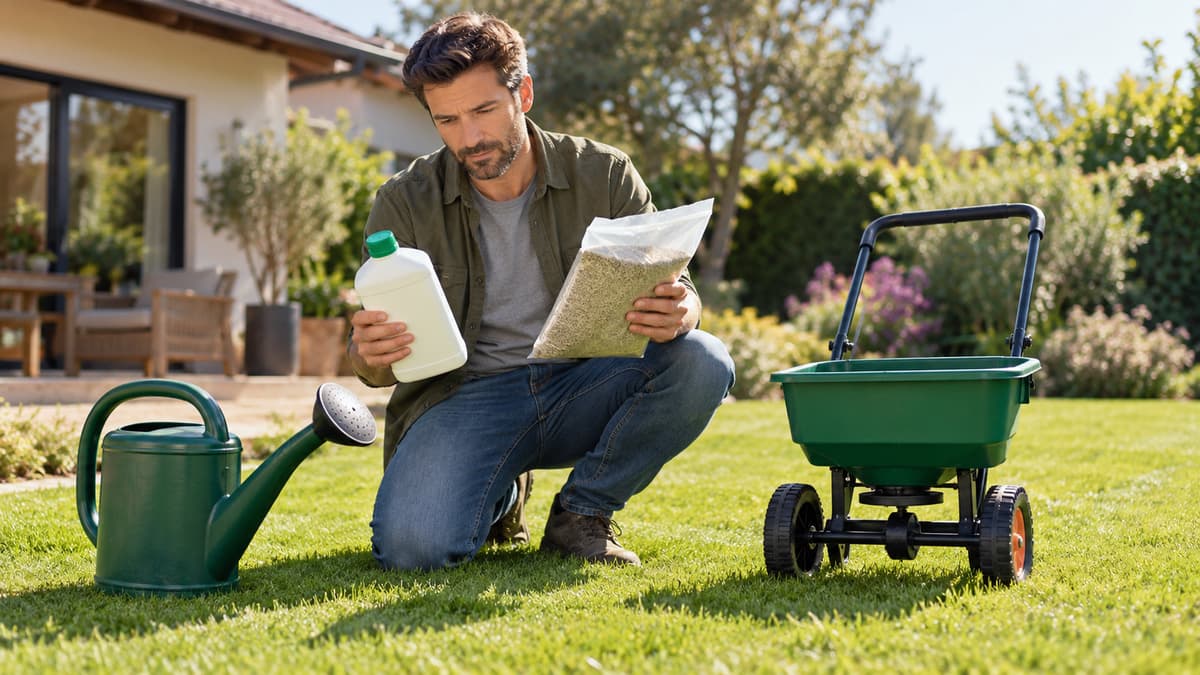
Granules or liquid lawn feed
Compare coverage, application and scorch risk before choosing a lawn fertiliser format.
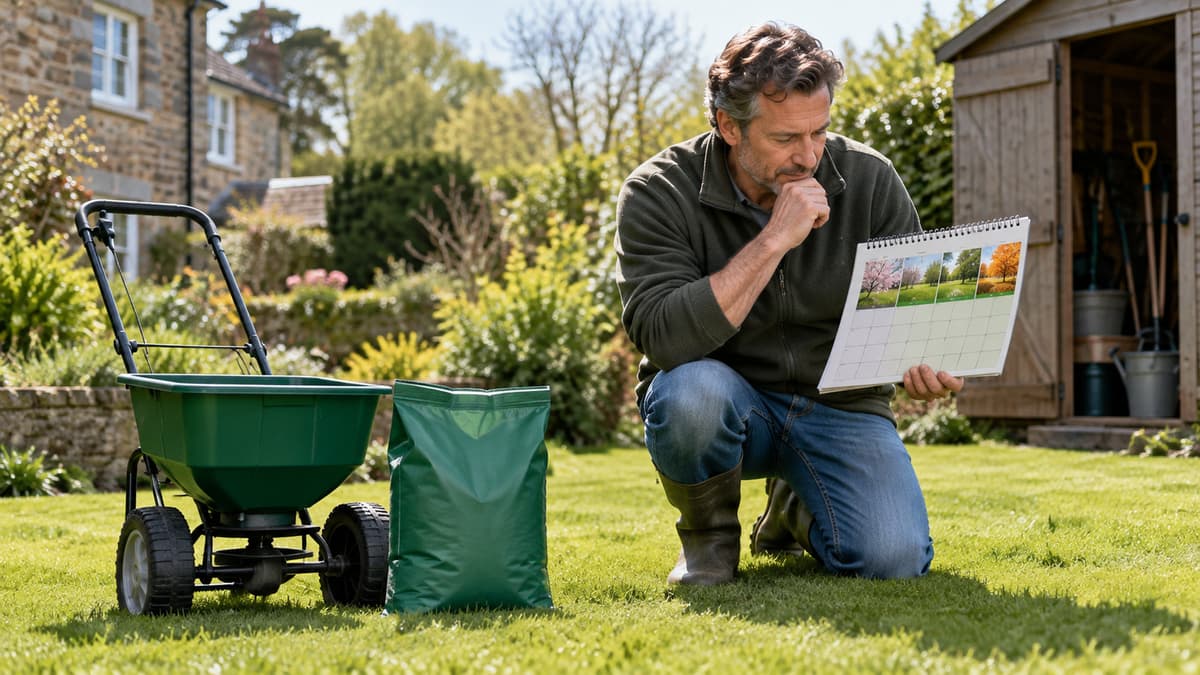
How often to feed a lawn
Choose a sensible feeding interval for the product, season and condition of your lawn.
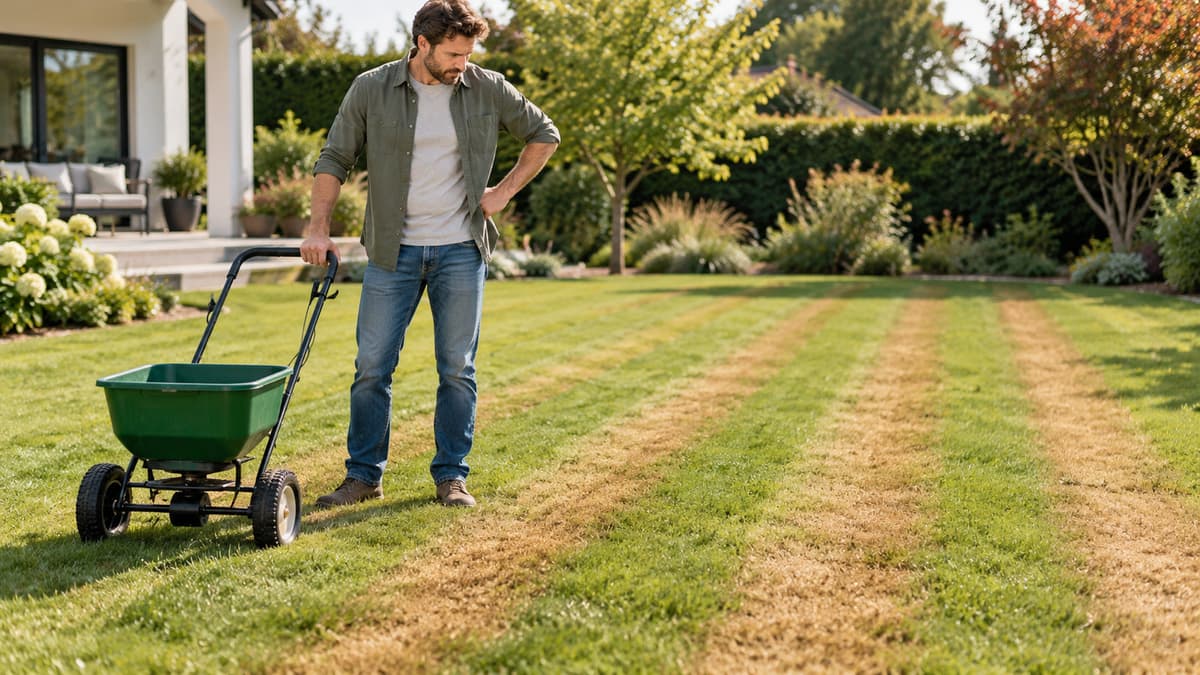
Brown stripes after feeding a lawn
Find the likely cause of stripes and scorched patches, then decide what to do next.