Granular or liquid lawn fertiliser: which to choose
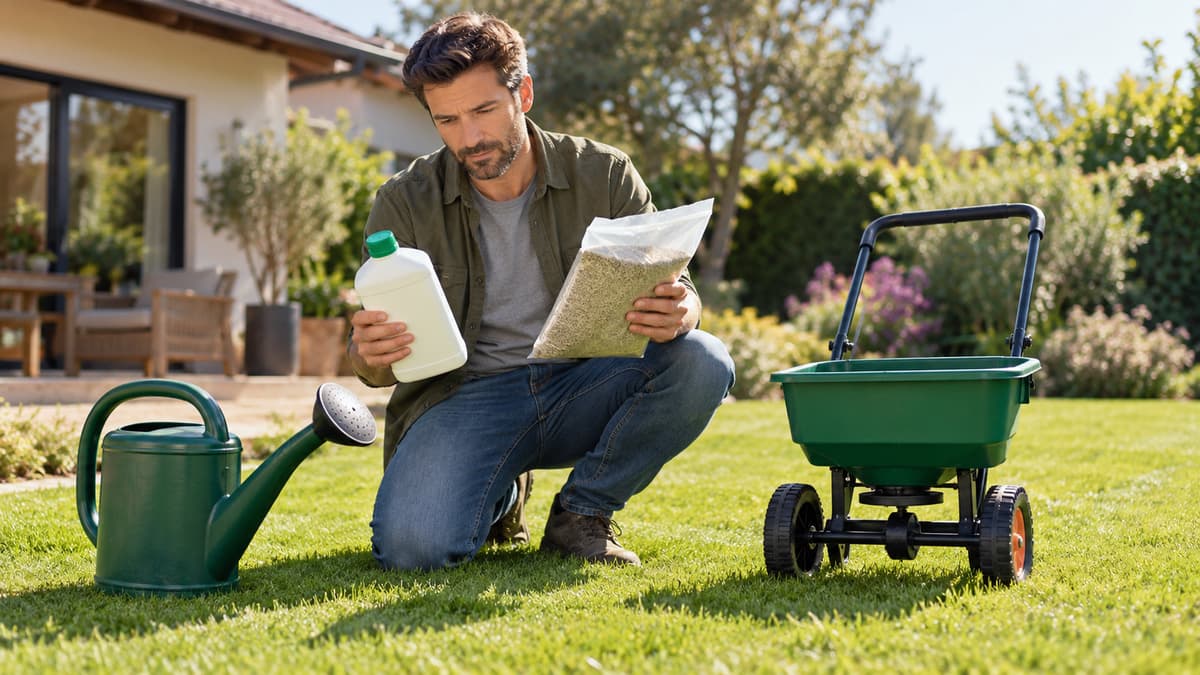
Compare granular and liquid lawn fertiliser by lawn size, application time, equipment and scorch risk, with practical advice for UK gardens.
On this page
A watering can can make liquid lawn feed look like the simple option, while a bag of granules can appear better suited to serious lawn care. In practice, granular or liquid lawn fertiliser can both work well: the deciding factors are your lawn's area, the equipment you can use accurately, the printed application rate and the weather on the day. Neither format protects grass from an over-strong dose or uneven coverage.
In short
Choose liquid feed when you have a relatively small lawn and can follow a clear dilution rate without losing track of where you have watered. Choose granules when a calibrated spreader will make a medium or large area quicker and more even. If a product has contradictory coverage claims, no usable rate or instructions you cannot follow, leave it on the shelf regardless of format.
How granular lawn fertiliser works
Granular lawn fertiliser puts a measured mass of solid particles across a measured area. The nutrients become available as the granules dissolve, which is why many products tell you to apply them when the soil is moist and then rely on rain or watering. Read the specific bag before you begin, because instructions differ between straight lawn feeds and products that combine feed with other treatments.
On a 400 m² lawn, walking systematic passes with a suitable rotary or drop spreader is usually more practical than mixing and carrying many watering cans. If a bag says 35 g/m² and your lawn is 100 m², the job needs 3.5 kg. Weigh that amount before opening the spreader. A handful is not a measuring tool, and the darkest stripes often reveal where passes overlapped.
Rolawn's guidance on lawn spreaders recommends calibration rather than assuming a setting will deliver the intended rate. Different particle sizes flow differently.
A safer spreading routine
Measure the lawn and deduct substantial beds, patios and paths. Weigh the required quantity away from the grass, then set the spreader up on a hard surface. Boston Seeds recommends applying half the rate in one direction and the other half at right angles.
Keep a consistent pace and close the hopper whenever you stop or turn. Do not fill it while it is standing on the lawn: one failed latch can place a concentrated heap exactly where roots and leaves will be damaged. Sweep stray granules off paving so they do not stain stone or reach a drain.
How liquid lawn feed works
Liquid lawn feed exchanges a spreader for a mixing and delivery system: a watering can with a sprinkler bar, a hose-end applicator or, where the label permits it, suitable spraying equipment. The concentrate still has a dose per area. Adding water helps distribute that dose, but water does not make an excessive amount of fertiliser harmless.
For a tiny lawn, mark the area into sections, mix one batch and cover each section with overlapping sweeps. Use an ordinary watering can only when the label gives a watering-can dilution and the can has a suitable rose. Do not transfer a sprayer rate to a watering can.
Suppose one watering-can batch covers 10 m²: a 100 m² lawn needs ten correctly measured batches, at the same dilution and pace. A direction such as 150 ml in 2.5 litres is incomplete for planning unless the label also makes clear how much lawn that mixture should cover.
Which is easier for your lawn size?
There is no precise area at which liquid becomes wrong and granules become right. A rectangular 150 m² lawn may be straightforward with a spreader, while a 60 m² lawn divided by trees and narrow strips may be easier to treat in small liquid batches.
If the product requires 100 ml per 10 m², a 37 m² lawn needs 370 ml in total, distributed using the labelled water ratio. Do not round that up to half a bottle. Measuring the area and applying the stated rate is covered in how to feed a UK lawn.
On a larger lawn, a granule application may involve a short setup and then far fewer refills. Keep concentrate in its original container, closed and out of reach of children and animals. Never decant leftover mixture into a drinks bottle. Format alone does not establish pet safety. Follow the label for how long people and animals should stay off the treated area.
Scorch risk and weather
Neither format forgives a dry, stressed lawn. Granules can sit in concentrated patches, and liquid can dry on the leaf at an excessive strength. Lawnsmith's scorch guidance notes that liquid fertilisers may scorch dry leaves and that products containing iron can mark grass when used at inappropriate rates.
The RHS advises applying lawn fertiliser evenly when the soil is moist, or when rain is expected. The product label decides whether to water granules in, whether leaves should be dry and how long rain should stay away. Avoid feeding during drought, immediately after severe scalping, or in wind that blows material onto borders.
First decide whether the lawn needs feeding and whether the formulation suits that point in the growing year. Use the manufacturer's stated response window for greener colour rather than feeding again the next day. If stripes appear, brown stripes after feeding a lawn sets out what to do next.
If you spill or overlap
Stop as soon as you notice a granule heap or a concentrated liquid spill. Collect dry granules rather than spreading the pile with your shoe, then follow the bag's spill and watering directions. For liquid, use the label's safety instructions and keep it out of drains and ponds.
Do not respond to a missed-looking strip by immediately applying another full pass. Record the date, product, rate and conditions, then wait for the response period stated by the manufacturer.
How to compare two products
Ignore bottle size and bag weight until you have found the application rate. A 2.8 kg bag at 35 g/m² covers 80 m²; a 2.8 kg bag at 70 g/m² covers 40 m². Liquid needs the same calculation from concentrate per batch and square metres per batch.
The front label may advertise a maximum area while a dilution line implies a different total. If the product does not explain the difference, do not invent one. Ask for clarification and keep a photograph of the label you actually used. Count a spreader in the cost of granules if you cannot spread them evenly by hand, and count time and water in the cost of liquid.
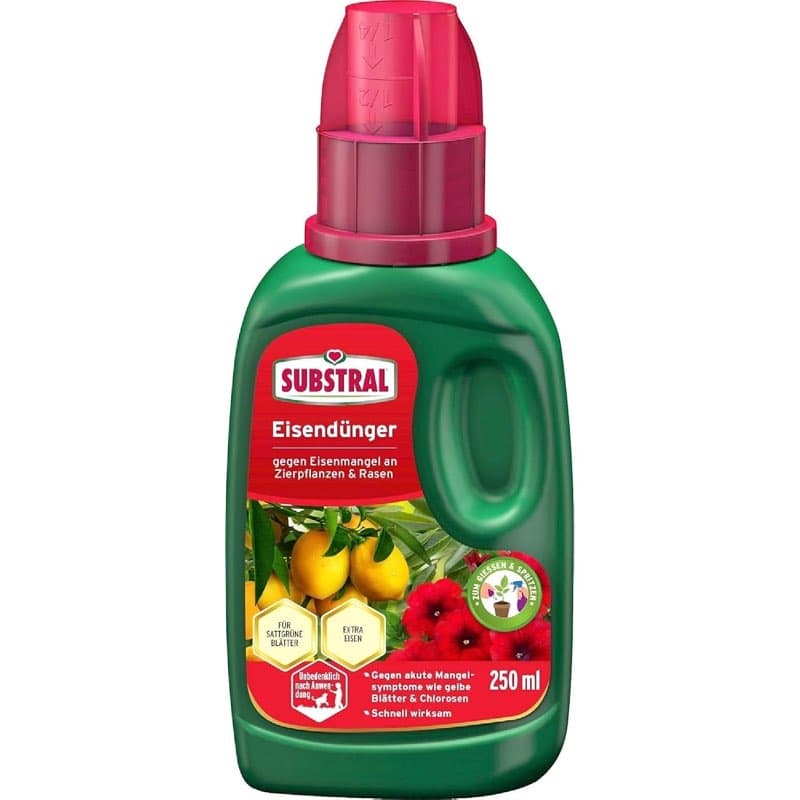
The Substral lawn fertiliser comparison sets out liquid and granular options in this set. Its top pick is Substral 7391 Iron Fertiliser Green, listed on amazon.co.uk at about £15.35, with a rating of 4.6 from 848 reviews. That is the highest review count and the lowest shelf price in the comparison.
It is a liquid iron feed, not a complete seasonal programme. The listing gives no square-metre coverage, no NPK analysis and no usable dilution, and the pack fields conflict between 250 ml and 2,000 ml. Check the bottle before mixing. A high rating is not a moss-control claim. A qualifying purchase can earn us a commission at no extra cost to you. About £15.35 is this comparison's listing, not a live basket.
The practical verdict
For a small lawn, liquid feed is often the more sensible first option when the bottle gives a complete, consistent dilution and area. Every refill creates another opportunity to mismeasure or overlap, and an over-strong mixture can scorch dry grass.
For a medium or large lawn, granular feed applied with a calibrated spreader is often quicker and easier to keep consistent. Weigh the required mass, use a two-direction half-rate pattern where the product and spreader permit it, and follow the watering directions.
The most reliable decision is which labelled rate you can apply evenly across your measured lawn today. If the weather is wrong, the grass is stressed or the coverage figures conflict, postpone the job.
Liquid is a delivery format, not a no-scorch guarantee.
This page is from the Products Compared editorial team. Figures come from the amazon.co.uk listings in this comparison and the public UK pages linked above. We did not run a lawn trial.
Common questions
Is liquid lawn fertiliser better than granules?
Which lawn feed is easiest for a small garden?
Do liquid lawn feeds need watering in?
Can liquid lawn feed scorch grass?
Do granular lawn feeds have to be watered in?
What should I do if a bottle gives two coverage figures?
Can I use the same lawn feed in spring and autumn?

Products Compared publishes British-English buying guides based on amazon.co.uk listings and public UK sources. We do not run a lab and we do not invent test scores.
Related articles
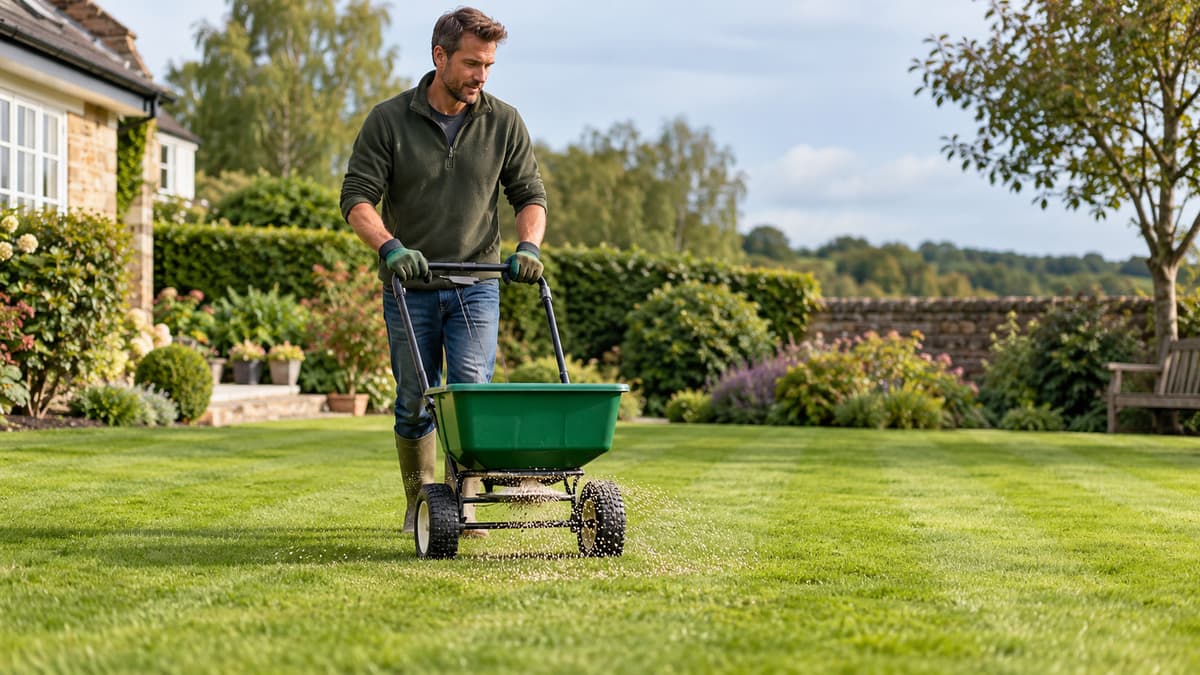
How to feed a lawn in the UK without scorching it
Measure the area, follow the stated rate and apply lawn feed evenly without scorching the grass.
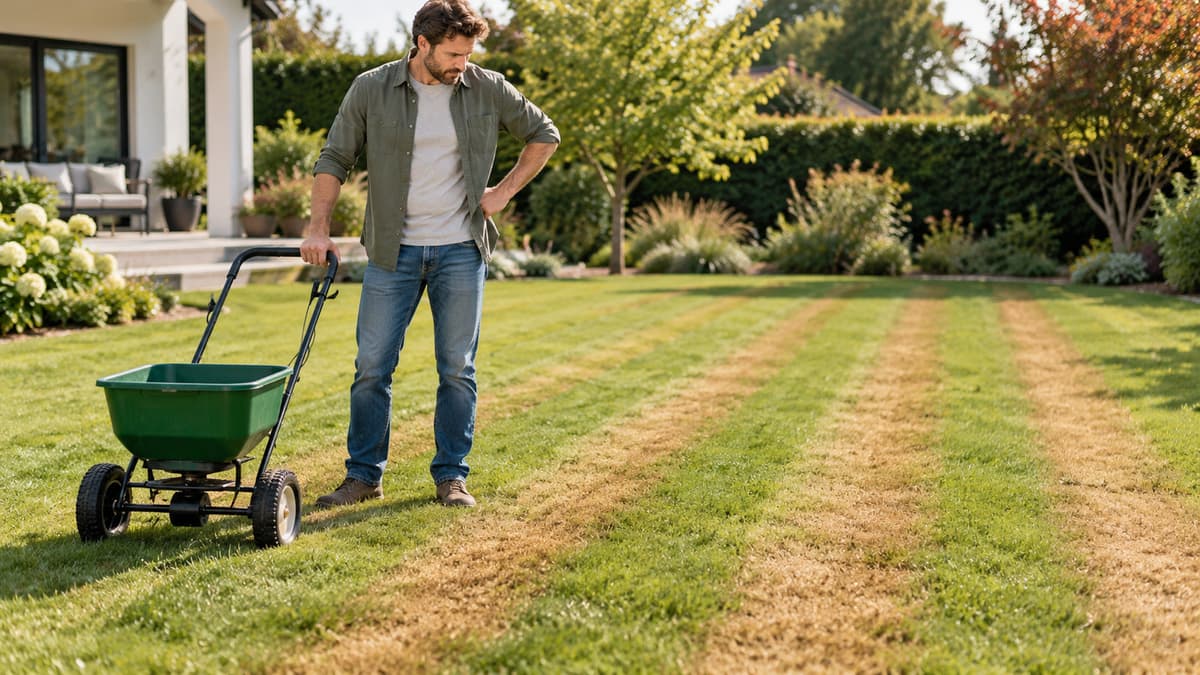
Brown stripes after lawn fertiliser: what to do
Find the likely cause of stripes and scorched patches, then decide what to do next.
How often to fertilise a lawn: a practical UK schedule
Choose a sensible feeding interval for the product, season and condition of your lawn.