How to fit wire mesh without sealing the wrong hole
The roll is on the path, the snips are in your hand, and the gap is a chewed board, an air brick or a line of posts. How to fit wire mesh, for these amazon.co.uk rolls, is measure, protect your hands, cut, then fix the edge so it cannot be pushed past. It is also knowing when to stop: a flue, a nest in use, or a fence higher than the limit where you live. Prices stay on the [wire mesh comparison](/hub/fencing-and-wire/wire-mesh). The Products Compared editorial team set these steps from the listings and public UK sources on 16 October 2026, with no lab test. A qualifying purchase can earn a commission at no extra cost to you.
The roll is on the path, the snips are in your hand, and the gap is a chewed board, an air brick or a line of posts.
The roll is on the path, the snips are in your hand, and the gap is a chewed board, an air brick or a line of posts. How to fit wire mesh, for these amazon.co.uk rolls, is measure, protect your hands, cut, then fix the edge so it cannot be pushed past. It is also knowing when to stop: a flue, a nest in use, or a fence higher than the limit where you live. Prices stay on the wire mesh comparison. The Products Compared editorial team set these steps from the listings and public UK sources on 16 October 2026, with no lab test. A qualifying purchase can earn a commission at no extra cost to you.
Our top picks
| Badge | Product | Hand cutting | Tools in the box | Size | Note | Price | Offer |
|---|---|---|---|---|---|---|---|
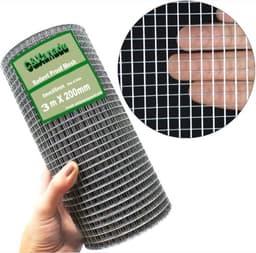
| Best overall |  C&Xanadu C&Xanadu 200 mm x 3 m rat mesh | Tin snips | Not listed | 200 mm x 3 m | 8.7 | about £11.58 | View offer |
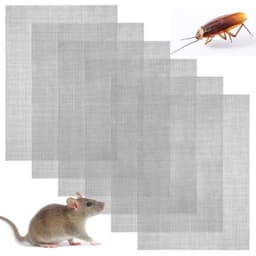
| Preis-Tipp |  Not stated 304 stainless mesh sheets, pack of 6 | Scissors or snips | Not listed | 6 sheets, 15 x 21 cm | 7.9 | about £6.99 | View offer |
| Alternative |  Anesty Anesty chicken wire 40 cm x 10 m kit | Included plier | Plier, gloves, 50 ties | 40 cm x 10 m | 8.5 | about £12.71 | View offer |

On this page
Measure the gap and add overlap
Gloves, snips and a roll that springs
Fix it so the edge cannot be pushed past
Soil, vents, height and wildlife
When the roll should stay in the packet
Common questions
What should I wear when I cut the roll?
How do I stop the roll springing open?
Can I cover an air brick and still let air through?
How do I fix mesh to wood or brick?
How high can I take a mesh fence?
When do I stop and call someone?
Related pages
Sources
Sources from the research digest. amazon.co.uk listings in this comparison were checked for the 16 October 2026 score. We did not run a laboratory test.
- Town and Country Planning (General Permitted Development) (England) Order 2015, Schedule 2, Part 2, Class A (retrieved 15 October 2026)
- Planning Portal: Fences, gates and garden walls (retrieved 15 October 2026)
- GOV.WALES: Planning permission for fences, gates and garden walls (retrieved 15 October 2026)
- Scottish Government: Householder permitted development rights, Class 3E (retrieved 15 October 2026)
- GOV.UK: When is permission required? (retrieved 15 October 2026)
- Consumer Rights Act 2015, section 9 (retrieved 15 October 2026)
- Wildlife and Countryside Act 1981, section 1 (retrieved 15 October 2026)
- Hedgehog Street: Link your garden (retrieved 15 October 2026)