Picket fence buying guide
You have a front path, a flower bed, or a small dog in the border, and the same search has offered a 30 cm plastic edge and a timber panel that needs posts. A picket fence buying guide has to split those jobs before the price looks clever. The [picket fence comparison](/hub/fencing-and-wire/picket-fence) holds the four amazon.co.uk listings in this set. Peter F. stored the shelf prices on 19 October 2026. This page is the checklist: the job, the finished height, what touches the soil, and the true run. A border is not a front boundary. Two packs of 33 cm plastic do not become that fence.
You have a front path, a flower bed, or a small dog in the border, and the same search has offered a 30 cm plastic edge and a timber panel that needs posts.
You have a front path, a flower bed, or a small dog in the border, and the same search has offered a 30 cm plastic edge and a timber panel that needs posts. A picket fence buying guide has to split those jobs before the price looks clever. The picket fence comparison holds the four amazon.co.uk listings in this set. Peter F. stored the shelf prices on 19 October 2026. This page is the checklist: the job, the finished height, what touches the soil, and the true run. A border is not a front boundary. Two packs of 33 cm plastic do not become that fence.
Our top picks
| Badge | Product | Stated height | Material | What meets the soil | Note | Price | Offer |
|---|---|---|---|---|---|---|---|
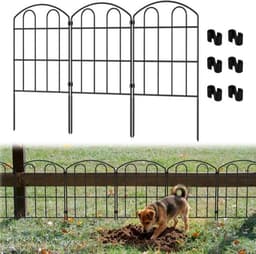
| Best overall |  LIANTRAL LIANTRAL 61 cm steel picket set | 61 cm panel | Powder-coated steel | Screw-in legs, galvanising not stated | 8.2 | about £23.48 | View offer |
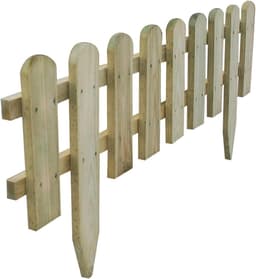
| Best value |  AJ AJ timber picket panel | 40 cm or 40 mm | Timber | Pressure-treated claim, no Use Class | 5.8 | about £9.99 | View offer |
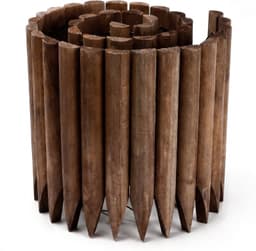
 JonesHouseDeco JonesHouseDeco 120 cm picket roll | 30 cm | Timber | Spikes in soil, treatment not stated | 7.1 | about £25.99 | View offer |
On this page
Three products share the name
Height, gaps and the gravel board
Timber treatment, plastic and steel coatings
What to measure before you order
Common questions
Is a picket fence a privacy fence?
What height marks a bed without looking like a boundary?
When do you need posts instead of spikes?
What does pressure treated need to say before you trust it?
How wide a gap is normal, and what does that mean for a dog?
Related pages
Sources
Public UK sources and the amazon.co.uk listings used for this comparison. Prices stored 19 October 2026.
- Planning Portal, fences, gates and garden walls: planning permission (retrieved 19 October 2026)
- Town and Country Planning (General Permitted Development) (England) Order 2015, Schedule 2 Part 2 (retrieved 19 October 2026)
- Welsh Government, planning permission for fences, gates and garden walls (retrieved 19 October 2026)
- mygov.scot, building a fence or wall at your house (retrieved 19 October 2026)
- Planning (General Permitted Development) Order (Northern Ireland) 2015, Part 3 (retrieved 19 October 2026)
- HM Land Registry, boundaries and boundary disputes (retrieved 19 October 2026)
- Wood Protection Association, buyer guide to preservative treated wood, September 2025 (retrieved 19 October 2026)
- Timber Development UK, fencing products (retrieved 19 October 2026)