Independent comparisons. We may earn from shop links. More info

How to fit fence slats

Updated: October 2026

The boards or the roll are already in the hall, and you want them on the boundary this afternoon. How to fit fence slats starts one step earlier than the first nail. The face goes on last. Posts, rails and a gravel board come first if you are building, and a fence that already stands has to be sound if you are only covering it. The [fence slats comparison](/hub/fencing-and-wire/fence-slats) is where the five amazon.co.uk listings are priced. This page is the order of work. Peter F. used those listings and public UK fitting notes. There is no lab test of a finished bay.

The boards or the roll are already in the hall, and you want them on the boundary this afternoon. How to fit fence slats starts one step earlier than the first nail. The face goes on last.

Our top picks

On this page

Set the line before the slats

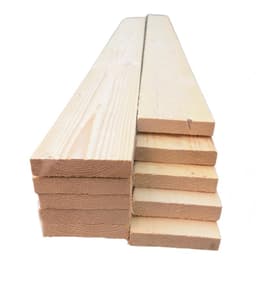
A close-boarded run is posts, then a gravel board, then arris rails, then the boards. Lawsons’ install note, a trade method and not a standard you must copy metre for metre, puts the bays at about 3 m and only then hangs the boards. Five WoodworxPro boards at 60 cm, 90 cm or 120 cm are not that bay. They are short pine, 19 mm by 100 mm, with no posts in the pack. If the timber in the ground is rotten, new slats will not stiffen it. A gravel board, or a deliberate gap, keeps the face timber off the soil. Above-ground boards, when a merchant specifies them, are Use Class 3. Posts in the ground are Use Class 4. Do not concrete the holes if you have never set posts.

Fixing timber boards

These pine packs are square 19 mm by 100 mm, not sold as tapered feather edge, so there is no thick edge to aim at. If you lap them anyway, nail through the overlap into the rail with a corrosion-resistant nail, and keep the end grain off the soil. Lawsons mentions 50 mm galvanised nails in their close-board method. Check that length against your rail. Pick one lap and keep it. Five boards with a 25 mm lap cover well under half a metre. Cut ends need preservative before they go up. The Wood Protection Association’s notes ask for two brush coats on fresh cuts. Let that dry before you nail.

Fixing a roll

A roll skips the arris rails only because something else is already doing that job. Primrose’s screening note says a bamboo roll is not a hurdle. If you want it freestanding you build a frame first. Suregreen talks about posts at most 2 m apart for that frame, and says you should ask before you fix anything to a neighbour’s fence. Neither Wadan nor Abaseen puts the fixings in the box. Abaseen states that assembly is required. Fix the binding wire, not the cane. A staple through the bamboo splits it. Spacing in those notes is about every 10 cm along the wire and about every 50 cm up the height. A roll fixed only at the corners becomes a sail. Measure first. Wadan’s title says 1.5 m by 4 m and the technical details also say 100 × 100 × 300 cm. Keep the bottom off the soil. A 1.5 m roll on a 1.8 m fence leaves a strip at the top.

When to stop

Stop when the posts move in your hand. New boards on a rotten post are a weekend you will repeat. Stop, and go back to the fence slats buying guide, if the pack in the hall is 60 cm and the bay is 1.8 m. Nailing cannot invent the missing length. Stop if you are about to staple a second bamboo layer onto a fence that already leans. The extra layer is more wind, not more posts. A qualifying purchase through the amazon.co.uk links can earn us a commission at no extra cost to you.

Common questions

Do I nail the thick edge or the thin edge?
On tapered feather edge, trade guides say one nail per rail through the thick edge, with the thin edge lapped over the next board. The pine in this comparison is square 19 mm by 100 mm, so there is no thick edge. If you overlap those boards, nail through the lap into the rail. Do not copy a feather-edge diagram onto a square board and expect the same shadow line.
How much should the boards overlap?
Use one supplier figure and keep it. Published practices include at least 20 mm (Lawsons), about 25 mm (Timberstore), and 35 mm to 40 mm (AVS Fencing). They are not a single number in a British Standard you can treat as the only legal lap. A 25 mm lap on a 100 mm board leaves about 75 mm of face. A drawing that illustrates BS 1722-5 uses about 18 mm. Measure the first three boards before you nail the rest of the bay.
How many rails do I need?
BSW’s fencing guide uses two rails up to 1,200 mm and at least three above that. Timberstore’s feather-edge steps say the same split, about two rails to 1.2 m and three when the fence is taller. A low repair can use the rails already on the frame. A new 1.8 m bay needs the extra rail, and it needs boards long enough to reach the top rail. The longest pine pack here is 120 cm, so it does not dress that taller bay.
Can the roll stand on its own?
No. A screening roll is a cover. A freestanding run needs a frame you build first, with posts that can take the wind. Suregreen’s note on this kind of screen says it cannot stand independently. Tying Wadan or Abaseen to a fence that already leans does not create that frame. If you still need posts, you are no longer fitting a roll. You are building a fence.
When should a fencer take over?
When you have not set posts before, when the boundary is a highway, a listed site, a Scottish conservation area, or a line a neighbour disputes, and when the existing posts are soft. England often allows 2 m, and 1 m next to a highway used by vehicles, with listed buildings and local directions outside that simple pair. Wales, Scotland and Northern Ireland are not the same sentence. Also stop when the slope means each bay changes height and you are guessing the concrete.

Related pages

Sources

Public UK sources listed in the research digest. Listing prices, stars and review counts are from the amazon.co.uk files kept for these five ASINs. Retrieved October 2026.

  1. GPDO 2015, Schedule 2, Part 2, Class A — England (retrieved October 2026)
  2. Welsh Government — planning permission for fences, gates and garden walls (retrieved October 2026)
  3. Scotland Class 3E — gates, fences, walls and other means of enclosure (retrieved October 2026)
  4. Scottish Government Circular 1/2024 — householder permitted development (retrieved October 2026)
  5. Northern Ireland GPDO 2015, Schedule, Part 3 (retrieved October 2026)
  6. BS 1722-5 — close-boarded fences and wooden palisade fences (retrieved October 2026)
  7. Wood Protection Association — buyer guide to preservative-treated wood, September 2025 (retrieved October 2026)
  8. Consumer Rights Act 2015, section 11 — goods to match the description (retrieved October 2026)