Independent comparisons. We may earn from shop links. More info

Fence slats buying guide

Updated: October 2026

You are in a UK garden with a tape measure and an amazon.co.uk basket, and the pack price already looks like a fence. A fence slats buying guide has to slow that moment down. The five listings on the [fence slats comparison](/hub/fencing-and-wire/fence-slats) are either five short rough-sawn pine boards or a bamboo roll titled 1.5 m by 4 m. Length, the face left after an overlap, and treatment decide whether that price fits the bay you have. Peter F. checked those listings against public UK notes on use class and board counts. There is no lab test.

You are in a UK garden with a tape measure and an amazon.co.uk basket, and the pack price already looks like a fence. A fence slats buying guide has to slow that moment down.

Our top picks

On this page

Boards or a roll

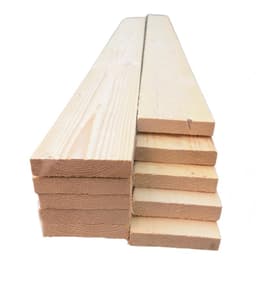
A fence slat in this set is one of two objects, and they fail in different places. A loose board is pine you fix to rails you supply, so it can become the face of a small run. A slat roll is split bamboo on wire, and it only covers a fence, a wall or a frame that already stands. The roll is not the posts. If you still have no sound fence, the cheaper roll does not become a boundary because the title says privacy. The pine is rough-sawn 19 mm by 100 mm, five boards to a pack, at 60 cm, 90 cm or 120 cm. None states a preservative use class. Both rolls are titled 1.5 m by 4 m, and Wadan also prints 100 × 100 × 300 cm. Measure that roll. If the material is still open, stay on timber fence boards or bamboo screening.

Length and how many

On a close-boarded fence the long edge of the board is usually the height. A 60 cm board gives you about 60 cm. A 120 cm board gives you about 120 cm. A common back-garden feather-edge board is 1.8 m. Five short boards do not stack into a 1.8 m bay. Five boards at 100 mm with a 25 mm lap cover well under half a metre of run. A roll titled 1.5 m high stops short of a 1.8 m boundary and does not raise the fence to 2 m. Abaseen prints 6 m², which is 1.5 times 4 if both figures survive a tape.

Treatment

Suitable for outdoor projects is not a use class. The Wood Protection Association’s buyer guide puts fence boards above ground in Use Class 3 and posts in the ground in Use Class 4. The WoodworxPro bullets say you can paint, stain, oil or treat the boards. They do not say the timber arrives pressure treated or marked UC3. The same two review texts praise flat boards and cardboard packing. Fresh end grain still needs a brush coat after a cut. Do not stand that cut end in the soil, and do not turn a 19 mm board into a post. A merchant 1.8 m UC3 feather-edge board states the class these packs leave blank.

What the price does not include

The shelf prices buy boards or a roll. They do not buy the fence. A close-boarded bay still needs posts, arris rails, a gravel board if you are keeping timber off the soil, and corrosion-resistant fixings. None of the five listings puts those in the box. Abaseen’s included-components line says bamboo slat, and assembly is required. A merchant feather-edge board in the 1.5 m to 1.8 m range can be about £1.40 to £2.84 including VAT where the page shows it, and you still buy posts, rails and nails. Five short pine boards look cheaper until you notice the length. The roll needs a fence to hang on. A qualifying purchase through the amazon.co.uk links can earn us a commission at no extra cost to you.

Common questions

How many fence boards do I need per metre?
Count the face, not the full width of the board in your hand. For a 100 mm board with a 25 mm overlap, Timber Online’s rule of thumb is about 13.3 boards per metre, because each board then shows about 75 mm. A drawing that illustrates BS 1722-5 uses about 18 mm of overlap and about 12 boards per metre. A 125 mm feather-edge board with about 25 mm of overlap is nearer 10 per metre in a Travis Perkins guide. Use the overlap you will actually nail.
Is 19 by 100 mm rough-sawn pine the same as feather edge?
Feather edge is tapered, and the merchant boards people mean for a close-boarded fence are often about 22 mm by 125 mm to 150 mm and 1.5 m to 1.8 m long. These packs are square-sawn 19 mm by 100 mm at 60 cm, 90 cm or 120 cm. You can lap a square board, but the thick-edge nail advice written for feather edge does not transfer automatically, and the height is still the length on the pack.
Is a 1.5 m by 4 m roll enough for a 1.8 m boundary?
A roll titled 1.5 m high stops about 300 mm short of a typical 1.8 m back fence, and it does not add that strip. The 4 m figure is the length along the fence, if the roll matches the title. Wadan also prints 100 × 100 × 300 cm, so measure that one flat. Abaseen’s 150 cm by 400 cm and 6 m² agree with the title until you lay the roll out.
How high can the fence be?
In England, a new gate, fence or wall is often permitted up to 2 m, and only up to 1 m next to a highway used by vehicles, with extra limits for listed buildings and for local directions that remove the right. Wales includes the footway in that roadside test. Scotland and Northern Ireland use their own class rules, and a conservation area in Scotland is excluded. Measure the finished fence, including anything fixed on top, and ask the council if the site is awkward.
When is a merchant UC3 board the better buy?
When the bay is about 1.8 m high, you want a stated Use Class 3, and you will buy posts and rails separately. One merchant feather-edge board can be a couple of pounds, and you will need many of them, but the length and the treatment label match a job these five-board packs do not state. Stay with the short pine only when 60 cm, 90 cm or 120 cm is the piece you measured and you will treat it yourself.

Related pages

Sources

Public UK sources listed in the research digest. Listing prices, stars and review counts are from the amazon.co.uk files kept for these five ASINs. Retrieved October 2026.

  1. GPDO 2015, Schedule 2, Part 2, Class A — England (retrieved October 2026)
  2. Welsh Government — planning permission for fences, gates and garden walls (retrieved October 2026)
  3. Scotland Class 3E — gates, fences, walls and other means of enclosure (retrieved October 2026)
  4. Scottish Government Circular 1/2024 — householder permitted development (retrieved October 2026)
  5. Northern Ireland GPDO 2015, Schedule, Part 3 (retrieved October 2026)
  6. BS 1722-5 — close-boarded fences and wooden palisade fences (retrieved October 2026)
  7. Wood Protection Association — buyer guide to preservative-treated wood, September 2025 (retrieved October 2026)
  8. Consumer Rights Act 2015, section 11 — goods to match the description (retrieved October 2026)