Independent comparisons. We may earn from shop links. More info

How to fit a toggle switch: plate or panel

Updated: October 2026

You have either a 1-gang plate to put back on the same back box, or a panel switch that needs the hole printed on its listing. How to fit a toggle switch depends on which of those is in your hand. The [toggle switch comparison](/hub/electrical-equipment/toggle-switch) brings lighting plates and panel parts together from amazon.co.uk, so the steps follow the object you bought. Finish with the next physical step, or stop for a new circuit, a consumer unit, or a bath or shower space. The Products Compared editorial team did not run a lab test. A qualifying purchase can earn a commission at no extra cost to you.

You have either a 1-gang plate to put back on the same back box, or a panel switch that needs the hole printed on its listing. How to fit a toggle switch depends on which of those is in your hand.

Our top picks

On this page

A plate and a panel are different jobs

A lighting plate fixes to a back box with screws. A panel toggle needs the hole the listing states. On these panel listings the round sizes are 12.2 mm, 12 mm and 6 mm. Krysel is a snap-in at 23 mm outside and 20 mm inside. The back box screws stay with the plate. Take the white plate on a landing: two screws release it, the cable stays in the box, and the new plate covers that same opening. A dashboard sits outside dwelling installation work, so the plate rules stop at the house. Mixing a landing swap with a panel cutter is how the job becomes an unplanned cut-out.

A like-for-like plate in England

In England, a like-for-like replacement of a plate sits in the non-notifiable group under Approved Document P (2013). The IET Part P FAQ includes people doing that work themselves. The circuit still has to be left safe. Switch the circuit off at the consumer unit and prove the conductors dead with a suitable tester before a terminal screw turns. Photograph each terminal and move those same conductors onto the matching terminals of the new plate. Pause if a new terminal lacks a partner on the old plate, or if the dead result is still in doubt. Knightsbridge reviews describe screws too long for a thinner back box, or missing until the seller replaced them. White-plate reviews describe screws too short, so the old screws were reused. Fit screws that suit your box. Leave the cable at its present length. Lengthening it is the next stop.

Where you stop

Approved Document P (2013) for England treats three jobs as notifiable: a new circuit, replacement of a consumer unit, and an alteration in a special location. Hand those to a professional who can notify them. A special location includes a bath or shower room to 2.25 m high and 0.6 m out from the bath or tray, or 1.2 m from the shower head where there is no tray, plus a pool or sauna room. If you are unsure, stop. Wales diverged on 31 July 2014. Scotland and Northern Ireland use their own building regulations. These steps are for a like-for-like plate in a home in England.

The panel hole and the terminals

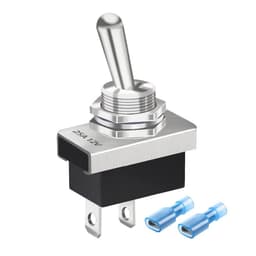
Cut the opening the listing states: 12.2 mm, 12 mm or 6 mm. A 6 mm body leaves a gap in a 12 mm cut-out, and a 6 mm hole is too small for a 12.2 mm body. Krysel's snap-in is a different opening. On the QWORK 20-pack, UK reviews say the body melts when soldered and then shorts. One buyer used 2.8 mm spades. A fixed extra-low-voltage circuit in a dwelling can still fall under Part P. A car dashboard sits outside that job.

Common questions

Is a like-for-like plate swap notifiable in England?
In England, a like-for-like light-switch swap is non-notifiable under Approved Document P (2013), and the IET Part P FAQ includes DIY. Isolate the circuit, prove it dead, and refit the plate on the same back box. A new circuit, a consumer unit, or a special location is notifiable.
What still has to be safe on a non-notifiable replacement?
Isolate and prove dead, return each conductor to the matching terminal, and fix the plate firmly to the same back box. Loose terminals and missed lugs are still failures, and Approved Document P expects the work to be safe. Stop if the plate sits badly.
When should I stop and call a professional?
Stop for a new circuit, a consumer unit replacement, or a bath, shower, pool or sauna space. Approved Document P (2013) treats those as notifiable in England. Also stop if a cable must be lengthened or you have not proved the circuit dead.
What hole size do the panel listings state?
These panel listings state 12.2 mm, 12 mm or 6 mm holes. Use the figure on the amazon.co.uk page for the switch you bought. Krysel is a snap-in at 23 mm outer and 20 mm inner, a different cut from those round holes. If your opening matches none of them, wait for the right part.
Should I solder the switches in the 20-pack?
UK reviews of the QWORK 20-pack on amazon.co.uk say the body melts when soldered and the switch then shorts. One buyer used 2.8 mm spades instead. Fit spades if they grip the tab, and change a loose spade instead of heating the moulding. This warning is for that 20-pack alone.
Does a toggle switch on a car dashboard follow Approved Document P?
A car dashboard sits outside dwelling work, so keep the England notification list for the house. A fixed extra-low-voltage circuit in a home can still fall under Part P. Fit the switch to the stated hole and terminals, and do not treat a dashboard lamp as a room-plate job.
Do the England rules apply in Wales, Scotland and Northern Ireland?
Wales diverged from the England Part P position on 31 July 2014. Scotland and Northern Ireland have their own building regulations. The new-circuit, consumer-unit and special-location list in Approved Document P (2013) is the England list. Check the rules where the property stands before you assume a plate swap needs no notification.

Related pages

Sources

Public UK sources used for this comparison. Listing prices, stars and review counts are from the amazon.co.uk files dated 15 October 2026.

  1. Approved Document P, 2013 (retrieved 15 October 2026)
  2. IET Part P FAQ (retrieved 15 October 2026)
  3. IET, About BS 7671 (retrieved 15 October 2026)
  4. Electrical Equipment (Safety) Regulations 2016, regulation 3 (retrieved 15 October 2026)
  5. Electricity at Work Regulations 1989, regulation 4 (retrieved 15 October 2026)
  6. HSE, electricity at work: the law (retrieved 15 October 2026)
  7. Consumer Rights Act 2015, section 9 (retrieved 15 October 2026)
  8. BSI, BS EN 60669-1:2018 (retrieved 15 October 2026)