Independent comparisons. We may earn from shop links. More info

Home solar battery storage UK

Updated: October 2026

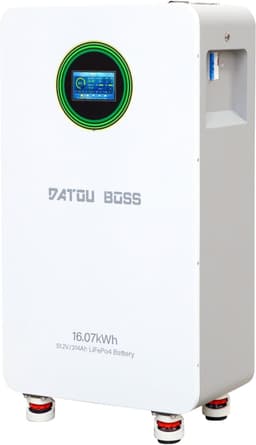
You have a solar array, or you are about to, and a cabinet at £1,369.99 with 16.07 kWh on the title looks like the whole project. Home solar battery storage in the UK is the installed system that holds surplus generation or cheap-rate electricity for later in the day. The only listing of that kind in this comparison is a bare LiFePO4 cabinet, and the shelf price is the goods. Specs for the eight listings are the [Solar battery comparison](/hub/electrical-equipment/solar-battery). This page is the Products Compared editorial team reading that one listing against public UK rules. It is not an install design, and it is not a lab test.

You have a solar array, or you are about to, and a cabinet at £1,369.99 with 16.07 kWh on the title looks like the whole project.

Our top picks

On this page

What a home battery is doing

A home battery stores electricity you have already generated or bought, and it releases it when the house asks. Energy Saving Trust describes that job as keeping more of your solar generation for evening use. Energy Advice makes the matching point that a home battery is storage, not a generator. The Centre for Sustainable Energy tells households to size that store from their own use, and to look at whether backup is actually provided in a power cut. Their payback remark, in the region of 8 to 12 years, is about the technology in general. It is not a forecast for the cabinet below. A typical system in the Trust’s guide is around 10 kWh, with an installed cost of about £1,500 to £10,000 and about £4,600 for a 5 kWh example. Those pounds include the work of putting a system on the wall. Garden AA cells in the rest of this category are not a smaller version of this cabinet.

What the DATOUBOSS page does and does not say

The listing kept here is the DATOUBOSS DT-48314 at £1,369.99. It states 314 Ah and 16.07 kWh. The title says 48 V. The bullets say 51.2 V. Both numbers are printed, so an inverter has to be matched from the datasheet, not by averaging the two figures. Weight is 109 kg. Bullets describe a 200 A battery management system, a colour touchscreen and wheels. Communications are CAN, RS485 and RS232. Expansion is up to 15 cabinets in parallel, not in series. The box is the battery. No inverter, cables, mounts or dimensions are listed. There are no customer reviews in the file. The warranty line is two years. A bullet says 8,000-plus deep cycles and up to 10 years. Those are claims on the page, and no type-test number is printed.

Notification, building work and VAT

Battery storage that connects to the grid is something you tell the distribution network operator about. EREC G98 is the connect-and-notify route for fully type-tested microgeneration, up to 16 A per phase, which is 3.68 kW, with the notification due within 28 days. A home battery added to an existing PV array often takes the scheme over that line, and then EREC G99 is the apply-to-connect route, before you install. This listing shows no type-test reference, so you cannot assume the fast-track form will accept the cabinet. In England, Approved Document P makes a new circuit or a new consumer unit notifiable building work. Scotland’s building-warrant rules are a separate regime. Moving a 109 kg cabinet onto a consumer unit is where a competent electrician takes over. HMRC VAT Notice 708/6 zero-rates a qualifying installation of electrical storage batteries until 31 March 2027. It is not a statement that the £1,369.99 amazon.co.uk price is VAT-free. The page also shows no MCS mark.

When this purchase is the wrong shape

Buy the cabinet when you already have an inverter that speaks CAN, RS485 or RS232, an installer who will notify the network, and a plan for a 109 kg object with no published dimensions. Walk away from the listing alone when you need the inverter in the box, a review record, a type-test number, or a proven backup in a power cut. Paying £1,369.99 does not buy Energy Saving Trust’s £4,600 installed example. If the search was a pack of AA cells, you are in the wrong aisle of the same word. The split between jobs is on the solar battery buying guide. For this cabinet, the next conversation is with an installer who can see your consumer unit, your array and your DNO.

Common questions

Is the £1,369.99 DATOUBOSS price an installed system?
It is the shelf price of the DT-48314 battery. The box contents are the battery, and no inverter is listed. Energy Saving Trust’s band of about £1,500 to £10,000 is an installed-cost range for a different purchase.
Why does the listing say both 48 V and 51.2 V?
The title says 48 V and the bullets say 51.2 V. The file does not say which figure your inverter should use. Your installer matches the inverter to the datasheet rather than to a guess from the title.
What is not in the box?
The listing includes the battery. It does not list an inverter, cables, mounts or dimensions. There is no review line, no MCS mark and no type-test number. The warranty line is two years. The 10-year sentence is a bullet.
Do I tell the distribution network operator?
Yes, when the battery connects to the grid. G98 is a notification within 28 days for fully type-tested equipment up to 16 A per phase, 3.68 kW. Storage added to PV often needs G99 approval before installation. This cabinet prints no type-test number.
Does the VAT zero rate apply to this amazon order?
HMRC’s Notice 708/6 zero-rates qualifying installations of electrical storage batteries until 31 March 2027. The relief attaches to a qualifying install. It does not turn the £1,369.99 amazon.co.uk price into a VAT-free sticker.
Can this cabinet run the house in a power cut?
The bullets mention backup and off-grid use. The box does not include an inverter, and nothing in the file shows a power-cut test. Ask the installer whether the inverter supports island mode and whether the DNO application covers it.

Related pages

Sources

Public UK sources are listed below. Shelf prices and star lines are the amazon.co.uk figures in the listing files.

  1. GOV.UK: register energy devices in homes or small businesses (retrieved October 2026)
  2. Energy Saving Trust: battery storage (retrieved October 2026)
  3. HMRC VAT Notice 708/6 (retrieved October 2026)
  4. Approved Document P, electrical safety (retrieved October 2026)
  5. UK CAA: safety advice on what to pack (retrieved October 2026)
  6. GOV.UK: battery waste, supplier responsibilities (retrieved October 2026)
  7. BuyaBattery: garden solar light batteries (retrieved October 2026)
  8. Expert Reviews: solar power banks (retrieved October 2026)