Independent comparisons. We may earn from shop links. More info

Solar battery buying guide

Updated: October 2026

You have searched for a solar battery and the shelf in front of you runs from a few pounds to well over a thousand. In this comparison that phrase covers three purchases: a 1.2 V NiMH AA cell for a garden light, a lithium power bank with a small panel, and one LiFePO4 cabinet. Capacity and stars only mean something after you name the job. The [Solar battery comparison](/hub/electrical-equipment/solar-battery) holds the eight saved amazon.co.uk listings, with shelf prices from £5.99 to £1,369.99. This page is the split. It is a reading of those listings and of public UK sources, written by the Products Compared editorial team, and it is not a lab test.

You have searched for a solar battery and the shelf in front of you runs from a few pounds to well over a thousand.

Our top picks

On this page

Three products, one search

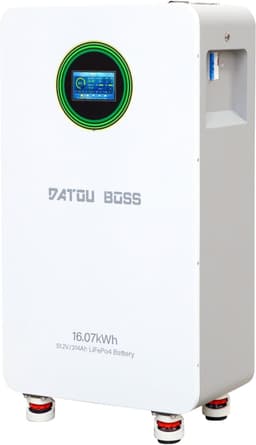
A solar battery buying guide that sorts every row by milliamp-hours will set a phone pack beside a stake-light cell and treat the bigger number as the better buy. The garden rows are AA cells at 1.2 V. The phone rows are lithium packs measured in tens of thousands of milliamp-hours, sometimes with no voltage printed at all. The home row is a 109 kg cabinet with 16.07 kWh on the page. The prices follow the same split. Four garden packs sit between £5.99 and £8.99. Three phone packs sit at £24.97, £36.99 and £59.99. The DATOUBOSS cabinet is £1,369.99 for the battery alone. Energy Saving Trust’s installed band, about £1,500 to £10,000, is a commissioned system, not these shelf prices.

Garden cells: voltage, then milliamp-hours, then pack count

A solar stake light in this set wants a 1.2 V NiMH AA cell. A 1.5 V alkaline cell is the wrong chemistry for a holder that charges. BuyaBattery’s garden note, a retailer’s guidance and not a test of these packs, is to stay near the capacity of the cell you are taking out. A much larger milliamp-hour figure can sit above what a small panel will put back on a short British day. The four garden listings are KINREECELL and BOLIFIER at 600 mAh in packs of 12, EBL at 1100 mAh in a pack of 20, and WENJOOP at 1600 mAh in a pack of 4. The 20-pack covers a path of lights in one order, at about 40 pence a cell. The swap itself sits on replace a solar garden light battery.

Phone packs: ignore solar until a panel wattage exists

The three phone listings are KamKorda at £24.97, Riapow at £36.99 and BLAVOR at £59.99. KamKorda’s title says 26,800 mAh at 3.7 V and 10.5 W. Riapow and BLAVOR both say 20,000 mAh and print no voltage, so those titles cannot be turned into watt-hours. None of the three prints a solar-panel wattage. Expert Reviews, writing about solar power banks in general and not about these three ASINs, treats cells on the lid of a small pack as a weak top-up on an average UK day. Riapow has the largest review pool here, 4.2 from 2,791, and the complaint that repeats is the panel. Fill these from USB when the phones have to last the weekend. Whether a lid panel is a real refill is on solar power bank worth it.

A home cabinet is not an installed system

The only home-storage row is the DATOUBOSS DT-48314 at £1,369.99. The title says 48 V, 314 Ah and 16.07 kWh. The bullets also say 51.2 V. Weight is 109 kg. The box is the battery. No inverter, cables or mounts are listed. There are no customer reviews in the file. The warranty line is two years, beside a bullet about up to 10 years and 8,000-plus deep cycles. No type-test number and no MCS mark appear. Notification, building rules and VAT sit on home solar battery storage UK.

What to ignore

A single best fails because the three jobs do not share a winner. Sorting by stars puts WENJOOP’s 4.8 from 92 reviews above KINREECELL’s 4.4 from 2,137. It is not a test that the cabinet failed. Set aside a solar claim when the panel-wattage field is blank, and an installed-cost article when the basket shows a shelf price.

Common questions

What is a solar battery in a UK shop?
In the eight listings kept here, a solar battery is a 1.2 V NiMH AA cell for a garden light, a lithium power bank with no printed panel wattage, or a LiFePO4 cabinet. The word on the title does not make them interchangeable.
Which battery goes in a solar stake light?
These garden packs are sold as 1.2 V NiMH AA cells, and retailer guidance is to stay near the milliamp-hour figure of the cell you remove. The packs here are 600 mAh, 1100 mAh and 1600 mAh. A 1.5 V alkaline cell is the wrong chemistry for a holder that charges.
Is a bigger mAh number always better?
On a small garden panel, BuyaBattery’s note is that a much larger cell may not finish charging when the days are short. Across jobs the number changes meaning: a 20,000 mAh power bank is a phone pack, and 16.07 kWh is a house-scale nameplate.
Is a solar power bank the same as a home battery?
The phone packs here weigh 230 g to 700 g and charge USB devices. The DATOUBOSS cabinet weighs 109 kg, prints 16.07 kWh, and lists no inverter in the box. A lid panel will not store a day’s household use.
Why is one row about £8 and another about £1,370?
They are different products on the same search. The garden packs are £5.99 to £8.99 for AA cells. The cabinet is £1,369.99 for the battery alone. Energy Saving Trust’s installed range, about £1,500 to £10,000, includes labour and commissioning.
Can I rank these eight by stars?
Stars do not make one ranking across the eight. KINREECELL’s 4.4 from 2,137 reviews is a larger garden sample than WENJOOP’s 4.8 from 92. The cabinet has no review line in the file. Read the stars only after you know which job you are buying.

Related pages

Sources

Public UK sources are listed below. Shelf prices and star lines are the amazon.co.uk figures in the listing files.

  1. GOV.UK: register energy devices in homes or small businesses (retrieved October 2026)
  2. Energy Saving Trust: battery storage (retrieved October 2026)
  3. HMRC VAT Notice 708/6 (retrieved October 2026)
  4. Approved Document P, electrical safety (retrieved October 2026)
  5. UK CAA: safety advice on what to pack (retrieved October 2026)
  6. GOV.UK: battery waste, supplier responsibilities (retrieved October 2026)
  7. BuyaBattery: garden solar light batteries (retrieved October 2026)
  8. Expert Reviews: solar power banks (retrieved October 2026)