Independent comparisons. We may earn from shop links. More info

Log splitter drill bit vs axe

Updated: 23 October 2026

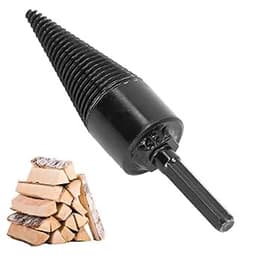
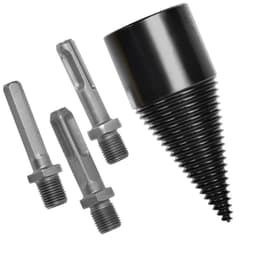
You are choosing a tool for a pile of wood, and a log splitter drill bit is being sold as the axe you do not have to swing. The comparison is real, and the hazard is not the same one with the blade removed. A cone in this amazon.co.uk capture costs about £8.99 to £19.69. That price is not a reason to prefer it. The listings, if you later decide a cone is even in scope, are in the [log splitter drill bit comparison](/hub/drilling-and-accessories/log-splitter-drill-bit). The notes below use those listings, Electrical Safety First's drill advice, and UK guides that separate an axe from a maul. No lab, and no claim that one tool is HSE approved.

You are choosing a tool for a pile of wood, and a log splitter drill bit is being sold as the axe you do not have to swing. The comparison is real, and the hazard is not the same one with the blade removed.

Our top picks

On this page

The hazard is not the same

An axe or a maul injures you on the swing. A drill cone injures you with torque and a spinning log. Electrical Safety First's drill page is the right frame for the cone: goggles, no loose clothing, hair tied back, and the wood secured. The thread can catch a sleeve. Shop pages that call the cone safer than any axe are ahead of the evidence. The largest UK sample in the set, a 42 mm cone at 2.5 from 221 reviews, mostly says the cone sticks. At work, PUWER 1998 requires suitable equipment and trained users whichever tool you pick. It does not award the job to the drill. The injury mode changes.

When a cone is the tool to try

Try a cone only for small, dry offcuts, and only if you already own a high-torque drill with a side handle and a low gear, and a plan to release the trigger if it binds. A compact driver is a mistake even on kindling-sized pieces. Listings that name oak still lose when the same page excludes hard, wet or knotty wood. Owning a drill does not make the cone the cheap option. If the drill, the wood and the stop are all in place, the first session is on the how to use a log splitter drill bit page. Diameter and shank, if you have not bought yet, are on the log splitter drill bit buying guide. This page does not rank the ten cones.

When an axe, a maul, or a wedge is the tool

Use a splitting axe or a hatchet on straight-grained seasoned rounds you can swing at on a stable block. A UK firewood guide aimed at stove owners treats a long splitting axe as a poor match for tiny kindling batons, because the handle is too long for that small work. A hatchet fits those batons better. Use a maul, or a hammer and a wedge, when the round is knotted, stringy or simply large. That is the wood the cone listings tell you to leave. A hammer wedge does not need a chuck, a gearbox or a battery. A fixed kindling cracker is a different product, and this capture did not test one.

When the job is a winter of fuel

A season of logs is a machine job. A hydraulic or kinetic splitter is the class of tool, not a bigger cone. This page will not quote a tonnage or pick a brand. In England, retail firewood under 2 cubic metres has to be Ready to Burn, at 20% moisture or less. In a smoke control area, wood in a chimney belongs in a Defra-approved appliance. A cone does not dry a wet log. Use a cone only for small dry offcuts you can control, an axe or a maul on knotted rounds, and a powered splitter for a winter of fuel.

Common questions

Is a log splitter drill bit better than an axe?
It is better only for a small, dry offcut when you already have a suitable drill and you will stop if the cone sticks. It is worse for knotted, wet or large rounds, and worse as a plan for a season of fuel. The largest UK review sample in this capture says the cone sticks and points people back to an axe. Better depends on the wood in front of you, not on the fact that the bit costs under £20.
Is it safer because there is no swing?
No. The swing is gone and the torque is not. A spinning log, a sleeve in the thread, and a drill that twists in the hands are the hazards Electrical Safety First's drill rules are written for. Reviews do not support a claim that the cone is safer than an axe. The injury mode changes. Treat loose clothing and an unbraced log as seriously as you would treat a glancing blade.
I already own a drill. Is the cone the cheap option?
Only if that drill has a side handle and a low gear, and the wood is small and dry. The cone's price in this capture is about £8.99 to £19.69, which is less than a good axe, and the drill is a cost you have already paid. A compact driver makes the cone a false economy, because the failure is a stalled or twisted tool. Cheap describes the bit. It does not describe a split the reviews do not report.
What should I use on knotty oak rounds?
Use a maul or a hammer and wedge, or a hydraulic splitter if the rounds are the winter's supply. Cone listings that name oak still exclude knotty wood, wood that is too hard, or large-diameter hardwood. UK reviews describe failed splits on that sort of piece. A drill cone is the wrong tool for knotty oak, including when the title prints the species.
What should I use for a basket of small dry kindling?
A hatchet, or a fixed kindling splitter, is the usual UK answer for batons. A long splitting axe is a clumsy match for pieces that small. A cone is a possible trial if the offcuts are dry, the drill is suitable, and you will release the trigger on a bind. It is not the default just because the basket is indoors. If you dislike the spinning thread, do not buy the cone for that basket.
When is a hammer and wedge the simpler tool?
When the round is knotted or large, and when you do not want a chuck, a battery and a threaded cone in the job. A wedge and a hammer stay simple. They do not unscrew an adapter in reverse, and they do not need low gear. The block and the swing still matter, because it remains a striking tool.

Related pages

Sources

Public UK sources for the safety and firewood points. Listing prices, stars and review text are the amazon.co.uk captures. Those files were not re-checked on 22 October 2026.

  1. HSE, PUWER overview (retrieved 22 October 2026)
  2. HSE, Safe use of woodworking machinery (L114) (retrieved 22 October 2026)
  3. GOV.UK, Selling wood for domestic use in England (retrieved 22 October 2026)
  4. GOV.UK, Smoke control area rules (retrieved 22 October 2026)
  5. Electrical Safety First, drills (retrieved 22 October 2026)
  6. BSI, BS EN 62841-2-1 scope (retrieved 22 October 2026)
  7. Consumer Rights Act 2015 (retrieved 22 October 2026)
  8. betterout.co.uk, drill-powered conical wood splitter (retrieved 22 October 2026)