Independent comparisons. We may earn from shop links. More info

How to use a hole saw

Updated: 2026-10-23

The cup is in the box, the drill is on the bench, and the mistake that ruins the hole is usually made before the teeth touch the work: full speed, the wrong arbor, or a hand in a hot slug while the chuck is still live. How to use a hole saw is a sequence, not a product ranking. Diameters and which set to buy stay on the [hole saw set comparison](/hub/drilling-and-accessories/hole-saw-set). Products Compared did not run a lab test. You are cutting wood, plasterboard, plastic or thin metal with a toothed cup. Tile, glass, brick and concrete are a different tool. The steps below assume the material matches the tooth you already chose.

The cup is in the box, the drill is on the bench, and the mistake that ruins the hole is usually made before the teeth touch the work: full speed, the wrong arbor, or a hand in a hot slug while the chuck is still live.

Our top picks

On this page

Fit the cup before you start

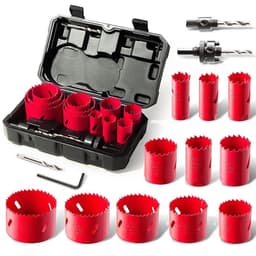
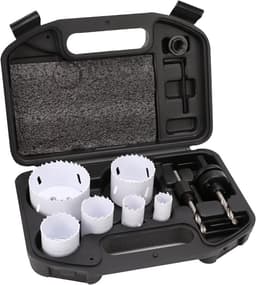
Unplug the drill, or take the battery off, before you change a cup. Electrical Safety First says do not insert or remove a bit on a live tool, watch the cable, and skip baggy sleeves. At work, PUWER 1998 still expects a suitable tool and people who have been told how. Match the arbor to the cup. Two-mandrel sets use a smaller shaft under about 30 mm and a larger one after that. Forcing the small arbor onto a 51 mm cup strips the thread. Starrett describes that split for Starrett arbors. A budget mandrel may differ, so try the cup on the mandrel first. Heamar suggests the pilot sticks out about 5–10 mm past the teeth. That figure is theirs. Tighten the grub screw, then the chuck, and tug the cup. If it rocks, it is not ready. Mollom reviews describe cups that walk when the pilot runs out of true. Clamp the work. A loose offcut will climb the pilot. Amazon Basics notes the small mandrel can tighten and may need a wrench afterwards.

Square, slow, and fluid on metal

A 68 mm saw needs a slower trigger than a 20 mm saw. Starrett’s UK chart for that maker’s bi-metal saws puts mild steel near 580–350 rpm at 14–25 mm and near 165–115 rpm at 52–76 mm, with stainless slower and wood higher. Those bands are Starrett’s, not a setting for these sets. Larger means slower, and metal means slower than wood. Flintronic says to keep that set at or below 1,000 rpm on long jobs. Do not paste that cap onto every box. Start square, then light pressure. If the cup snatches, you are pushing, tilted, or too fast. Withdraw while it is still turning so the chips clear. Use cutting fluid on metal. Wood and plasterboard stay dry. Fluid on a plasterboard ceiling makes a paste. Do not use hammer mode. If the board is thicker than the cup, finish from the other side. A stated 25 mm depth will not clear a 40 mm worktop. The 40 mm figure on one bi-metal listing is that listing’s limit.

Clear the slug with the drill dead

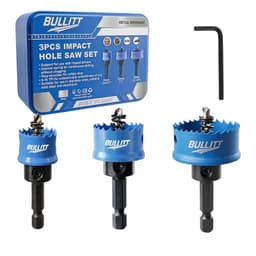
Stop the drill and remove power before you touch the slug. Lever it through the side slots. A spring is meant to push the plug free and does not always stay fitted. UK reviews on BULLITT say the ejector spring pops out, breaks on first use or is too stiff. If it has left the cup, use the slots with the drill dead. TOOLMAYS describes a tilt so the core pops out of that set’s side slots, not out of a carbon cup with no spring. Do not grab a spinning slug. If the mandrel has tightened, use a wrench with the power off. Let a metal cup cool before it goes back in the case. A lock or a visible fascia is worth a scrap cut first. UK reviews on one carbon set include cups that measured short of the printed size.

When to stop

Stop for tile, glass, brick or concrete, even when a bullet wanders into castings or stone. Stop in hammer mode, or if a small 12 V driver is stalling a large cup. That stall matches reviews of drivers struggling on bigger diameters. It is not a wattage rating. Stop if the hole is about to meet a joist, a flue, a cable or a pipe. If you may already have hit a cable, isolate and get an electrician. At work, the wrong saw for the material fails the suitable-equipment test under PUWER. Carbide teeth chip if you rush them or the cup chatters.

Common questions

In what order do I fit the cup, the arbor and the pilot?
Power off first. Fit the mandrel that matches the cup, set the pilot tight and proud of the teeth, lock the grub screw, then tighten the chuck and tug. Heamar’s 5–10 mm stick-out is that article’s figure, not one printed on these listings.
How fast should the drill turn?
Slower as the cup gets larger, and slower on metal than on wood. Starrett’s mild-steel bands, about 580–350 rpm at 14–25 mm and 165–115 rpm at 52–76 mm, are for Starrett bi-metal saws. Flintronic’s 1,000 rpm note is for that set only.
When do I use cutting fluid?
On metal. Wood, plywood and plasterboard are cut dry. Gunpla’s water-or-oil line does not turn a carbon cup into a stainless saw. Keep fluid off a plasterboard ceiling.
How do I stop the cup snatching?
Keep the speed down, stay square, and use light pressure once the pilot has centred. Clamp loose work. A loose pilot, as in Mollom reviews of a cup that walks, grabs as soon as the teeth meet the surface.
How do I get the slug out without grabbing it live?
Stop, unplug or remove the battery, then lever through the side slots. Springs fall out, which BULLITT reviews describe. If the mandrel has tightened, use a wrench with the power off, as the Amazon Basics listing warns.
What if the board is thicker than the cup?
Cut until the teeth bottom, then finish from the other side. A stated 25 mm depth will not clear a thicker board in one pass. Do not lean on the drill to gain millimetres the cup does not have.
What must I not do with a toothed hole saw?
Do not cut tile, glass, brick or concrete, and do not use hammer mode. Do not clear a hot slug with the drill live. If the hole meets a joist, a flue or a cable, stop.

Related pages

Sources

Public UK sources from the research digest, last checked on 19 October 2026. Shelf prices and star lines are the amazon.co.uk figures checked on 19 October 2026.

  1. HSE: PUWER overview (retrieved 19 October 2026)
  2. HSE: wood dust (retrieved 19 October 2026)
  3. RS: hole saws guide (retrieved 19 October 2026)
  4. RS PRO bi-metal hole saw datasheet (retrieved 19 October 2026)
  5. Starrett UK: bi-metal speeds (retrieved 19 October 2026)
  6. Approved Document P (2013) (retrieved 19 October 2026)
  7. LightHub: downlight cut-out sizes (retrieved 19 October 2026)
  8. Electrical Safety First: drills (retrieved 19 October 2026)