Independent comparisons. We may earn from shop links. More info

Hole saw set buying guide

Updated: 2026-10-23

You have a waste fitting, a lock or a cable grommet in your hand, and a basket of hole saw sets that all shout a piece count. A hole saw set buying guide starts somewhere else: the tooth, then the diameters you will actually use, then the depth and the arbor. The price table stays on the [hole saw set comparison](/hub/drilling-and-accessories/hole-saw-set). This page is the check order before you add a box. Products Compared used the amazon.co.uk listings checked on 19 October 2026, from £12.49 to £79.90, and did not run a lab test. A qualifying purchase can earn a commission at no extra cost to you.

You have a waste fitting, a lock or a cable grommet in your hand, and a basket of hole saw sets that all shout a piece count.

Our top picks

On this page

Start with the tooth, not the piece count

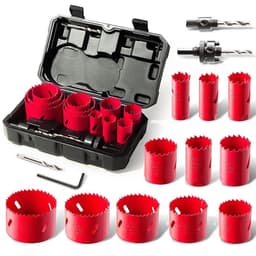
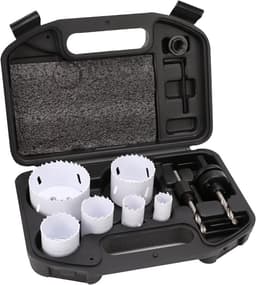
The piece count is a packing number. HYCHIKA bi-metal says 17 pieces and the box line is 11 cups plus mandrels, drills and a key. HYCHIKA carbon says 19 against 13 blades. Gunpla says 21 against 15 cups. Dokka’s title says 8 while the size bullet names six cups and the model number is UK-hsset-6pcs. Mollom’s packing line and the included-components line disagree on the pilot count. Count the cups you will use. A six-cup bi-metal kit is the right buy when those diameters match, and a 15-cup carbon kit is the wrong buy in steel. If the title and the bullet disagree, trust the millimetres. The shortlist is the best hole saw set page.

Match the listing’s materials to the tooth

Carbon steel on these listings stops at wood, plasterboard and thin plastic. HYCHIKA carbon says cork, thin PVC and plastic, and not hard board, density board or a computer desk. Oudtinz says not metal. Gunpla names aluminium sheet only with water or oil, which is not a stainless rating. Bi-metal is the mixed default. HYCHIKA bi-metal names soft metal, wood, PVC, plastic and gypsum board, and not stainless. Amazon Basics names mild steel and aluminium in the bullet and plastic only in the compatible-material field. BULLITT names mild steel, stainless and aluminium, prints a 1.6 mm sheet limit, and lists only 20, 25 and 32 mm. Mollom is carbide, names stainless, and excludes tile, glass, concrete and stone. TOOLMAYS is carbide for nails in timber and plasterboard, and excludes metal. Those two boxes do not swap. Flintronic says carbon steel and M42 in the same bullets, which is a clash.

Diameters and stated depth

Buy the fitting first and match a cup the listing prints. There is no single British Standard hole. Amazon Basics lists 20, 25, 35, 40, 51 and 68 mm. HYCHIKA bi-metal runs from 19 mm to 68 mm. BULLITT lists only 20, 25 and 32 mm. Dokka stops at 35 mm and cannot cut a 51 mm waste. HYCHIKA bi-metal states 40 mm. Dokka, Flintronic, HYCHIKA carbon and TOOLMAYS state 25 mm, and TOOLMAYS says 25 mm per pass. BULLITT’s number is a 1.6 mm sheet limit, not cup depth. Mollom, Moendergo, Gunpla, Amazon Basics and Oudtinz do not state a cutting depth. If the board is thicker than the cup, cut from both sides or change tool. Do not lean harder.

Arbor, case and clashes

Past about 30 mm you usually need two mandrels, or a hex shank with the arbor built in. Starrett’s UK catalogue splits about 14–30 mm from about 32 mm upward. That is Starrett’s split, not a budget mandrel’s thread. HYCHIKA bi-metal names 9.5 mm and 11 mm shafts and does not say which cup fits which. Amazon Basics puts 68 mm on the larger arbor. BULLITT and Dokka use a hex shank, so they need no second mandrel and they cannot grow to a 100 mm cup. Mollom states no arbor. A case counts when the listing names it. Amazon Basics prints one. Gunpla’s bullets do not, though UK reviews mention a plastic case. When Moendergo’s title says cobalt and the spec says alloy steel, do not average the two words into a better saw. None of these listings cites a British Standard. Tile, glass, brick and concrete need a different tool.

Common questions

Should I buy the hole saw set with the highest piece count?
No. A 17-piece, 19-piece or 21-piece title is usually the cups plus mandrels, pilots and a key. HYCHIKA bi-metal says 17 and the box line is 11 cups. A six-cup kit at the right sizes beats a 15-cup carbon kit in steel.
Is carbon steel enough for plasterboard and wood?
Yes, when the listing stops at wood, plasterboard and thin plastic. Carbon is the wrong tooth for mild steel plate and stainless. HYCHIKA carbon also excludes hard board, density board and a computer desk.
What if the board is thicker than the stated depth?
Cut from the other side, or use a deeper cup. HYCHIKA bi-metal states 40 mm. Several sets state 25 mm, and Amazon Basics, Mollom, Gunpla, Moendergo and Oudtinz state none. BULLITT’s 1.6 mm figure is sheet thickness, not cup depth.
Do I need two arbors?
You need the arbor that matches the cup. HYCHIKA bi-metal, Amazon Basics and Gunpla name two mandrels. BULLITT and Dokka use a hex shank and only cover small diameters. Starrett’s 14–30 mm split is that maker’s catalogue, not a no-name thread.
What should I do if the title says cobalt and the spec says alloy steel?
Treat it as a clash, not an upgrade. Moendergo’s title says cobalt and the spec says alloy steel. Flintronic says carbon steel and M42 together. Do not assume 8% cobalt unless it is printed, as on the BULLITT bullet.
Where do downlight sizes and the cutting method belong?
Downlight cut-outs, isolation and dust are a ceiling job. Speed, fluid and clearing the slug belong on the how-to page. This page stops once tooth, diameters, depth and arbor agree with the fitting in your hand.

Related pages

Sources

Public UK sources from the research digest, last checked on 19 October 2026. Shelf prices and star lines are the amazon.co.uk figures checked on 19 October 2026.

  1. HSE: PUWER overview (retrieved 19 October 2026)
  2. HSE: wood dust (retrieved 19 October 2026)
  3. RS: hole saws guide (retrieved 19 October 2026)
  4. RS PRO bi-metal hole saw datasheet (retrieved 19 October 2026)
  5. Starrett UK: bi-metal speeds (retrieved 19 October 2026)
  6. Approved Document P (2013) (retrieved 19 October 2026)
  7. LightHub: downlight cut-out sizes (retrieved 19 October 2026)
  8. Electrical Safety First: drills (retrieved 19 October 2026)