How to use a HiKOKI cordless drill
The drill is already in the case, and the first hole shows whether the collar is on screws, on drill or on hammer. For the bodies in this comparison, use comes down to that collar, the two-speed gearbox, the side handle on the heavier combis, and Reactive Force Control where the listing states it. This page follows HiKOKI's handling points and the amazon.co.uk cells that disagree with them, checked on 22 October 2026. It is not a lab test. Which body you should have bought is the [Hikoki cordless drill comparison](/hub/drilling-and-accessories/hikoki-cordless-drill). A qualifying purchase can earn a commission at no extra cost to you.
The drill is already in the case, and the first hole shows whether the collar is on screws, on drill or on hammer.
The drill is already in the case, and the first hole shows whether the collar is on screws, on drill or on hammer. For the bodies in this comparison, use comes down to that collar, the two-speed gearbox, the side handle on the heavier combis, and Reactive Force Control where the listing states it. This page follows HiKOKI's handling points and the amazon.co.uk cells that disagree with them, checked on 22 October 2026. It is not a lab test. Which body you should have bought is the Hikoki cordless drill comparison. A qualifying purchase can earn a commission at no extra cost to you.
Our top picks
| Badge | Product | Hammer mode | Listed torque | Chuck or interface | Note | Price | Offer |
|---|---|---|---|---|---|---|---|
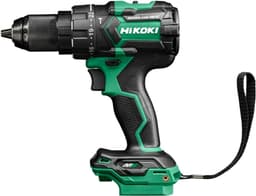
| Best overall |  Hikoki Hikoki KC18DCJAZ, combi and impact driver | Combi named, no separate cell | 210 Nm on the table; combi bullet says 140 Nm | Not stated | 7.1 | about £359.99 | View offer |
 Hikoki Hikoki DS18DDW4Z, body only | No | 55 Nm | 13 mm keyless | 8.0 | about £66.71 | View offer | |
| Alternative |  Hikoki Hikoki DV36DCW2Z, body and case | Yes | 155 Nm | 13 mm | 6.5 | about £209.99 | View offer |


On this page
Collar first, then the trigger
Low gear and high gear
Side handle and Reactive Force Control
When to put the drill down
Common questions
Which collar mark is for screws, which is for drilling, and which is for brick?
When do I use the low gear?
Can I move the gear lever while the chuck is spinning?
Which of these drills need the side handle?
What does Reactive Force Control do, and can it fail to trip?
Is 33,000 rpm the speed of the chuck on the DV36DC listing?
When should I stop and call a professional?
Related pages
Sources
Public UK sources and manufacturer pages, last checked on 22 October 2026. Shelf prices and star lines are the amazon.co.uk listing figures.
- Hikoki UK catalogue 2025 (retrieved 22 October 2026)
- Hikoki DS18DD (retrieved 22 October 2026)
- Hikoki DV18DC (retrieved 22 October 2026)
- Hikoki DV36DC (retrieved 22 October 2026)
- Hikoki DV18DEW2Z (retrieved 22 October 2026)
- Hikoki Multi Volt (retrieved 22 October 2026)
- Hikoki UK warranty terms, 25 August 2025 (retrieved 22 October 2026)
- HSE, hand-arm vibration regulations (retrieved 22 October 2026)