Impact driver vs drill
The listing prints 165 Nm, and it is tempting to treat that as the better drill. On the Stanley kit, 165 Nm is the impact driver, and the hammer drill beside it is the 50 Nm bullet. Impact driver vs drill is a chuck and a clutch you set, against a 1/4 inch hex collet that strikes in rotation. If you buy one tool, buy the drill or the combi. Buy the impact driver when the screws get long. The ten listings are on the [cordless drill driver comparison](/hub/drilling-and-accessories/cordless-drill-driver). Products Compared read those listings and UK guides from Toolstation, Toolpicker, Homebuilding and Wonkee Donkee, not a lab. A qualifying purchase can earn a commission at no extra cost to you.
The listing prints 165 Nm, and it is tempting to treat that as the better drill. On the Stanley kit, 165 Nm is the impact driver, and the hammer drill beside it is the 50 Nm bullet.
The listing prints 165 Nm, and it is tempting to treat that as the better drill. On the Stanley kit, 165 Nm is the impact driver, and the hammer drill beside it is the 50 Nm bullet. Impact driver vs drill is a chuck and a clutch you set, against a 1/4 inch hex collet that strikes in rotation. If you buy one tool, buy the drill or the combi. Buy the impact driver when the screws get long. The ten listings are on the cordless drill driver comparison. Products Compared read those listings and UK guides from Toolstation, Toolpicker, Homebuilding and Wonkee Donkee, not a lab. A qualifying purchase can earn a commission at no extra cost to you.
Our top picks
| Badge | Product | Stated torque | Hammer mode | Type | Note | Price | Offer |
|---|---|---|---|---|---|---|---|
| Best overall |  Bosch Bosch EasyImpact 18V-40 cordless combi drill | 40 Nm | Yes | Combi drill | 9.3 | about £64.97 | View offer |
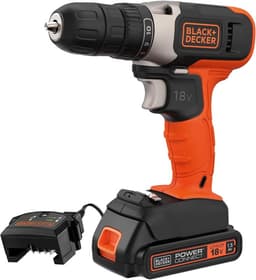
| Best value |  BLACK+DECKER BLACK+DECKER 18V cordless drill driver BCD001C1-GB | 37 Nm | Not stated | Drill driver | 9.2 | about £35.00 | View offer |
| Alternative |  Stanley Stanley FATMAX V20 hammer drill and impact driver kit | 50 Nm hammer drill; 165 Nm impact driver | Yes, on the hammer drill | Hammer drill and impact driver kit | 3.3 | about £140.00 | View offer |


On this page
Two different blows
Clutch versus raw torque
The Stanley kit in this set
One tool or both
Common questions
If I buy one tool, which is it?
Can an impact driver drill brick?
Why do small screws strip in an impact driver?
What is the 165 Nm on the Stanley kit?
Do I need both for flat-pack furniture?
Do I need both for decking?
Related pages
Sources
Public UK sources from the research digest. Shelf prices and star lines are the amazon.co.uk figures in the display file.
- Toolstation drill buying guide (retrieved 22 October 2026)
- Homebuilding: types of drill (retrieved 22 October 2026)
- UK Tool Store: how to choose a cordless drill (retrieved 22 October 2026)
- Gtech: how to choose a cordless drill (retrieved 22 October 2026)
- GOV.UK: Supply of Machinery (Safety) Regulations 2008 (retrieved 22 October 2026)
- BSI: BS EN 62841-2-1:2018+A12:2022 (retrieved 22 October 2026)
- HSE: Control of Vibration at Work Regulations 2005 (retrieved 22 October 2026)
- HSE: indicative vibration magnitudes (retrieved 22 October 2026)