Classic car spot welds: size, the panel, and when to stop

Classic Mini owners often use an 8 mm bit and stop at the first sheet. That habit is not a method for boron steel or a weld bigger than the cutter.
On this page
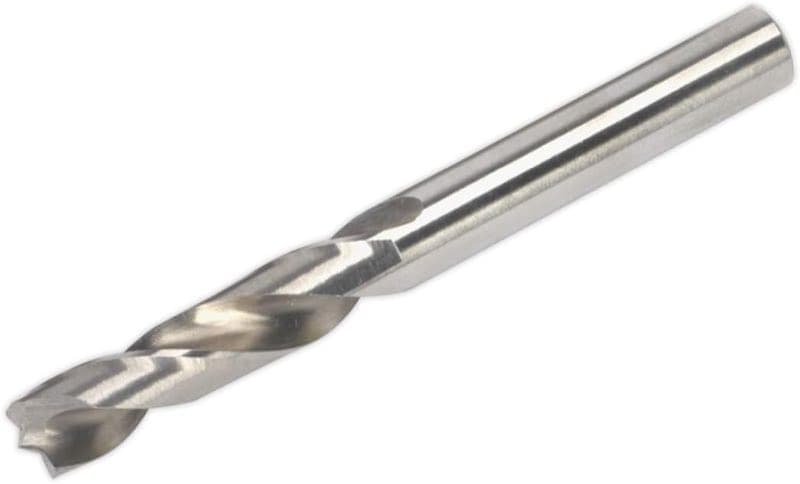
The wing skin is rotten and the flange is a part you hope to keep. The joint is a line of classic car spot welds. Several Mini owners reach for an 8 mm bit and stop as the top sheet lets go. That fits mild steel you can see. It fails if the weld is bigger than the cutter, or if the steel is a press-hardened rail.
Products Compared used UK review themes from the amazon.co.uk listings checked on 15 October 2026, The Mini Forum, Mig Tig Arc, and a Laser Tools note on when the panel releases. There is no lab cut, and Mini owner practice is not a specification. A qualifying purchase can earn a commission at no extra cost to you. The cutters are on the spot weld drill comparison.
In short
Classic car spot welds in these UK notes are wings, floors, sills, quarters, and brackets on older panels, cut with an 8 mm bit or a crown and stopped at the first sheet. Mini owners often choose 8 mm, and the welds vary. A flat bit is what several of them prefer when the panel underneath is already painted. The same method stops at boron and at a nugget the cutter cannot cover.
The jobs in the UK reviews
The reviews name ordinary panels, not a structural method. Topcloud's UK texts, on a nine-piece crown kit listed at about £12.96, mention an MX-5 front, a Land Rover floor, van wings, and a van bracket. One reviewer was still on the first cutter after about 60 welds, including angles that were not square. Another estimated a third collet after more than 200 welds in steel of at least 1 mm. Those counts are estimates, not a duty cycle for the next floor.
Sealey's UK notes on the AK4734, about £7.99, include a Civic restoration and a snap after about three welds in what the reviewer called 1.5 mm mild steel. Bohaner's 6 mm by 66 mm and 8 mm by 79 mm pair released a Mini quarter, with one estimate of 80 to 90 spots still cutting. Gasea's classic Mini sill lasted about three uses, and a UK review says the BGS 1632 removed a sill. Other Sealey reviews finished a large restoration without a second bit.
Treat those car names as jobs, not a safe-panel list. An MX-5 wing and a Land Rover floor can both hide a flange you should not thin. Topcloud reviews include welds that were not at 90 degrees, and a reach made with a socket extension. A crown that walked on someone else's floor will walk on yours from the wheel arch. Panel types, and where a hobby flange becomes a shop job, are on the car panel page.
6 mm, 8 mm, and the weld you can see
The Mini Forum thread on 6 mm or 8 mm is owner practice: 8 mm, sometimes a reground ordinary bit, and welds that vary in size. Eight millimetres is also what Sealey and Castle Brooke publish for a cobalt body bit. It is not a rule that every classic flange is an 8 mm nugget. A smaller weld loses more lip metal. A larger weld will not come out in one ring.
Sealey states 8 mm by 80 mm. Bohaner states 6 mm by 66 mm and 8 mm by 79 mm. Gasea states 6 mm and 8 mm and does not state lengths. Gainsten and VBVOO offer 6.5 mm, 8 mm, and 10 mm. Ten millimetres is a larger hole, and 10 mm is not 3/8 inch. Topcloud's title says 3/8 inch, which is 9.525 mm, and the listing states no millimetres, so you cannot relabel that crown as 8 mm or as 10 mm.
Look at the weld before you pick a diameter. If the nugget sits inside 8 mm and the flange is narrow, 6 mm leaves more metal to join again. If it fills an 8 mm face, the smaller bit leaves a crescent. The BGS crowns are 9.5 mm, a ring rather than an 8 mm mill, and that size is on the BGS listing alone. Diameter next to the cobalt sentence is on the buying guide.
Keeping the panel underneath
Laser Tools describe the cut on a classic or accident panel as finished when the top sheet lets go around the pin. Mig Tig Arc's order is the same: cut the weld in the skin you are removing, split the joint, and dress what is left. A light witness mark can mean you stopped in time. Daylight through both sheets means the cut ran on. Topcloud's UK reviews include cutters driven through both panels by pressure. Painted steel does not get an exemption.
Several Mini Forum owners want a flat cobalt bit so a painted inner wing stays unmarked, and several call hole cutters poor. That is a preference, not a guarantee. A flat bit that goes through leaves a hole the size of the bit. A crown cuts a ring and leaves a button, and a cocked crown walks across the paint. The spring pin needs a seat from a centre punch or a shallow pilot. The sequence is on how to drill out spot welds.
Hold the cutter square. On a wide floor you can often get 90 degrees. On an inner wing or a bracket foot you often cannot, which is where a solid 8 mm bit reaches and a crown cannot sit down. That choice is the cutter or bit page. Vacuum swarf from a boxed section. These reviews do not promise a concours inner wing with no mark, and a second pass to clean it up is how a witness becomes a hole.
When a grinder is what restorers use
Mini Forum practice includes a grinder when the outer skin is scrap. The flange underneath is what you care about, and a disc can take the weld without matching the nugget. Sparks and dust fill the seam, and a disc that dips thins the metal you meant to weld back to.
The drill stays the tool when the outer panel might be reused. Owners still describe an 8 mm bit, or a reground ordinary bit, for that parting. A regrind is not one of the twelve listings, and it does not put a 5% cobalt sentence onto a plain bit. If the edge has already rubbed shiny, fit a fresh edge or change method.
Topcloud's VW T6.1 note sits between the two tools. The welds were larger than the cutter, three heads went on eight welds, and the reviewer moved to a grinder. That bracket is a modern van, not a classic Mini wing. When the nugget does not fit the cutter, cover the weld you can see, change to a cutter whose size is written and larger, or stop. Pressing an undersized crown through a classic sill copies the mistake.
Where classic practice stops
Mig Tig Arc says that style of 8 mm bit is for mild steel, not boron. Sealey's AK4734 is high-speed steel with 5% cobalt for galvanised and high-stress steels. An Amazon field that says Boron on that bit clashes with the bullets. The maker's boron sentence is on the carbide AK4740, listed at £47.94, and that bit is not in this comparison. Wielander+Schill use their own drill, a tungsten-carbide bit, a speed ceiling, a clamped panel, and cutting oil. That setup is not a gold HSS bit from this shelf.
A high-stress bullet does not move a classic method onto a press-hardened reinforcement. Newer cars mix mild skins with ultra-high-strength rails. A sill that looks like the Mini sill in the Gasea review can be a structural member on another vehicle. If the vehicle information names boron or ultra-high-strength steel, or the flange is torn and still has to carry load, or the weld sits near fuel, brakes, or an airbag, stop. A body shop is the next step.
Pause on mild steel too when the weld is larger than the cutter, the crown will not sit square, or the bit has already snapped. Gasea's three uses on a Mini sill is one short life, not a reason to keep drilling with a polished edge. When the steel is unknown and structural, neither the grinder nor the 8 mm habit is the method. Measure the weld, and leave the modern rail alone.
Common questions
What size are people using on a classic Mini?
Which cars show up in the UK reviews for this set?
How do you keep an inner wing that is already painted?
When is a grinder what restorers use instead?
Are classic sills the same as a new car's boron rail?
What if the weld is bigger than the cutter?
Which comparison lists the bits?

Products Compared publishes British-English buying guides based on amazon.co.uk listings and public UK sources. We do not run a lab and we do not invent test scores.
Related articles

When a body shop should cut the welds
A hobby wing and a high-strength sill do not share a tool decision, even when both are spot welded.

Centre-punch the weld before you cut
A dimple gives the bit a seat so the cutter does not skate across paint you are trying to keep.
Cobalt or a gold coating
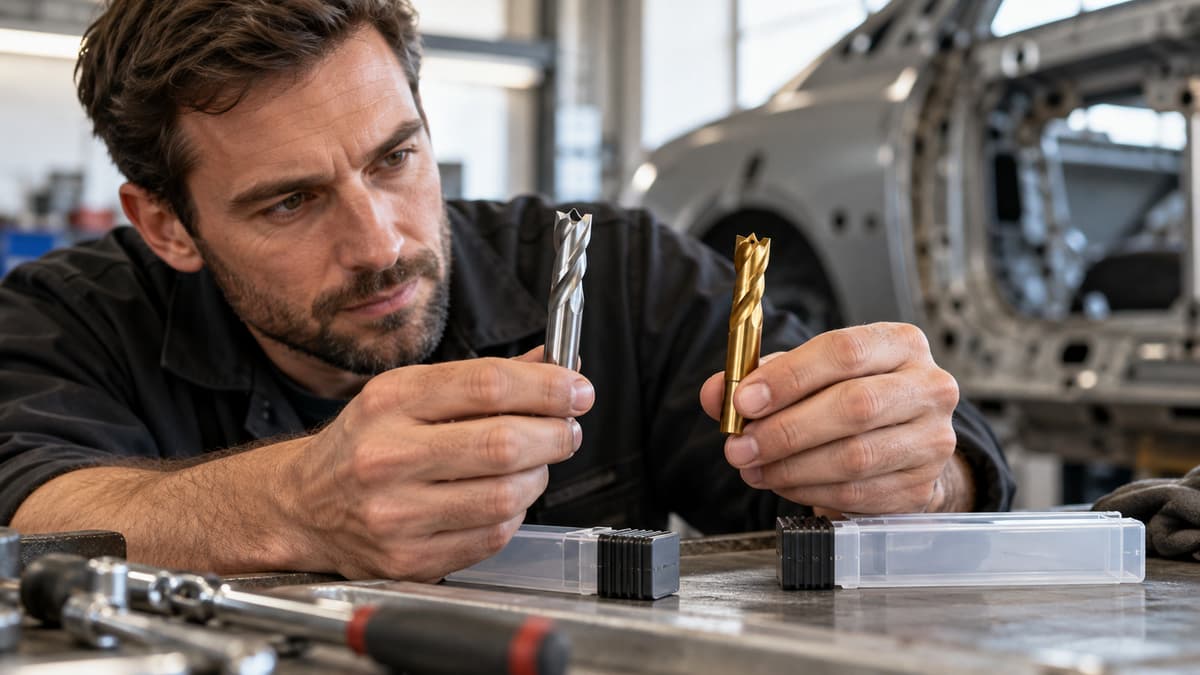
Several Mini owners want a flat cobalt bit. The percent has to be written, not assumed from a gold flute.