How to use a cordless drill
The drill is on the kitchen table, the battery is still in the carton, and the first job is a shelf where you cannot see behind the plaster. This is how to use a cordless drill: charge it on the right plug, lock a bit that fits, set the clutch before the screw, and look for cables before you touch a wall. The steps assume a 12V drill you already own. They are not a buying table. Products Compared drew this from maker-style setup guides, Electrical Safety First, the National Fire Chiefs Council and the review notes in our [12V cordless drill comparison](/hub/drilling-and-accessories/12v-cordless-drill), not from a lab, on 19 October 2026. A qualifying purchase can earn a commission at no extra cost to you.
The drill is on the kitchen table, the battery is still in the carton, and the first job is a shelf where you cannot see behind the plaster.
The drill is on the kitchen table, the battery is still in the carton, and the first job is a shelf where you cannot see behind the plaster. This is how to use a cordless drill: charge it on the right plug, lock a bit that fits, set the clutch before the screw, and look for cables before you touch a wall. The steps assume a 12V drill you already own. They are not a buying table. Products Compared drew this from maker-style setup guides, Electrical Safety First, the National Fire Chiefs Council and the review notes in our 12V cordless drill comparison, not from a lab, on 19 October 2026. A qualifying purchase can earn a commission at no extra cost to you.
Our top picks
| Badge | Product | Speeds | Chuck | Charge | Note | Price | Offer |
|---|---|---|---|---|---|---|---|
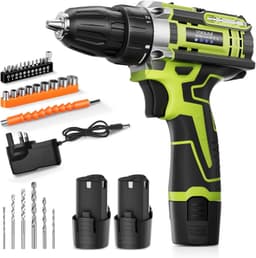
| Best overall |  FADAKWALT FADAKWALT 12V cordless drill, green | 22 clutch steps | 9.53 mm | Charger | 8.6 | about £24.99 | View offer |
| Best value |  VOERJIA VOERJIA 12V cordless drill, two batteries | 2 speeds | 10 mm | Charger | 7.5 | about £29.99 | View offer |
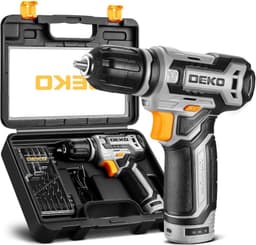
| Alternative |  DEKOPRO DEKOPRO 12V cordless drill | 1 speed | 10 mm | Type-C | 7.8 | about £23.99 | View offer |

On this page
Charge it before the first hole
Fit the bit and set the direction
Clutch for screws, drill symbol for holes
Walls, dust and when to stop
Common questions
Which clutch number do I start on?
Can I change gear while it is spinning?
Why does the chuck click?
How do I avoid cables in a wall?
What if the bit stays in the wood?
Related pages
Sources
Public UK sources from the research digest, last checked on 19 October 2026. Shelf prices and star lines are the amazon.co.uk figures in the product display for this comparison.
- Bosch Professional: changeover from 10.8V to 12V (retrieved 19 October 2026)
- BSI: BS EN 62841-2-1, hand-held drills and impact drills (retrieved 19 October 2026)
- HSE: PUWER overview (retrieved 19 October 2026)
- Electrical Safety First: drills (retrieved 19 October 2026)
- Electrical Safety First: DIY and cables (retrieved 19 October 2026)
- GOV.UK: Electrical Equipment (Safety) Regulations 2016 (retrieved 19 October 2026)
- GOV.UK: recycling batteries and electrical waste (retrieved 19 October 2026)
- Screwfix: best drills guide (retrieved 19 October 2026)