How to fit a window seal so the sash still locks
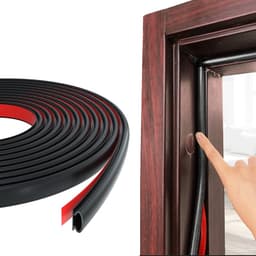
You have a self-adhesive roll and a casement that whistles. How to fit a window seal is finished only when the sash still shuts and the handle still locks. Stick the strip to the fixed rebate, try about 50 mm before you commit the roll, and peel it off if the lock will not meet. Listings sit on the [window seal comparison](/hub/door-and-window-security/window-seal). Products Compared checked public UK advice and the amazon.co.uk fitting lines on 15 October 2026, with no laboratory lock test. A qualifying purchase can earn a commission at no extra cost to you.
You have a self-adhesive roll and a casement that whistles. How to fit a window seal is finished only when the sash still shuts and the handle still locks.
You have a self-adhesive roll and a casement that whistles. How to fit a window seal is finished only when the sash still shuts and the handle still locks. Stick the strip to the fixed rebate, try about 50 mm before you commit the roll, and peel it off if the lock will not meet. Listings sit on the window seal comparison. Products Compared checked public UK advice and the amazon.co.uk fitting lines on 15 October 2026, with no laboratory lock test. A qualifying purchase can earn a commission at no extra cost to you.
Our top picks
| Badge | Product | How it fits | Suitable gap | Fitting | Note | Price | Offer |
|---|---|---|---|---|---|---|---|
| Best overall |  YANKUIRUI YANKUIRUI D-profile foam seal, 6 m, white | Self-adhesive | 3–6 mm | Scissors, no drilling | 8.6 | about £4.49 | View offer |
| Best value |  UPSEN UPSEN D-profile foam seal, 10 m, white | Self-adhesive | About 3.5–5 mm | Scissors | 8.3 | about £4.99 | View offer |
| Alternative |  Esufeir Esufeir D-shape rubber seal, 6 m, black | Self-adhesive | 2.5–6 mm | Scissors; wipe included | 5.4 | about £7.99 | View offer |


On this page
Test 50 mm before you commit the roll
Clean the rebate and stick to the frame
Corners, vents and the lock
When this method is the wrong job
Common questions
Do I stick the seal on the frame or on the opening sash?
How do I test the thickness before I use the whole roll?
What should I clean the rebate with?
Should I stretch the strip to make it reach?
What if the handle will not lock afterwards?
Can I use this method on a sash window?
Can I cover a trickle vent that whistles?
Related pages
Sources
Public UK sources named in the research digest. Listing prices and ratings are the amazon.co.uk figures saved on 15 October 2026.
- Energy Saving Trust — Draught-proofing (retrieved October 2026)
- Centre for Sustainable Energy — DIY draught-proofing (retrieved October 2026)
- GOV.UK — Approved Document F (2026) (retrieved October 2026)
- BSI — BS EN 12365-1:2003 gasket and weatherstripping (retrieved October 2026)
- Seals Direct — How to measure a replacement glazing gasket (retrieved October 2026)
- Fixtrade — How to replace the rubber seal on uPVC windows (retrieved October 2026)
- Historic England — HEAG084 Draught-proofing windows and doors (retrieved October 2026)
- Consumer Rights Act 2015 (retrieved October 2026)