How to fit an electric door release
How to fit an electric door release on a timber side door is a sequence: identify the supply, offer the body up, cut only the timber it needs, and connect low voltage. UK reviews in the [electric door release comparison](/hub/door-and-window-security/electric-door-release) say instructions are missing and polarity is unmarked. If voltage and fail mode are still guesses, use the [electric door release buying guide](/hub/door-and-window-security/electric-door-release/sub/electric-door-release-buying-guide). Peter F. used those notes on 19 October 2026. There was no lab test. A purchase through our links can earn a commission at no extra cost to you.
How to fit an electric door release on a timber side door is a sequence: identify the supply, offer the body up, cut only the timber it needs, and connect low voltage.
How to fit an electric door release on a timber side door is a sequence: identify the supply, offer the body up, cut only the timber it needs, and connect low voltage. UK reviews in the electric door release comparison say instructions are missing and polarity is unmarked. If voltage and fail mode are still guesses, use the electric door release buying guide. Peter F. used those notes on 19 October 2026. There was no lab test. A purchase through our links can earn a commission at no extra cost to you.
Our top picks
| Badge | Product | Voltage | Fail mode | Fitting note | Note | Price | Offer |
|---|---|---|---|---|---|---|---|
| Best overall |  effeff effeff 118E door opener | 10–24 V AC/DC | Not stated | Body only; plate not in the box | 7.0 | about £24.41 | View offer |
 AMALOCKS SecureMyDoor fail secure 24 V | 24 V DC | Fail secure | Polarity unmarked; 12 V was not enough | 7.6 | about £32.97 | View offer | |
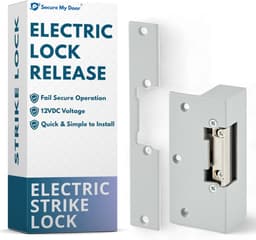
 AMALOCKS SecureMyDoor fail secure 12 V | 12 V DC | Fail secure | Thin instructions; extra chiselling reported | 8.4 | about £32.97 | View offer |


On this page
Before any chisel
Frame, cable and jaw
What the reviews found when the box was thin
When you stop
Common questions
Do I cut the door or the frame?
How do I know the supply is 12 V DC and not mains?
Which way is positive if the coil is unmarked?
Why will a mortice lock not lock again when the door shuts?
When do I stop and call a locksmith?
Related pages
Sources
Public UK sources from the research digest. Listing prices and review counts were read on 19 October 2026. The CDVI GAER page is an example for a different product, not a current figure for these six listings.
- Approved Document B Volume 1 (England, dwellings) (retrieved 19 October 2026)
- BSI BS 7273-4:2015+A2:2023 (retrieved 19 October 2026)
- NIFRS door release note (2025) (retrieved 19 October 2026)
- CDVI: fail-safe and fail-secure (retrieved 19 October 2026)
- CDVI: guide to electronic locking (retrieved 19 October 2026)
- Links Integrated Systems: electronic locking for fire doors (retrieved 19 October 2026)
- Regulatory Reform (Fire Safety) Order 2005 (retrieved 19 October 2026)
- CDVI GAER-12CC (example current, not an ASIN in this set) (retrieved 19 October 2026)