Fail safe vs fail secure door release
The power has gone off, and you need to know whether the side door is still shut. Fail safe vs fail secure door release is that question. Fail-secure stays locked in a power cut and needs power to unlock. Fail-safe unlocks when power is lost. Listings are on the [electric door release comparison](/hub/door-and-window-security/electric-door-release). Voltage and plate are in the [electric door release buying guide](/hub/door-and-window-security/electric-door-release/sub/electric-door-release-buying-guide). Peter F. compared those amazon.co.uk listings on 19 October 2026. There was no lab test. A qualifying purchase can earn a commission at no extra cost to you.
The power has gone off, and you need to know whether the side door is still shut. Fail safe vs fail secure door release is that question. Fail-secure stays locked in a power cut and needs power to unlock.
The power has gone off, and you need to know whether the side door is still shut. Fail safe vs fail secure door release is that question. Fail-secure stays locked in a power cut and needs power to unlock. Fail-safe unlocks when power is lost. Listings are on the electric door release comparison. Voltage and plate are in the electric door release buying guide. Peter F. compared those amazon.co.uk listings on 19 October 2026. There was no lab test. A qualifying purchase can earn a commission at no extra cost to you.
Our top picks
| Badge | Product | Fail mode | In a power cut | Voltage | Note | Price | Offer |
|---|---|---|---|---|---|---|---|
| Best overall |  effeff effeff 118E door opener | Not stated | Not stated | 10–24 V AC/DC | 7.0 | about £24.41 | View offer |
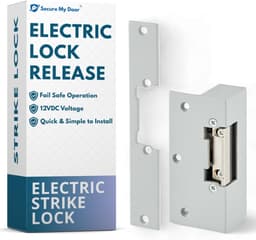
 AMALOCKS SecureMyDoor fail safe 12 V | Fail safe | Unlocks | 12 V DC | 7.9 | about £32.97 | View offer | |
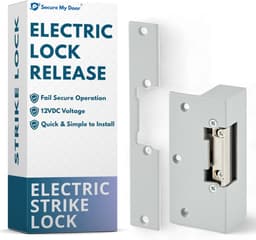
 AMALOCKS SecureMyDoor fail secure 12 V | Fail secure | Stays locked | 12 V DC | 8.4 | about £32.97 | View offer |

The two behaviours
When fail-secure
When fail-safe
The condition
Common questions
What does fail-secure do in a power cut?
What does fail-safe do in a power cut?
Which is safer?
Can I swap a fail-safe unit for a fail-secure unit on the same wires?
Which loaded listing is which mode?
Related pages
Sources
Public UK sources from the research digest. Listing prices and review counts were read on 19 October 2026. The CDVI GAER page is an example for a different product, not a current figure for these six listings.
- Approved Document B Volume 1 (England, dwellings) (retrieved 19 October 2026)
- BSI BS 7273-4:2015+A2:2023 (retrieved 19 October 2026)
- NIFRS door release note (2025) (retrieved 19 October 2026)
- CDVI: fail-safe and fail-secure (retrieved 19 October 2026)
- CDVI: guide to electronic locking (retrieved 19 October 2026)
- Links Integrated Systems: electronic locking for fire doors (retrieved 19 October 2026)
- Regulatory Reform (Fire Safety) Order 2005 (retrieved 19 October 2026)
- CDVI GAER-12CC (example current, not an ASIN in this set) (retrieved 19 October 2026)