Independent comparisons. We may earn from shop links. More info

How to fit a euro cylinder without leaving it proud

Updated: October 2026

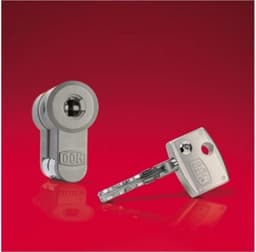
You have the door open, a new euro cylinder in the box, and one chance to get the length right before the screw goes back in. How to fit a euro cylinder is mostly measuring: both sides from the fixing screw, then a refit that does not force the cam or leave the barrel sticking out. The three DOM sizes in the [DOM lock cylinder comparison](/hub/door-and-window-security/dom-lock-cylinder) show why the split matters. They are not a ranking on this page. Peter F. set this out in October 2026 from public UK fitting guidance, not from a timed job on your door. A qualifying purchase can earn a commission at no extra cost to you.

You have the door open, a new euro cylinder in the box, and one chance to get the length right before the screw goes back in.

Our top picks

On this page

Measure both sides

Measure from the centre of the fixing screw to the outside face, then to the inside face. Do not start from the cam or include a thumbturn. A 30/30 is 60 mm. A 30/40 is 70 mm. A 35/35 is also 70 mm and is a different split. The nickel listing states 60 mm. The polished 30/30 does not. The brass listing is a long cam at 30 x 40 mm. Ordering it because 70 mm felt right will not turn a 35/35 case. What to buy is on the DOM lock cylinder buying guide. Finish flush with the handle or within about 3 mm. West Yorkshire Police say the cylinder must not protrude.

Take the old cylinder out

With the door open, remove the fixing screw by hand. Do not use a power tool. If it shears, stop. The cylinder will not slide out while the cam is across the case. Turn the key until the cam lines up with the body, then draw it out. Forcing it bends the cam. Compare the old cam with the new one. The brass listing is the one that states a long cam. The polished listing states no cam. If the shapes differ, it is the wrong part. Which listing matches is on best DOM lock cylinder.

Refit and test

On a 30/40, confirm which side you measured as outside. Push the cylinder in with the cam aligned as it came out. Do not hammer it. If it stops, the cam is across the case. Tighten the fixing screw by hand, with the door still open, and throw the lock both ways. Close the door only after that works. The outside end should be flush or within about 3 mm. If the key is stiff only when the door is shut, the door or the keep is out of line. Do not file the cam.

Stop and call a locksmith

Call a locksmith when the screw has sheared, when you cannot see the cam, or when the new cam does not match. Call one for a fire door or a communal door, because a retail swap can undo a certified doorset. Call one if the cylinder must work with keys you already hold, or if a DOM security card is lost. A replacement card goes through the dealer. You can finish a like-for-like euro swap when the screw comes out cleanly, the cam matches, and the closed-door test locks. The usual failure is the wrong split, forced into a case it does not throw. Remove it and reorder the measured size, or leave the old cylinder in until the right one arrives.

Fit it only after the two numbers match

Write both sides down, match the cam by looking, and tighten the edge screw by hand. Keep the outside end flush, or within about 3 mm. The brass 30/40 states a long cam and 70 mm. The nickel 30/30 states 60 mm. The polished 30/30 states neither, so the tape decides. If the screw shears or the cams differ, stop.

Common questions

Is 70 mm always 35/35?
No. 35 mm plus 35 mm is 70 mm, and 30 mm plus 40 mm is also 70 mm. The case cares which side is longer. The brass listing is the 30/40 with a stated long cam, not a 35/35. If your tape says 35 and 35, none of the three listings is that split.
How far may the cylinder stick out?
West Yorkshire Police say it must not protrude from the door unit. An ERA 3-star fitting sheet, used here as a method rather than as a DOM product, sets a maximum of 3 mm beyond the hardware. Flush is cleaner. Copying a barrel that already stands proud keeps the same leverage.
How do I get the old cylinder out?
Open the door, remove the edge screw by hand, and turn the key until the cam lines up with the cylinder body. Then slide the cylinder out. It will not pass the lock case while the cam is turned across it. If it will not move with light hand pressure, stop. A long cam, a damaged gearbox, or a screw that is still catching will not improve with force.
What if the screw snaps?
Stop. A sheared fixing screw left in the edge of the door needs to be extracted without damaging the multipoint lock. A longer driver or a power tool is how the stump gets worse. Leave the old cylinder in place if it still locks, and book a locksmith. Do not order a new cylinder as a way around a screw you can no longer remove.
Can I do this on a fire door?
Not as a casual swap. A fire door or a flat entrance in a block may rely on a certified lock and cylinder. Changing the barrel can affect that certification even when the new one turns. Use a locksmith who can match the door, and do not treat a retail Diamant listing as a fire-door part because the EN 1303 code contains a fire digit. That digit is a classification on the manufacturer's code, not a survey of your door.

Related pages

Sources

Public UK and manufacturer sources, plus the amazon.co.uk listings B077Q4LF93, B08W4N7RSV and B077PSM71X. Figures are taken from those pages and from the digest. Checked for this comparison in October 2026.

  1. West Yorkshire Police, euro cylinder advice (retrieved October 2026)
  2. GOV.UK, Approved Document Q (retrieved October 2026)
  3. DOM Diamant double cylinder (retrieved October 2026)
  4. DOM ix Twido double cylinder, DOM-UK (retrieved October 2026)
  5. Hoppe, BS EN 1303 (retrieved October 2026)
  6. AC Leigh, DOM master-key cylinders (retrieved October 2026)
  7. Lock and Key, how to measure a euro cylinder (retrieved October 2026)
  8. amazon.co.uk listings B077Q4LF93, B08W4N7RSV and B077PSM71X (retrieved October 2026)