Independent comparisons. We may earn from shop links. More info

O end vs T end manhole keys

Updated: 23 October 2026

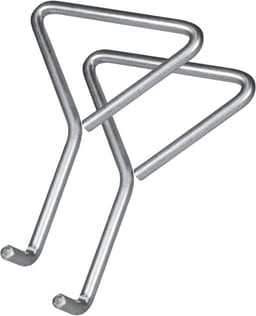
You are looking at two photographs that both say manhole key, and one end is a round hook while the other looks like a T. O end vs T end manhole keys is a shape choice: the metal that enters the cover, not the handle you hold and not the price. A bent 10 mm O-end or a J-hook suits a round eye, a light lid, a recess tray, or an edge. A rectangular T-end or D-end is a lug for a rectangular keyway, and it only counts if the listing prints that lug in millimetres. The [manhole hook comparison](/hub/diy-supplies/manhole-hook) is the twelve-listing table. Faithfull’s pages, a maker key list, and the amazon.co.uk files were read for this page. We did not gauge your slot. A qualifying purchase through our amazon.co.uk links can earn a commission at no extra cost to you. One catalogue’s map is not a rule for every cover in Britain.

You are looking at two photographs that both say manhole key, and one end is a round hook while the other looks like a T.

Our top picks

On this page

An O-end or J-hook catches a round eye or an edge

An O-end is a round or oval hook, often bent, that drops into an eye or under a light rim. In this capture the clear O-end is Faithfull FAIMHK200B, ASIN B09HJRSFS6: a zinc-plated 200 mm pair, a bent 10 mm O-end, 25 mm deep, captured at about £13.84. Faithfull’s page limits that code to light-duty covers, recessed tray covers, and access panels, and it prints no max load. The amazon.co.uk line is 4.4 from 157 reviews. UK texts name old covers, a bar-and-recess drain, a block-paved tray, and a church water shut-off. That is the job the shape is for, when the eye accepts about 10 mm. A J-hook is the cousin that catches an edge rather than filling a keyway. The three PATIKIL pairs are the J-tips here: a pointed 390 mm pair on a 7 mm bar, a pointed 500 mm pair on a 10 mm bar, and a blunt 600 mm pair on a 10 mm bar. Their instructions talk about hooking under an edge. A quarter turn does not turn them into locking keys. A US review on the 390 mm pair says they suit vault lids and are not good for manholes. That review is not UK evidence, and it is a reason to treat manhole in the title as a claim you still test on your rim. If the photos on the Faithfull listing looked square and the metal that arrived was round, that is the mismatch one UK review already reported.

A T-end or D-end is a lug in a rectangular keyway

A T-end, in trade language, is a flat rectangular lug that fills a rectangular keyway and then locks. Faithfull’s T-end family prints that lug as 33 mm by 5 mm, with a stated 30 kg, on codes FAIMHK170, FAIMHK320, and FAIMHK520. Those codes are not ASIN B09HJRSFS6. The 30 kg line stays on them. Adding it to the bent O-end would invent a rating the maker page does not give. A D-end is the other common lug, a D-shaped section for a different keyway, often sold as a short cast pair around 125 mm. It is neither the O-end nor the 33 mm T-end. Manhole Covers Ltd maps tools to its own series: a J-type for its recess trays and pressed-steel tops, a light-duty T-handle for its A15 iron, and a D-handle for its heavier iron and block-paviour trays. That map is an example of a maker matching keys to its covers. It is not a national rule that every A15 cover in the UK wants that T-handle. Southwark’s drawing LBS-500-16, one council detail, shows a small keyway of about 14–16 mm by 9–11 mm and a large one of about 22–25 mm by 9–13 mm. A 33 mm lug will not enter the small window. If you want a rectangular end, buy a listing that prints the lug.

A T-handle on a marketplace hook is not that lug

Most of the T rows in this capture describe the handle, or a hook head with no lug size. LCFVOFU is a short electroplated T-hook, 16 x 15 x 3 cm and 240 g, with no diameter. UK reviews call it very light and suitable for a drain-channel grating. Zephanor states an 8 mm rod and a 16 cm length, and then a 10 ton line with no method. MFSKJELF’s title says 32.5 cm and the size field says one size fits all. None of those lines is a 33 mm by 5 mm locking lug. Veemoon’s iron hooks, about 29 x 10 x 6.5 cm, are the T-hook with the largest UK review file after Faithfull: 4.3 from 13, six printed texts, all from the UK. Buyers like a long reach on worn chamber lids. One says the hook is too thick for a 3 to 4 mm paving gap. One says the metal bends. A review mentions a round handle. The round handle is the grip. It does not tell you the cross-section of the end that enters the slot. Wensmy’s pair draws the same distinction the hard way: UK reviews say the bar is too thick for the holes, and some say both pieces broke. Separate three words. T-handle means the crossbar you hold. T-end means the rectangle that fills the keyway. T-hook on these titles usually means the first. The measurement itself is the first section of the manhole lifting keys guide.

When neither end is enough

Some covers use a screw head or a special tip, not a slot a hook can fill. A universal kit such as the Metex Unikey, which is not one of these twelve ASINs, carries interchangeable tips and states 250 kg on the handles and on the tips it tested. The maker says the stopcock tip was not tested. A lifting kit and a stop-tap key share a case and still do different jobs. If your cover is a water-meter lid with two deep grooves, or an outside stop tap, the O-end and the T-end both miss, and the water company’s key is the tool. Forcing either hook into that lid is how meter boxes get damaged. A slide-hammer frees a stuck cover. It does not replace a key that fits, and it is not a way to carry the lid. If you have looked at the slot and it is a round eye of about 10 mm on a light tray, the Faithfull O-end is the shape in this capture, with the photo mismatch and the missing load attached. If the slot is a rectangle, leave the O-end and buy a lug whose size is printed, which may mean leaving this twelve for a Faithfull T-end code or a trade D-end. ShiLiuYiDaLe’s 60° flat hook is an angled hook, stated at 30 cm, and it is not a 33 mm locking T-end either.

Common questions

When do I want an O-end or a J-hook?
Choose an O-end or a J-hook when the cover shows a round eye, a light pressed lid, a recess tray, or a plain edge, and the bar you measured is about 7 mm or 10 mm. In this capture that is Faithfull’s bent 10 mm pair, or one of the three PATIKIL J-tips if you are catching an edge rather than filling a keyway. Faithfull limits FAIMHK200B to light-duty covers, trays, and access panels. A J-hook does not lock with a quarter turn.
When do I want a rectangular T-end?
Choose a T-end or a D-end when the keyway is a rectangle and the listing prints the lug. Faithfull’s T-end codes use 33 mm by 5 mm and state 30 kg. Those codes are not the bent O-end ASIN. Southwark’s small and large keyway windows show why a lug can be too wide for the hole in front of you. Manhole Covers Ltd’s T-handle and D-handle map applies to that maker’s series, not to every A15 cover on a UK drive.
Is a T-shaped handle the same as a T-end lug?
The handle is the crossbar in your hand. The lug is the flat rectangle that enters the keyway. Marketplace titles in this set, including Veemoon, Wensmy, LCFVOFU, and the short stainless pairs, say T-hook without printing a lug size. A round handle on a Veemoon review is a comfort note. It does not mean the end matches a 33 mm by 5 mm trade key. If the millimetres are missing, measure the slot yourself.
Will the Faithfull O-end fit a square keyway?
FAIMHK200B is specified as a bent 10 mm O-end, 25 mm deep. A square or rectangular keyway wants a lug of the right width and thickness. One UK review says the end that arrived was round, while the photos looked square. If your cover needs the square lug in the picture, this pair is the wrong shape even before you test the fit. The T-end codes with a printed 33 mm by 5 mm end are the Faithfull product that describes that other shape.
What is a D-end if it is neither O nor T?
A D-end is a D-section lug for keyways that are cut for that profile, often sold as a short cast pair. It is a third shape. Manhole Covers Ltd uses a D-handle on its heavier iron and on block-paviour trays in its own catalogue. You still match it to the slot you can see. A D-end does not appear as a measured lug in this twelve-ASIN capture, so a title that only says T-hook has not sold you one.
Do PATIKIL’s pointed and blunt tips lock with a quarter turn?
They hook an edge. The 390 mm and 500 mm titles say a pointed tip. The 600 mm title says a blunt tip. The shared instruction is to place the J under the edge and keep your hands off the tip. That is not the quarter-turn lock Wonkee Donkee describes for a key made for a keyway. Pointed versus blunt changes how the tip finds the rim. It does not change the tool into a BS 7903 locking key.

Related pages

Sources

Public UK sources and the amazon.co.uk listings compared on this page. Listings scored 21 October 2026. Updated 23 October 2026.

  1. HSE: confined spaces (retrieved 23 October 2026)
  2. HSE: manual handling assessment (retrieved 23 October 2026)
  3. JDP: BS EN 124 explained (retrieved 23 October 2026)
  4. Wrekin: ironwork maintenance (retrieved 23 October 2026)
  5. Southwark LBS-500-16 keyways (retrieved 23 October 2026)
  6. Faithfull FAIMHK200B (retrieved 23 October 2026)
  7. Wonkee Donkee: lift a manhole cover (retrieved 23 October 2026)
  8. Thames Water cover booklet (retrieved 23 October 2026)