Independent comparisons. We may earn from shop links. More info

How to lift a manhole cover

Updated: 23 October 2026

You have a pair of keys that already fit, and a cover that should move once the rim is clear. How to lift a manhole cover is a short sequence: clear the slot, engage the tool, lift with your legs, and set the lid down where you decided before you pulled. If the lid is seized, or you would have to climb in, you stop. This is not a shop and not a way to break a stuck highway cover. Product choice sits on the [manhole hook comparison](/hub/diy-supplies/manhole-hook). The sequence below follows Wonkee Donkee’s lift notes, Thames Water’s cover booklet, Wrekin’s ironwork guidance, and HSE’s pages on manual handling and confined spaces. We did not run a lab lift. A qualifying purchase through our amazon.co.uk links can earn a commission at no extra cost to you. Hands stay off the rim for the whole job.

You have a pair of keys that already fit, and a cover that should move once the rim is clear.

Our top picks

On this page

Clear the cover and decide where it will lie

Dirt in the keyway is the usual reason a correct key feels wrong. Brush the cover, then scrape the rim and the slots until you can see metal or plastic, not grit. Wonkee Donkee’s sequence starts there, before anyone talks about twisting. Look for screws or bolts that still hold the frame. A key will not beat a fastener you have not undone. If the cover is only painted shut, a careful scrape around the edge is enough to test it. If it is tarred into a road, you are already past a householder lift. Decide the set-down spot while the hole is still closed, so you are not walking backwards with a cast lid looking for a gap. The lid should land beside you, flat, where it cannot fall back into the hole and where nobody has to step across the opening to put it down. A driveway that slopes toward the chamber is a bad lay-down. So is a spot in the line of a gate. Keep your feet out of the line of the rim. Thames Water’s booklet says the keys must be fully engaged, and that you do not lift a cover you cannot lift safely. That decision belongs here, before the first pull.

Engage the key or the hook

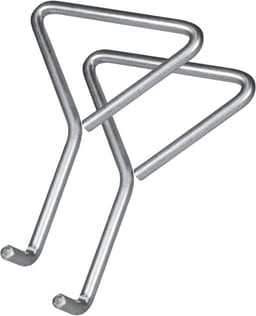
A locking key made for that slot turns until it holds. Wonkee Donkee describes about a quarter turn, either direction, on a key that matches the keyway. You insert both keys, you feel them seat, and you turn until they stop feeling loose. A rattle means they are not in. Pulling on a rattle loads the bend and your wrists, and it does not lift the cover. A plain J-hook in this amazon.co.uk capture does not become that lock. PATIKIL’s instruction on the long blunt pair says to hook the J under the edge, keep hands off the tip, and keep a steady posture. That is an edge catch. It will not quarter-turn into a BS 7903 keyway because you twist harder. Faithfull’s bent O-end is a 10 mm hook for light lids and trays, not a 33 mm by 5 mm T-lug. If the end will not enter, stop and change the tool. The manhole lifting keys guide is the page for that mismatch. More force is how the Faithfull reviews end in a snap at the bend. Test the engagement with a small movement, an inch, not a jerk. If one side lifts and the other stays, reseat the low key before you commit your back. Wrekin’s maintenance note says to prise ironwork loose before you lift it on the keys. The prise is a separate action, and it is not the lift.

Lift with your legs, with help if the cover is heavy

Once the cover is free, you lift it. Thames Water’s cue is your legs: a key that is too short makes you stoop, and a key that is too long can stop that leg lift. Bent knees, a straight back as far as the handle allows, and both hands on the keys. You are carrying the lid a short distance to the spot you chose, not dragging it across the opening on one hook. HSE’s manual-handling guidance does not give one safe kilogram. The Manual Handling Operations Regulations 1992 require an assessment of the task. A domestic plastic lid may be a one-person job if it comes free and you can see the whole rim. A heavy cast cover is a two-person job in Wonkee Donkee’s sequence, even when the keys fit. If you cannot hold a conversation while you take the first inch, or if the lid twists because one key is doing all the work, put it back down while you still can and fetch a second person. Other trade keys print 25 kg or 30 kg, and those figures stay on those tools. FAIMHK200B, the bent pair in this comparison, does not print a max load. Set the lid down flat, clear of the hole, before you look inside from ground level. Putting it back is the same sequence in reverse: keys fully in, legs, and no fingers under the rim.

Stop if it is stuck or the tool bends

A cover that will not move after a seated key and a test lift is seized. Stop pulling. Jerking is the failure mode in the UK reviews: Faithfull keys snapping at the bend, Wensmy hooks breaking, Veemoon iron bending on chamber lids that still needed a pry-bar. A bent key is a signal, not a cue to find a longer one and try again on the same stuck lid. Call a professional when the cover is carriageway iron, when it is locked water-company plant, or when the only way to see the problem is to climb in. A chamber is a confined space under the Confined Spaces Regulations 1997 when it is enclosed and a specified risk, such as gas or drowning, is reasonably foreseeable. HSE’s confined-spaces page is that test. This guide does not include a gas procedure and does not tell you to enter a sewer. If the keyhole is simply too small for the bar, change the end and leave the seized lid alone.

Common questions

What do I do before the keys go in?
Brush the cover and scrape the rim and the keyways until the slots are clear. Check for screws that still fix the lid to the frame. Choose the place the cover will lie before you lift, somewhere flat and off the line of the hole. Wonkee Donkee’s sequence puts that preparation first. A key in a packed slot feels like the wrong key, and then people pull harder than the bend can take.
Does every hook lock with a quarter turn?
A locking key made for that keyway does, about a quarter turn either way, once it is fully inserted. A J-hook or a bent O-end that only catches an edge or a round eye does not become a lock because you twist it. PATIKIL’s long hooks in this comparison are edge tools. If the tool rattles, it is not engaged. Reseat it or change it. Do not use the rattle as the start of the lift.
Can I lift a cast cover alone?
Plan on two people for a heavy cast cover, which is Wonkee Donkee’s line, even when the keys fit. HSE does not publish one safe kilogram under the manual-handling rules. A light plastic chamber lid can be a one-person lift if it is free and you can set it down without stepping across the hole. If the first inch loads your shoulders or the lid twists, put it down and get help. A kilogram printed on a different tool is not permission to lift this cover alone.
Where do I put the cover down?
Put it beside you, flat, on the spot you chose before the lift. Keep it off a slope that runs back toward the hole, and off the path someone would use to step across the opening. The return trip uses the same keys, fully seated, with your legs. Fingers stay off the underside of the rim on the way down as well as on the way up. You look inside from ground level only after the lid is clear of the hole.
What if it will not move?
Stop. A seated key and a failed test lift mean the cover is seized, not that you need a sharper jerk. You can prise in the prising points, with a bar used only to loosen, which is the limit Wonkee Donkee and Wrekin both describe. Oil on screws that are designed to turn, and timber at the edge, are the mild options. If it stays stuck, leave it, particularly in a road.
Can I lift the cover on a crowbar?
Use a crowbar to prise, in the holes meant for prising, and then lift on keys that are fully engaged. Wonkee Donkee’s tips page says not to lift the cover on the crowbar. A bar under the rim puts your hands and the lid in the same crush line. A chisel under the rim, a hammer on the key, or a car jack through the slot is outside this guide. If there is no prising point and the keys will not free the lid, that is a stop, not a prompt to invent a lever.

Related pages

Sources

Public UK sources and the amazon.co.uk listings compared on this page. Listings scored 21 October 2026. Updated 23 October 2026.

  1. HSE: confined spaces (retrieved 23 October 2026)
  2. HSE: manual handling assessment (retrieved 23 October 2026)
  3. JDP: BS EN 124 explained (retrieved 23 October 2026)
  4. Wrekin: ironwork maintenance (retrieved 23 October 2026)
  5. Southwark LBS-500-16 keyways (retrieved 23 October 2026)
  6. Faithfull FAIMHK200B (retrieved 23 October 2026)
  7. Wonkee Donkee: lift a manhole cover (retrieved 23 October 2026)
  8. Thames Water cover booklet (retrieved 23 October 2026)