Independent comparisons. We may earn from shop links. More info

How to fit joist hangers

Updated: 23 October 2026

You already have a timber-to-timber hanger, the joist is cut, and the job goes wrong in the holes rather than in the basket. How to fit joist hangers, for the hangers in this set, means a square end, a small gap at the back of the seat, and every specified hole filled with the nail that sheet names. An empty hole, a woodscrew, a bend the listing never allowed, or a joist that misses the seat are the failures. Choosing 47 mm against 50 mm stays on the [joist hanger buying guide](/hub/diy-supplies/joist-hanger/sub/joist-hanger-buying-guide). The listings are on the [joist hanger comparison](/hub/diy-supplies/joist-hanger). Updated 23 October 2026 by Peter F. We did not fit these hangers in a lab. A qualifying purchase can earn a commission at no extra cost to you.

You already have a timber-to-timber hanger, the joist is cut, and the job goes wrong in the holes rather than in the basket.

Our top picks

On this page

Set the hanger to the timber you measured

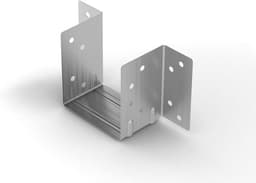
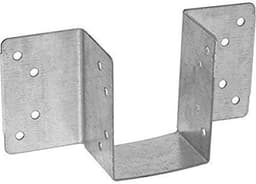
Start with the end of the joist. BPC’s conditions for the standard-leg hanger ask for a square cut, no more than about 6 mm from the back of the seat to the supporting face, and sides that cover at least 60 percent of the joist height. Those are fitting rules for that family, not a capacity. An out-of-square end meets one corner of the seat and leaves the other open. Seat the joist before you nail the carried member. Packing a gap, or leaving it because the hanger was 50 mm and the timber is nearer 45 mm, is a width mistake from before you started. A 30 x 3.75 mm nail into the edge of a thin batten is not the joint those notes describe. Masonry is a different product. One UK reviewer of the 50 mm mini opened the holes and screwed into brick. The listing does not specify that.

Fill the holes with the named nail

Fill the holes the sheet specifies, with the fastener it names, before you load the joist. Simpson’s installation note puts it that way. BPC’s mini page names 30 x 3.75 mm sherardised square-twist nails, or 35 x 3.75 mm collated nails, in all the holes. The standard-leg sheet uses the same sizes. None of the eight amazon.co.uk included lines puts those nails in the box. A woodscrew is the substitution that keeps appearing. Publisher notes aimed at Building Control say empty holes get counted and ordinary screws get rejected in shear. That is an inspector’s account, not a statute. On the £8.99 50 mm ten-pack, UK reviews opened small holes for screws, and one said the steel bends easily and will not hold a decent weight. The multi-truss bullet names 3.75 mm twist nails or 12 mm anchor bolts. If the specified pattern cannot be driven, stop, rather than calling a half-nailed joint finished.

Wrap a leg only when the listing says so

Only the BPC standard-leg listing, A270/47/TRADE, says the leg can be wrapped over to suit the joist height. That bullet is for the 150 to 250 mm hanger with the wider 50 mm strap. It is not on the mini pages. The minis are for timber up to 100 mm. Wrapping a mini because the standard-leg title sounded flexible is damage. Simpson’s note sits beside that one allowed wrap. Bending steel on site may fracture the bend, and fractured steel has to be replaced. Products designed to be bent are bent once. A UK review on the BPC 50-piece mini says the steel was pliable enough to butt tight at T joints. Sitting against a face is not a published wrap. If you are still choosing the leg, use mini joist hanger vs standard before you are on the ladder with the wrong one.

Stop before a wall, a loft floor, or a ceiling you might stand on

This sequence is for a timber-to-timber hanger whose width and depth already match, on a light job such as a hatch, a small frame, or joists inside the depth the listing prints. A habitable loft floor is Building Regulations work. Approved Document A covers structure in England. A ceiling joist does not become a bedroom floor because the hanger is seated tightly. Call an engineer or Building Control for a habitable loft, a beam, stair or roof loads, masonry, a wet joint, and members outside the table, including I-joists. Do not treat a maker’s UKCA sheet as a mark on these cartons. At height, the Health and Safety Executive’s order is avoid, then prevent, then minimise. Do not stand on the ceiling.

Common questions

Which nail goes in the hole?
For the BPC mini and the BPC standard leg, the maker sheets name 30 x 3.75 mm sherardised square-twist nails, or 35 x 3.75 mm collated nails. Buy them separately. The multi-truss listing names 3.75 mm twist nails or 12 mm anchor bolts and does not include them. If your listing prints no diameter, do not borrow a size from a different ASIN.
Can I use woodscrews?
Not in place of the specified nail. Fitting notes aimed at inspectors say ordinary screws fail in shear, and maker instructions specify square-twist nails where they publish a capacity. UK reviews that opened holes for screws left that pattern. One of those reviews said the 50 mm minis bend easily and will not hold a decent weight.
Do I fill every hole?
Fill the holes the sheet specifies before you load the joist. On the BPC notes that means the holes of the stated diameter. Empty holes are what building-control summaries look for. Do not invent a hole count for an ASIN that does not print one, and do not drill extra holes so a screw will start.
How square does the joist end need to be?
Square enough that the end meets the seat and the gap at the back stays within about 6 mm, the figure on the BPC standard-leg conditions. An out-of-square end loads one side. Packing a wide gap does not fix a 50 mm hanger on 45 mm timber.
May I bend the leg?
Only when that listing says you may. Here, the sentence is on the BPC standard-leg page, for joists 150 to 250 mm. It is not on the minis. Bending steel that was not designed to be bent can crack it, and cracked steel is replaced. Bend an allowed leg once.
When do I stop and call someone?
Stop for a habitable loft, a beam, a stair, roof loads, masonry, a wet joint, or a member the listing does not cover. A masonry hanger is built into the wall. Screwing a mini into brick by enlarging the holes is not that detail, and it is not this timber-to-timber sequence. Also stop if the carton is short or the steel has cracked. Do not stand on the ceiling to test it.

Related pages

Sources

Public UK sources and the amazon.co.uk listings compared on this page. Listings captured 21 October 2026. Updated 23 October 2026.

  1. Simpson Strong-Tie hanger installation (retrieved 21 October 2026)
  2. BPC mini hangers (retrieved 21 October 2026)
  3. BPC standard timber-to-timber hangers (retrieved 21 October 2026)
  4. Cullen technical guide 2022 (retrieved 21 October 2026)
  5. ITW EC5 guidelines (retrieved 21 October 2026)
  6. Approved Document A (retrieved 21 October 2026)
  7. CPA loft conversion project guide (retrieved 21 October 2026)
  8. HSE working at height (retrieved 21 October 2026)
  9. PBC Today: joist hangers (retrieved 21 October 2026)
  10. Arras CF joist hanger ETA (retrieved 21 October 2026)